Every summer, ahead of the anniversary of the military-police operation "Storm," accusations against Croatia arrive from Serbia. This time, the initiative was launched by Miodrag Linta, president of the "Alliance of Serbs from the Region," who asked Belgrade to request the European Union to ban the celebration of "Storm."
"It is absolutely unacceptable that a member state of the European Union celebrates the ethnic cleansing of a people every year. Croatia celebrates the persecution of 250,000 Serbs and does not acknowledge more than 2,000 Serbian victims, of whom over 1,200 were civilians. In this way, Croatia threatens peace and cooperation with Serbia because it lives trapped in the past," Linta said for Slobodna Dalmacija. He cited the 2015 ruling of the International Court of Justice, claiming that "Storm" was qualified as ethnic cleansing, and the obligations from Croatia's 2013 EU Accession Treaty regarding the prosecution of war crimes.
This is an inaccurate interpretation. The Appeals Chamber of the Hague Tribunal acquitted Generals Ante Gotovina and Mladen Markač in a final judgment in 2012, dismantling the theory of a joint criminal enterprise. In 2015, the International Court of Justice dismissed both Croatia's lawsuit and Serbia's counterclaim for genocide, finding that "Storm" was neither genocide nor ethnic cleansing with genocidal intent.
Milošević: 'A Victim's Innocence Does Not Depend on Which Side They Were Born On'
While political bickering continues, Boris Milošević, president of the Serb National Council, this week at a commemoration in Komić near Udbina reminded of the crimes that occurred after the liberation operation. In that village in the summer of 1995, eight Serbian civilians were killed or went missing, including 93-year-old Sava Lavrnić and her son Petar, while immobile Marija Brkljač was burned alive in her own home.
"No victim, Croatian or Serbian, deserves to be forgotten. A victim's innocence does not depend on which side they were born on. We demand that none be divided into more important and less important, into those deserving investigation and those waiting in vain," Milošević said. He warned that for the crime in Komić, no indictment has been raised even after three decades, and that the Constitutional Court recently, for the third time, established the ineffectiveness of the investigation into the war crime in Uzdolje near Knin. "Ineffective investigation repeats from village to village, from case to case," concluded Milošević, who in 2020 participated in the "Storm" celebration in Knin, and three weeks later, with Deputy Prime Minister and Minister of Croatian Veterans Tomo Medved, laid wreaths in Grubori for six killed elderly civilians.
Puhovski: 'Belgrade Has Clearly Written Off the So-Called Krajina'
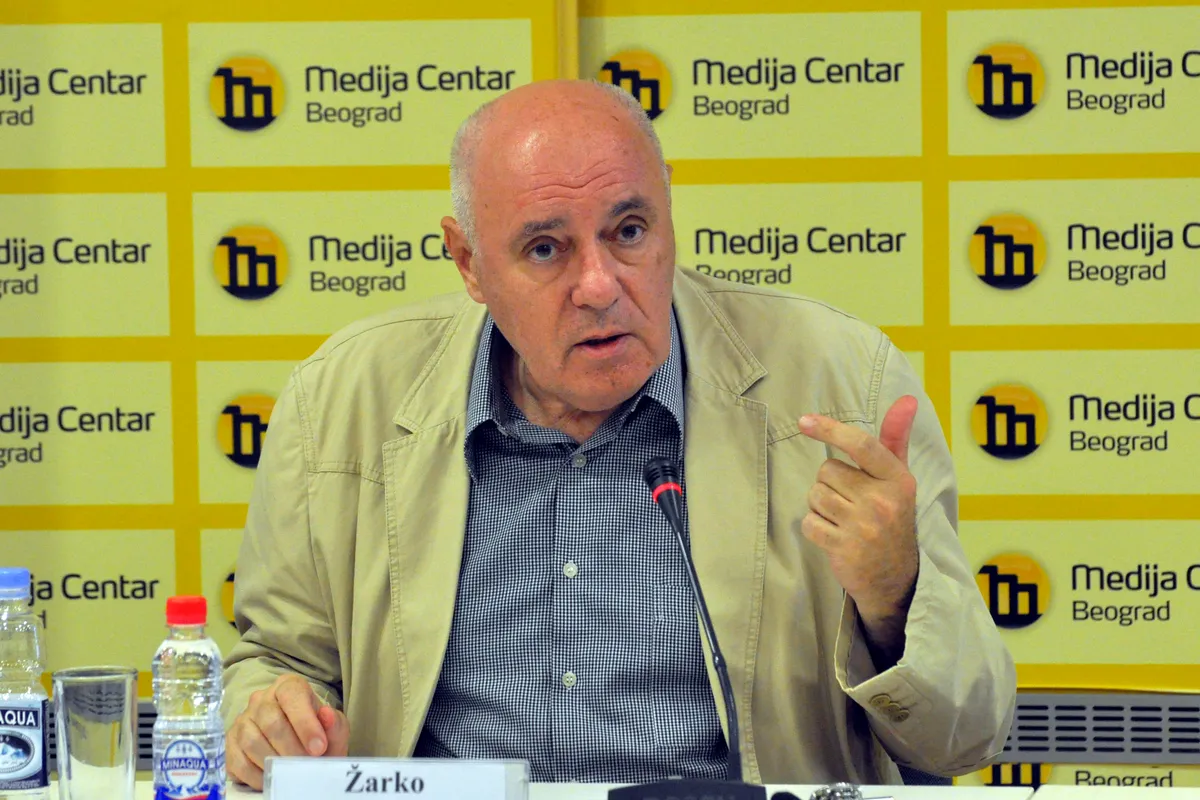
Prof. Dr. Žarko Puhovski, former member of the top of the Croatian Helsinki Committee, analyzed for Slobodna Dalmacija the dual coercion that led to the exodus of Serbs. "Storm is a great victory, a great day for the Croatian nation and the Croatian state, there is no dispute about that. The question is the price paid. The price was that between 125 and 150 thousand citizens of Serbian nationality left Croatia under coercion," Puhovski points out.
According to him, Serbia wanted to settle the Serbian population in Kosovo, while the Croatian side wanted territory with as few Serbs as possible so they would not be a "disruptive factor," the favorite phrase of Franjo Tuđman. "The Serbian side would like to be the victim, but would not like to admit defeat. The Croatian side would like to be the winner, but would not like to admit that victory was achieved violently," emphasizes Puhovski. He adds that in many situations, what was morally and under international law permissible was crossed, with several hundred civilians killed after the liberation of the territory.
The operation, Puhovski reminds, liberated 10,000 square kilometers in 84 hours at a pace of more than 120 km²/h, which, according to him, would not have been possible in real combat conditions and suggests that the real fighting was mainly around Petrinja. "It is absolutely incredible that the Serbian side did not see this. Probably they did not want to see it. Belgrade has clearly written off the so-called Krajina; I personally see no other explanation. I remember that the day after entering Knin, in the evening, I came to Ban Jelačić Square in Zagreb. There was not a living soul; the square was eerily empty. People expected the bombing of Zagreb, fearing retaliation like after 'Flash.' After 'Storm,' there was no attack. Milošević did not decide to fight this time," concludes Puhovski.
Crimes Without Punishment and Escalating Narratives
The Croatian Helsinki Committee published the first list of killed civilians as early as 1995. "There was a lot of data that was not entirely reliable because it was collected under very difficult circumstances. But there is no doubt that all lists of missing persons, which were made later, include victims who were first on the HHO list. There is no victim on the State Attorney's list that was not also on the Helsinki Committee's list. We wanted to show the public that war is not just a triumph on the wings of tanks, but that innocent people lose their lives in it," says Puhovski.
Today, however, he sees no room for reconciliation. "Things should, over time, become as civilized as possible. What worries me is that they are escalating as time passes. The same story is constantly repeated, that there can be no reconciliation until all crimes are punished. But in reality, there is no talk of punishing even 10 percent of the crimes," warns Puhovski. As an example of systematic acceptance of crimes, he cites the case of the Zec family: "The group that killed the Zec family in Zagreb was caught and then acquitted. All received medals from the President of the Republic, and one of them was a bodyguard for two years to the second most powerful man in the state, then-Defense Minister Gojko Šušak. In this way, the state actually accepted that crime as its own."