River Near Požega on the Brink of Drying Up
While the mainland braces for more unstable weather, Dalmatia remains in the grip of a heatwave. Drought breaks records on the Danube and Drava, while the Orljava has dropped to just four centimeters.
While the mainland braces for more unstable weather, Dalmatia remains in the grip of a heatwave. Drought breaks records on the Danube and Drava, while the Orljava has dropped to just four centimeters.
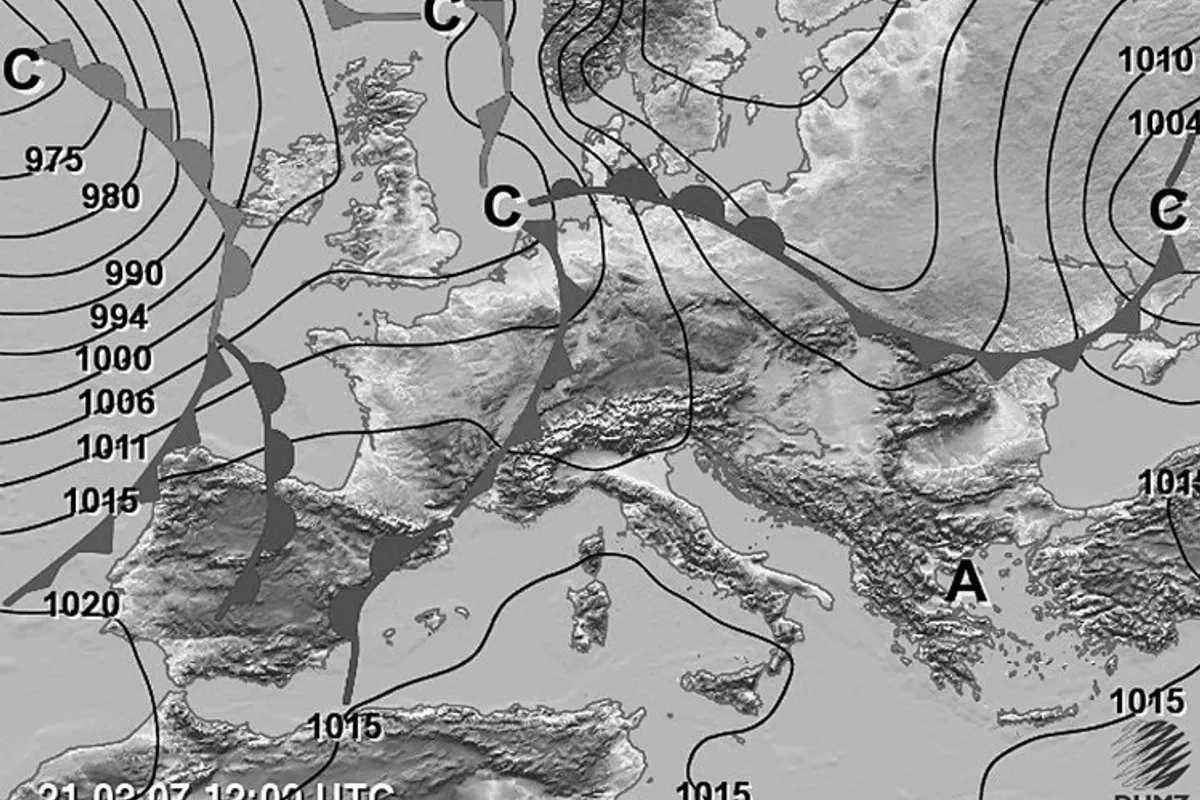
After all of Croatia was under a red alert on Thursday due to extreme heat, Friday brings a change for the mainland but also reveals the extent of a hydrological crisis threatening to dry up certain rivers. While the interior prepares for a cooldown, the Adriatic coast remains in the embrace of a heatwave, with the State Hydrometeorological Institute (DHMZ) warning of very high danger for several cities.
According to the DHMZ forecast, Friday will bring variably cloudy weather to the interior with occasional rain and local showers accompanied by thunderstorms, some of which could be more intense. Daytime temperatures across most of mainland Croatia will range between 28 and 35 degrees Celsius, while Lika and Gorski Kotar will see slightly more pleasant conditions, from 28 to 31 degrees.
A completely different picture is expected on the Adriatic. In the northern part, temperatures will reach 34 to 37 degrees, accompanied by a strong and locally stormy bora wind at the foot of Velebit. Dalmatia will be even hotter, with maximum daytime values between 34 and 38 degrees. Although local showers are possible in inland Dalmatia, they will not bring significant relief. For Saturday, continued unstable weather is forecast for the mainland, with a return of sunshine and a gradual rise in temperatures from Sunday onward. The DHMZ has issued a very high heatwave danger warning for the Rijeka, Split, and Dubrovnik areas through the weekend.
Although local showers will briefly moisten the soil, they are far from sufficient to restore watercourses and groundwater reserves. Croatian Waters has reported that certain measuring stations on the Danube and Drava have recorded their lowest water levels since systematic hydrological monitoring began. A significant rise in levels would require abundant rainfall across entire catchment areas, including substantial precipitation in upstream parts of Europe.
The situation is particularly alarming for the Orljava River near Požega. Its water level has dropped to just four centimeters. Experts warn that the riverbed could completely dry up within the next ten days if high temperatures persist and prolonged rain fails to materialize. Very low flow rates are also being recorded on the Plitvica River in Varaždin County, and Croatian Waters is monitoring the Bednja, Drava, and groundwater on a daily basis, intensifying field inspections to preserve the minimum flows essential for flora and fauna.
Despite critical hydrological indicators, public water supply in Croatia remains stable for the time being. Although reduced inflows are being noted at some sources, the supply of drinking water to the population is currently not at risk. The water supply system in the Požega area, for example, is functioning normally as it draws from multiple underground, mountain, and surface sources.
Nevertheless, Croatian Waters is urging citizens to use water rationally. They particularly recommend reducing lawn watering, yard washing, pool filling, and other non-essential activities. The prolonged drought, they emphasize, is a clear sign that the current stability of supply does not justify unlimited water consumption. A few local showers may temporarily lower temperatures, but true recovery for the rivers requires more sustained and abundant rainfall, which is not on the horizon in the near future.