Risk of Forest Fires in Southern Europe Has Doubled Since 1981
New research from the University of Groningen warns of increasingly frequent extreme weather conditions conducive to fires, particularly on the Iberian Peninsula
New research from the University of Groningen warns of increasingly frequent extreme weather conditions conducive to fires, particularly on the Iberian Peninsula
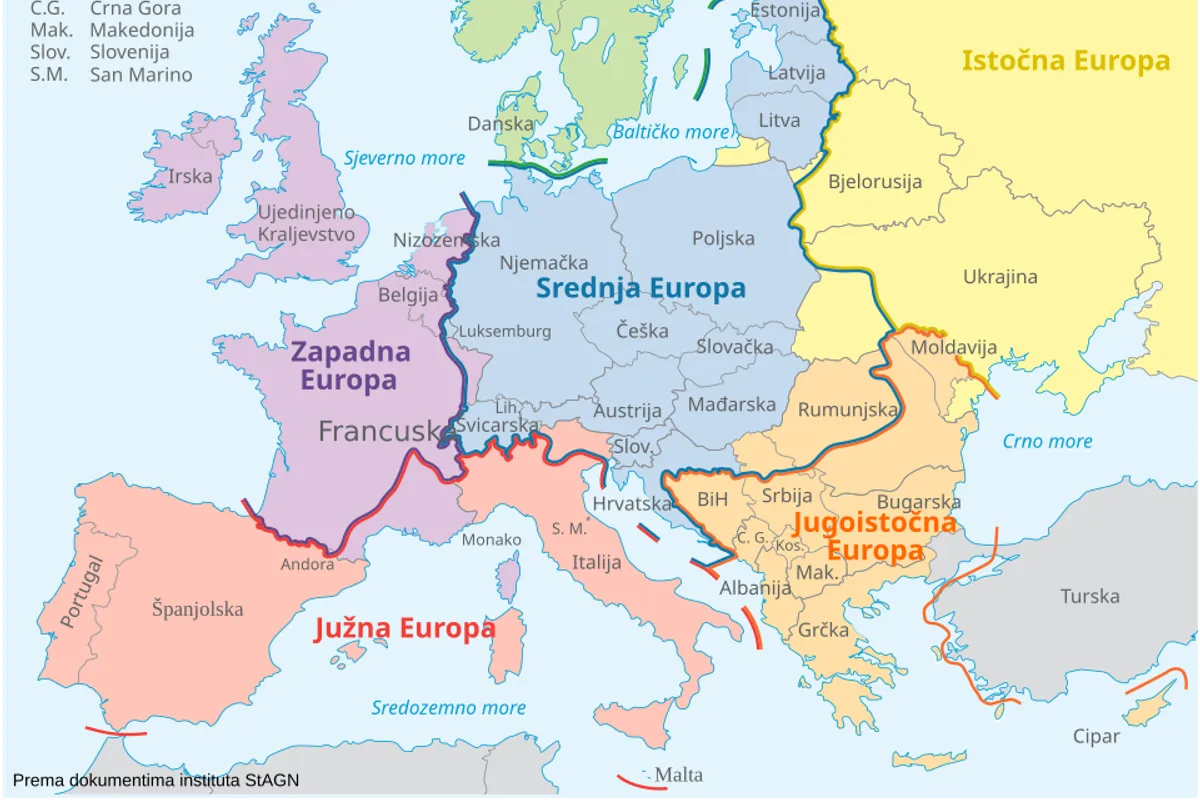
The number of days with a high risk of forest fires in southern Europe has doubled since 1981, according to research published on July 30, 2026, in the journal Scientific Reports. The study, led by Raúl Cordero from the University of Groningen in the Netherlands, covered a large part of the Iberian Peninsula, France, Italy, and Greece, and concludes that the region is entering a period of "extreme fire risk."
The most pronounced increase was recorded precisely on the Iberian Peninsula. According to the study's data, parts of Portugal and Spain experienced up to 25 days per year during the last decade with extremely hot, dry, and windy conditions conducive to fire outbreaks. For comparison, during the period from 1981 to 2010, there were fewer than ten such days annually.
Despite the increased risk, the authors note that in the last decade, from 2016 to 2025, southern Europe has on average recorded fewer forest fires than before. The burned area was smaller than during the 1980s, which the researchers attribute to better fire management, improved firefighter training, a greater number of firefighting aircraft, and increased public awareness.
However, the study warns of a paradox: it is precisely the more successful firefighting that has contributed to the accumulation of flammable material in the environment. This, combined with climate change, increases the danger of rarer but significantly more destructive megafires that are difficult to contain. The authors therefore recommend targeted and controlled regular burning of vegetation and the application of moderate, rather than maximal, fire suppression as possible measures to prevent the occurrence of large-scale fires.
Additional light on the problem is shed by a study from the World Weather Attribution (WWA) research network, published on July 31, 2026, which focused on the impact of climate change on so-called "fire weather." WWA analyzed historical weather data from affected regions up to July 24, 2026, using the Canadian Fire Weather Index's "Daily Severity Rating" (DSR), which takes into account heat, drought, and wind to describe how difficult it is to fight fires under such conditions. According to this analysis, the likelihood of extreme fire weather due to climate change has significantly increased: at least doubled in southwestern France, and up to twenty times higher in parts of Spain.
Climate scientist Friederike Otto from Imperial College London, one of the study's authors, explained the research methodology to Tagesschau: "This index has many different components, but among others, moisture, temperature, and wind speed. This index, which we observe over seven days, is essentially a measure of how difficult it is to extinguish such extreme fires due to weather conditions."
Otto also highlighted the importance of spring weather conditions: "Both in France and Spain, we had a relatively wet late winter with plenty of rain, followed by an extremely dry summer. This means that, especially in Spain where low-vegetation fires played a major role, a relatively large amount of low vegetation could have grown, which then dried out significantly during the very dry summer."
According to the researchers' estimates, fire weather conditions of this intensity could occur significantly more often in the future: statistically every 20 years in southwestern France, and even every six years in central Spain. Jonas Schröter from the German Weather Service (Deutscher Wetterdienst) in Offenbach emphasizes the practical value of such analyses: "Assessing weather data can provide an indication of which regions are particularly at risk. But trends can also show in which regions changed weather conditions particularly favor forest and low-vegetation fires."
Kirsten Thonicke from the Potsdam Institute for Climate Impact Research assessed the scientific approach as impressive: "Here we truly have something in hand where the essential factors can be assessed and classified. How incredibly rare such an event would be if we did not have the climate change that is currently underway."
According to data from the World Wide Fund for Nature (WWF), approximately 386,000 hectares have burned in the European Union since the beginning of 2026, which is roughly three times the long-term average. The researchers note that the study's results cannot be directly transferred to Germany, as the climatic conditions and vegetation types in southern Europe differ significantly from those in central Europe.