Romania Mines the Danube to Save Nuclear Plant, Hungary Shuts Down Paks
Record-low water levels in European rivers caused by the heatwave threaten the operation of nuclear power plants and the transport of goods across the continent.
Record-low water levels in European rivers caused by the heatwave threaten the operation of nuclear power plants and the transport of goods across the continent.
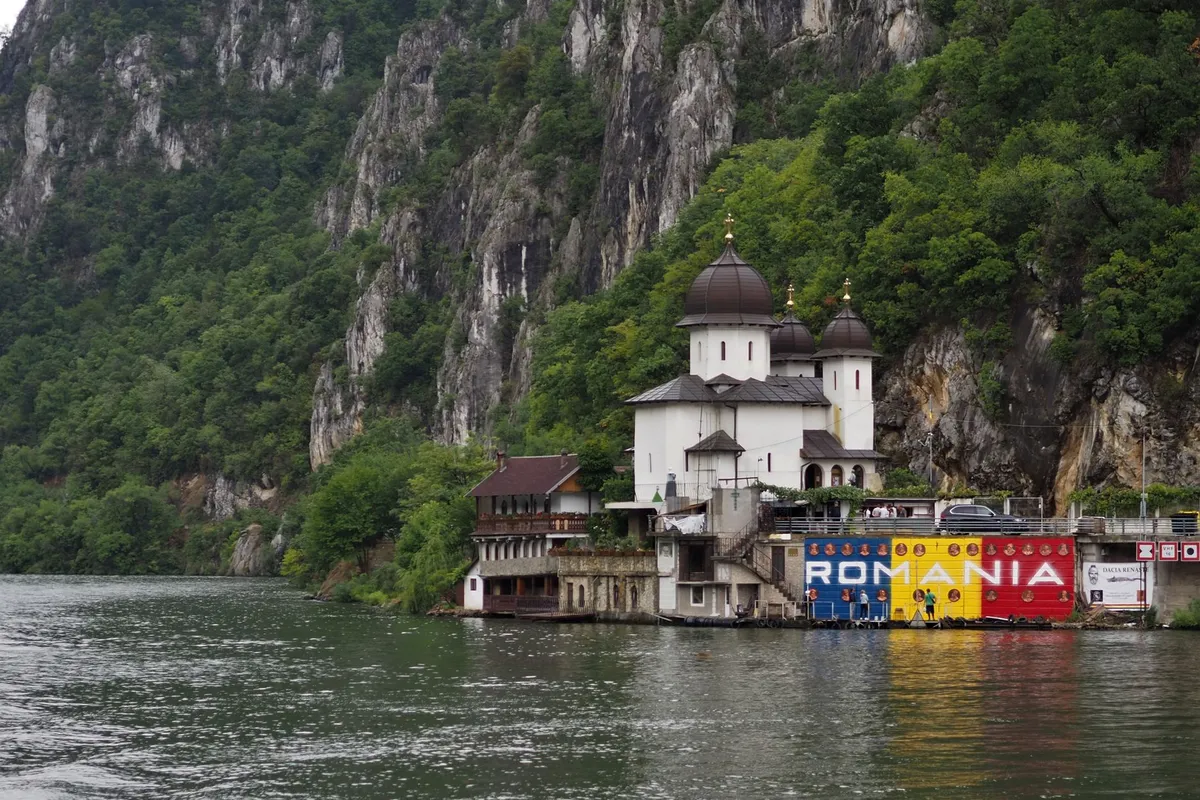
Romania's army carried out controlled explosions on the Danube to redirect the river's flow towards the Cernavodă nuclear power plant, which is at risk of shutdown due to record-low water levels. The operation involved detonating a large underwater rock called Pârjoaia, and will be followed by the sinking of four barges loaded with stones to channel water towards the Stari Dunav branch, which cools the reactors.
Acting Defense Minister Radu Miruță deemed the operation a success. "We placed 180 kilograms of explosives. Regardless of the final consequences for the Cernavodă Nuclear Power Plant in the coming days, what was achieved by removing this rock was necessary both for navigation and for future dredging works," Miruță stated, according to a report by Klix.ba. He emphasized that each day of the plant's operation is worth more than the cost of the entire operation.
The Cernavodă nuclear power plant, which typically covers a fifth of Romania's electricity consumption, had already shut down the first of its two 706-megawatt reactors earlier this week as a precautionary measure. This reduced domestic electricity production by ten percent. According to estimates, the plant could survive at the critical water level for another four to five days.
The Danube's flow at the entrance to Romania on Monday morning was 1,500 cubic meters per second, three times lower than the multi-year average for July and August. By August 7, a further drop to approximately 1,450 cubic meters is expected. Rear Admiral Marcel Neculae, deputy chief of staff of the Romanian Naval Forces, described the operation: "We carried out the first explosion on the surface to see how the rock would react, followed by a second explosion. We expected to move the Pârjoaia rock, but that did not happen. (...) I am confident that tomorrow (Monday) we will succeed in destroying this rock."
A similar crisis is unfolding in Hungary, where the two-gigawatt Paks nuclear power plant is operating at just over 10 percent capacity. Hungarian Prime Minister Peter Magyar stated on Monday that the last turbine, producing 240 megawatts, could continue operating for another day or two. "These are very good news because a complete shutdown of the plant can be avoided on one of the days with the highest consumption," Magyar said.
However, he also announced an extremely difficult period ahead. "The most critical five days begin now. The energy grid and water supply are under increasing pressure," he warned. The plant, which usually generates about half of Hungary's electricity, is expected to shut down completely later this week. Following the government's appeal for conservation, electricity demand in Hungary on Sunday was reduced by 700 megawatts, equivalent to the output of one and a half reactors at Paks. Pharmaceutical company Richter announced it would cut consumption by more than 50 percent over the next three weeks and offered four megawatts of solar energy daily.
The crisis is not limited to Romania and Hungary. Production at the Đerdap 1 hydroelectric plant, the largest in Serbia, has fallen to just 20 percent of capacity, confirmed plant director Davor Maljoković. Serbia's Kostolac thermal power plants have also reduced output due to a lack of cooling water. Both Serbia and Hungary plan to compensate for the shortfall with expensive electricity imports. France has also been forced to reduce nuclear power generation due to low water levels or rising river temperatures.
Low water levels are also affecting transport. The volume of goods shipped between Rotterdam and the Rhine has decreased by about 10 percent since the beginning of July. In Italy, the Po River is experiencing severe water scarcity, and expected hydroelectric generation this year is 3.9 terawatt-hours, below the historical average of 4.1. "This doesn't just affect one region as we've seen in the past, but the entire European space," said analyst Alessandro Armenia from the Kpler group. "Given the current dynamics, it means we will either face electricity shortages or we will have to invest significantly more."
Romania's interim Prime Minister Ilie Bolojan declared a national state of preparedness in the energy sector for the entire month of August. "We have declared a state of preparedness at the national level for August due to the reduction in electricity production caused by drought and low river flows, especially the Danube," Bolojan stated. The peak of the heatwave in the country is expected on Wednesday and Thursday, with temperatures exceeding 40°C. Romanian car factories Dacia and Ford have temporarily halted production until August 19, voluntarily reducing consumption by 200 megawatts.
Grain transport is also hampered. Consultant Cezar Gheorghe from AGRIColumn warns that barges cannot use most river ports. "Only ports near the Black Sea remain open. Barges cannot pass through the others," he told Reuters on Friday, adding that there could also be a shortage of trucks for alternative transport.
The Romanian government has approved 7 million lei (about $1.55 million) for the emergency operation on the Danube, which involves 100 soldiers and 16 pieces of technical equipment. In addition to blasting the Pârjoaia rock, plans include sinking four barges, each 70 meters long and three meters high, loaded with a total of 500 tons of stones, to permanently redirect the water flow towards the nuclear power plant.