US Nearly Exhausts Precision Missile Stockpiles
Pentagon insists military remains ready, but internal sources warn of serious gaps in arsenals critical for deterring China and Russia.
Pentagon insists military remains ready, but internal sources warn of serious gaps in arsenals critical for deterring China and Russia.
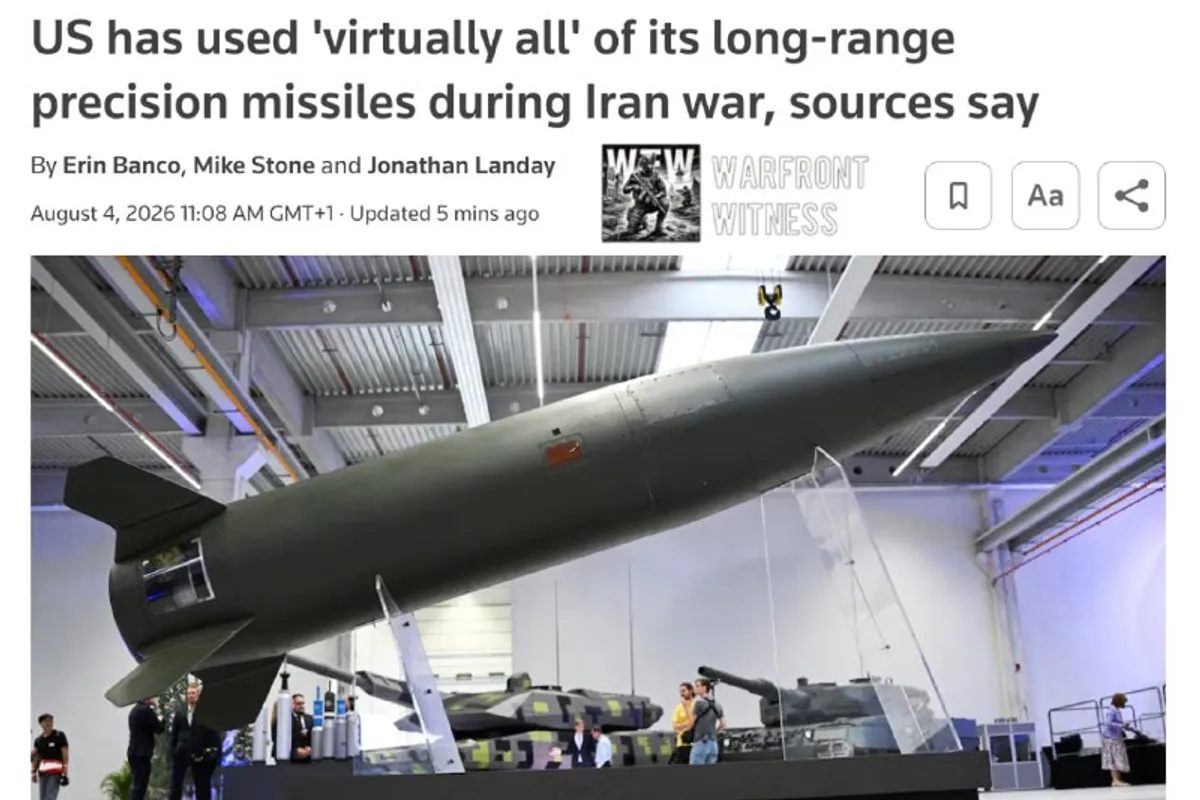
After five months of intensive military campaign against Iran, the United States has expended nearly all of its advanced long-range ground-based precision missile stockpiles. According to information released by Reuters on Tuesday, citing three sources familiar with internal military assessments, Washington has fired "practically all" available ATACMS and PrSM missiles since the conflict began in February 2026.
The scale of ammunition expenditure has caused serious concern among defense officials who question the U.S. operational readiness for potential conflicts with China or Russia. President Donald Trump initiated the conflict alongside Israel with expectations of a quick conclusion, but the campaign has dragged on, and the administration faces increasing pressure as it has not secured congressional approval for the use of military force.
U.S. Central Command has practically emptied its pre-war regional arsenal of ground-based precision weapons. Commanders have been forced to replenish launch batteries in the Middle East by "cannibalizing" global U.S. military reserves. The strategy of targeting Iranian positions from extreme distances to avoid risking manned aircraft in heavily defended airspace has led to rapid consumption of these missiles, which cost millions of dollars each.
The issues are not limited to ground-based missiles. According to the same sources, Washington has used about 65 percent of its Patriot interceptors and more than 38 percent of its THAAD (Terminal High Altitude Area Defense) interceptors. U.S. Navy warships have simultaneously launched nearly half of the entire global inventory of Tomahawk cruise missiles.
These sea-launched missiles remain the primary tool for striking fortified positions without exposing pilots to danger. The situation is further complicated by the fact that production of older ATACMS missiles, which Ukrainian forces have used extensively against Russian targets, is being phased out. Significant new deliveries of the more modern PrSM missiles are not expected before 2027. Defense contractors Lockheed Martin and Raytheon are attempting to expand production capacities, with Raytheon recently signing a preliminary multi-year contract with the Pentagon to drastically accelerate Tomahawk production.
Despite documented shortages, the administration continues to project an image of logistical dominance. President Trump stated that Washington retains absolute superiority in global ammunition stockpiles. "Our defense companies are producing more ammunition than ever before, expanding their factories and equipment at record levels," Trump said, according to sources.
The Department of Defense firmly reiterated the executive branch's stance. Chief spokesman Sean Parnell insisted that the armed forces retain absolute operational flexibility on a global scale. "The U.S. military is the most powerful in the world and has everything it needs to act when and where the President chooses," Parnell said.
However, sources also point to internal disagreements. While military advisors warn that sustained long-range bombardment undermines the fundamental strategic deterrence needed for other global flashpoints, one U.S. official claims that the White House's recent decision to abandon a major offensive was dictated by diplomatic pressure from Gulf states, not by reduced missile stockpiles.
Although there is no direct connection to Croatia, the serious depletion of U.S. military stockpiles could long-term affect the security balance and deterrence credibility within the NATO alliance, of which Croatia is a member.