US Nearly Exhausted Long-Range Missiles in War with Iran
Pentagon insists it has sufficient capacity, but sources warn of severely depleted stockpiles of key weaponry after five months of conflict.
Pentagon insists it has sufficient capacity, but sources warn of severely depleted stockpiles of key weaponry after five months of conflict.
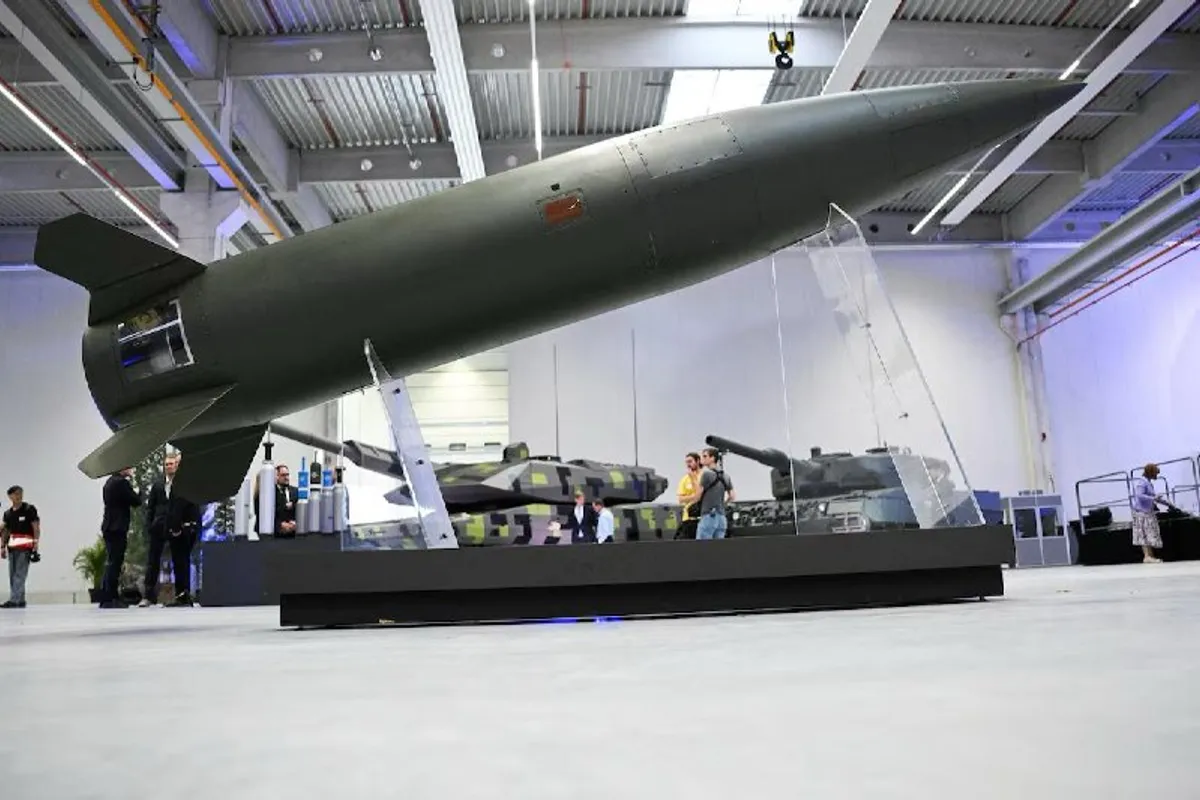
The US military has expended a significant portion of its stockpiles of high-precision long-range missiles during the five-month war with Iran, three informed sources told Reuters on August 4, 2026. According to them, Washington has used "nearly all" of its ground-launched ATACMS missiles and the next-generation Precision Strike Missiles (PrSM).
In addition, since the start of the escalation, slightly less than half of the sea-launched Tomahawk cruise missile inventory has been consumed. A fourth source familiar with the situation added that Central Command, responsible for US forces in the Middle East, has nearly exhausted the ground-launched missiles available to it before the war but has managed to replenish some stockpiles by redirecting from other parts of the world.
Sources told Reuters they are concerned that reduced missile stockpiles could limit the US ability to deter potential adversaries, including Russia and China. During the conflict with Iran, the US military launched ATACMS and PrSM missiles primarily from M142 HIMARS multiple launch rocket systems deployed at forward bases in allied Gulf countries and regional outposts.
These missiles were used to strike high-value fixed Iranian military targets, including air defense radar installations, fortified command bunkers, drone launch sites, and underground ballistic missile silos deep within Iranian territory, without exposing US aircraft to surface-to-air threats. Also targeted were anchored Iranian warships and coastal anti-ship missile batteries to secure surrounding maritime corridors.
Stockpiles of air defense systems have also been significantly reduced. According to data from the Center for Strategic and International Studies (CSIS), confirmed by agency interlocutors, from February to July, Americans used about 65% of Patriot interceptors and at least 38% of THAAD anti-ballistic missiles.
The administration of President Donald Trump requested $87.6 billion from Congress in July for "urgent needs," most of which is related to the war in Iran. The fiscal year 2027 budget also proposes $95 billion for ammunition procurement, plus an additional $21 billion war supplemental request. The military recently signed a contract with Lockheed Martin worth up to $58.6 billion for the production of Patriot interceptors.
Asked for comment on the state of stockpiles, the White House issued a statement from President Trump claiming the US has "far more ammunition than anyone else in the world" and "far more than we need." "Our defense companies are currently producing more ammunition than ever before, expanding their factories and equipment at record levels," Trump added.
Pentagon spokesman Sean Parnell stated that the US armed forces are "the most powerful in the world and have everything necessary to carry out tasks at the time and place chosen by the President." "We have conducted numerous successful operations within various combatant commands, while ensuring that the US armed forces possess a broad arsenal of capabilities to protect our people and our interests," Parnell said. US Ambassador to the UN Mike Waltz also earlier assured that the US "has everything necessary" to conduct the campaign against Iran.
According to Reuters, military advisers claim that President Trump has reportedly decided not to launch a new offensive in Iran precisely because of depleted missile stockpiles. Other sources, however, claim that pressure from Gulf countries influenced the decision.
Meanwhile, Secretary of State Marco Rubio stated on August 4 that negotiations with Iran on strategic waterways, mediated by Oman, have made "progress," but "there is no finality yet." "The straits are open," Rubio said, adding that he hopes an agreement will be reached "very soon."