The tragic case at the Zagreb Zoo, where a male lion killed a lioness just days after their arrival from different zoos, has reignited debates about keeping large predators in captivity and their adaptation. Zoology professor Igor Trbojević, speaking to N1, emphasized that it would be unprofessional to draw conclusions about the causes of the tragedy in advance, and that experts should have the final say after the investigation is completed.
There is no internationally prescribed adaptation period
Speaking about the Zagreb case, Trbojević stressed that the length of the adaptation period is not a decisive factor. "It would be unprofessional to claim in advance whether there was a professional oversight or not. What I can say, based on known zoological practice, is that I am not aware of any scientifically established and internationally prescribed minimum adaptation period," Trbojević told N1.
He added that the decision is not based on the number of days spent in adaptation, but rather on the animals' behavior during the process of introduction and adjustment. He also recalled a nearly identical case from 2022 at the Birmingham Zoo in the United States, where a male lion killed a female despite months of adaptation.
"The situation was almost identical, the male killed the female, even though they had been in the adaptation and introduction process for months. Therefore, it truly cannot be said whether the adaptation period here was too short, because there is no predetermined time for how long an adaptation must last," Trbojević said for N1.
A zoo cannot replace nature
Commenting on debates about the justification of zoos, Trbojević pointed out that modern zoos are no longer just places to observe animals. "Modern zoos today are no longer conceived as places where people just come to watch animals. Their primary role is the conservation of endangered species, scientific research, public education, and participation in international programs," he told N1.
However, he warned that no zoo can fully replace a natural habitat. Large predators in the wild use territories ranging from tens to hundreds of square kilometers, and no enclosure can provide such space and the complexity of the natural environment. "The goal is not just for the animal to be healthy, but also to be able to express as much of its natural behavioral repertoire as possible," he added.
What to do if you encounter a bear or a wolf?
Trbojević gave N1 concrete advice for encounters with large predators, emphasizing that people are more afraid than there is actual reason to be. "Bears, wolves, and lynxes in most cases avoid humans and will do everything to avoid an encounter altogether," he said.
He explained that during the summer, some animals approach settlements primarily in search of water and food. "Large predators do not come to settlements because they have lost their fear of humans. They come because of their natural, biological, and physiological needs. On the other hand, if a secondary food source is easily accessible, if people leave garbage, open containers, food scraps, or if orchards and livestock are not adequately protected, then we are essentially inviting these animals to come near our settlements," he warned.
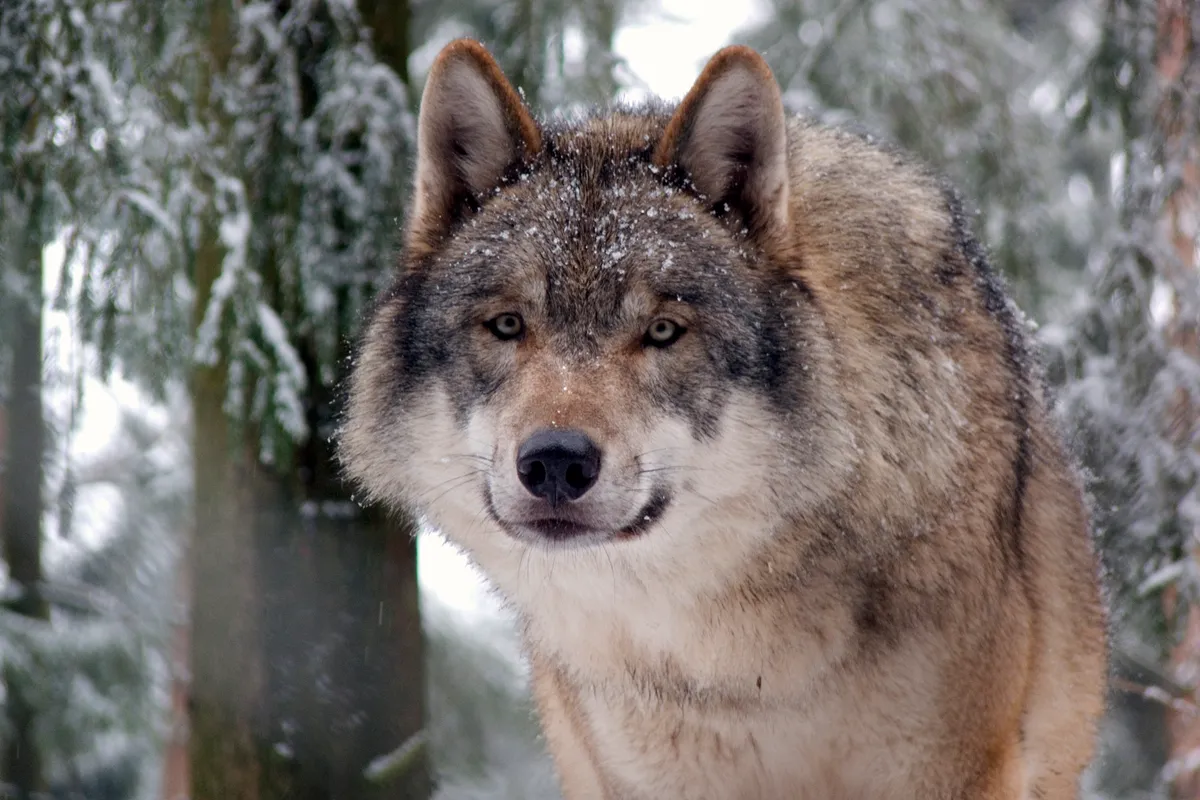
When encountering a wolf, the most important thing is to stay calm. "The wolf is an extremely shy animal and will do everything to avoid an encounter with a human. Confirmed attacks by healthy wild wolves on humans in Europe and worldwide are extremely rare. If you do see one in nature, it is enough to stay calm, stand upright, do not try to approach it, and give it enough space to move away," Trbojević advises.
The situation with a bear is more complex, and the outcome depends on numerous circumstances, whether it is a female with cubs, or whether the animal is surprised or caught off guard while feeding. "What there is a professional consensus on is that you should remain as calm as possible, no matter how difficult that may be. You should avoid panicked running, as predators may perceive such behavior as prey behavior. Do not approach the animal, but allow it to move away," he said.
The professor added that it is much more important to teach people how to avoid encounters altogether than how to react when one has already occurred.
Foxes should not be fed; snakes do not attack without reason
He also addressed foxes, which are increasingly seen near settlements, warning that people should not feed them. "A wild fox can lose its fear of humans if it is regularly fed by them, but that does not mean it is domesticated. It is still a wild animal, and its behavior remains unpredictable," Trbojević told N1.
He advises that wild animals should be observed exclusively from a distance. "Wild animals should be observed, photographed if we have the opportunity, and enjoyed, but we should never try to tame or feed them. They are specialists in finding food, and it is not our job to feed them. Let them remain wild," he urged.
In the case of a snake bite, the most important thing is to stay calm, limit movement of the injured limb, and seek medical help as soon as possible. "When it comes to the horned viper and the adder, it is not advisable to cut the wound or attempt to suck out the venom. That is a cinematic depiction that can cause additional problems. Also, do not apply a tourniquet to the limb, as this can cause further complications," he warned.
Trbojević concluded that killing animals should not be the first response to a problem. "In the vast majority of cases, conflicts can be prevented through preventive measures, better property protection, and responsible human behavior in nature. The most successful protection of people and wildlife is not their removal, but preventing conflicts from occurring in the first place," he told N1.
Record year for the Zagreb Wildlife Rehabilitation Center
Meanwhile, the Wildlife Rehabilitation Center of the Zagreb Zoo announced that in the first half of 2026, it received 1,011 animals, which is 143 more than in the same period last year. "This year, for the first time, the Center has cared for more than a thousand wild animals already in the first half of the year," said Ivan Cizelj, director of the Zagreb Zoo Institution.
Of the total number, 238 individuals belong to strictly protected species, while 773 are unprotected species. Veterinarian Jadranko Boras revealed a detailed list of patients: "Among the protected species in the first six months of 2026, bats were the most numerous, as many as 54. We also received 28 kestrels, 22 little owls, 20 tits, 17 buzzards, 13 storks, 11 common buzzards, 8 redstarts, 7 woodpeckers, and 6 noctule bats." The list also included two white-tailed eagles, a weasel, a white stork, a fire salamander, and a tree frog.
Animals of unprotected species arrive from the area of the City of Zagreb, while protected species come from other parts of Croatia, as the Center is one of about ten authorized places in the country for providing veterinary care to such animals.