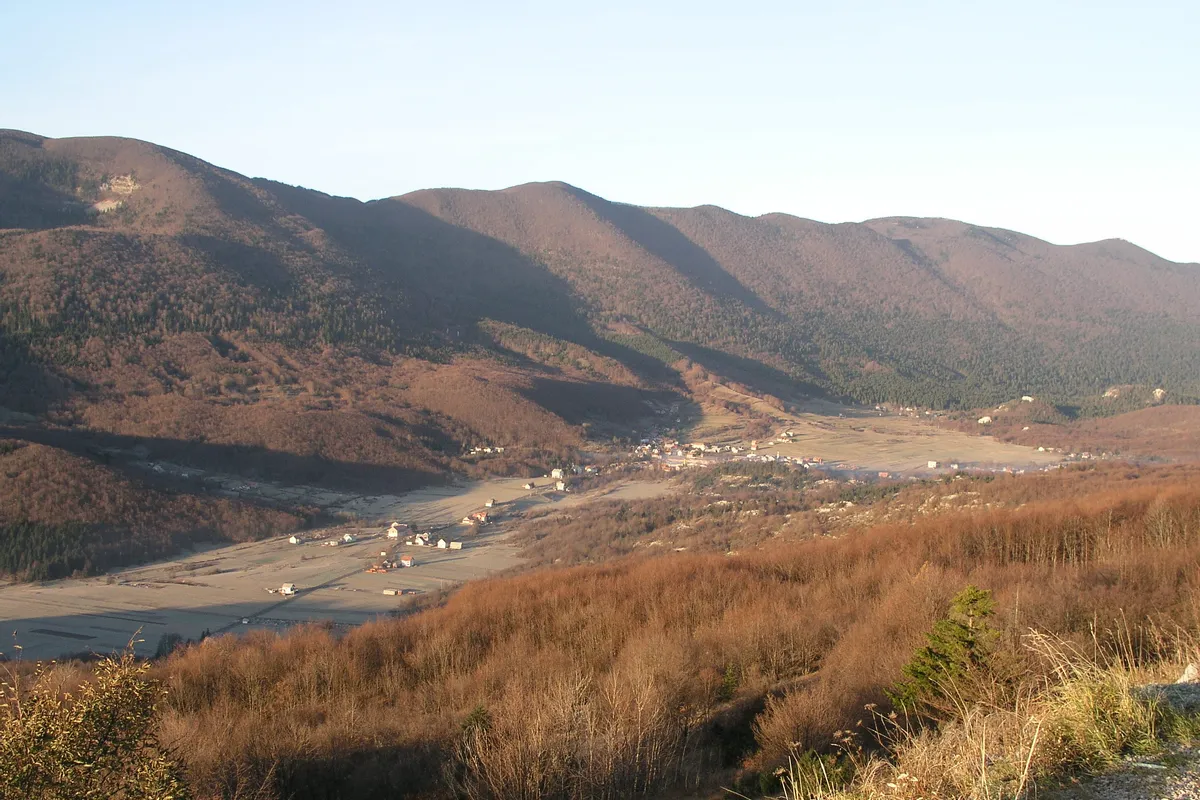
Rev. Stjepan Zeba, today the parish priest in Krasno, and in 1995 the parish priest in Gospić, entered Podlapača, his first parish, liberated in Operation Storm, on August 6 of that year, alongside members of the Croatian Army. He had been unable to return there since the summer of 1991. "There's our priest, Stipe!" the parishioners recognized him among the soldiers, Zeba recalls for Novi list.
The reunion with the villagers after four years of exile was emotional to the point of tears. "I told them: 'Don't be afraid, these are our people now.' Then there was an outpouring of joy, beauty, and camaraderie. And so I celebrated Mass for them. I was overjoyed, elated. We all wept," Zeba describes. However, the memory also carries painful scenes of civilian casualties inflicted by Serbian forces before Operation Storm, including the killing of elderly people and a fifteen-year-old boy on the threshold of his own home. "When Operation Storm came, it was truly a salvation," he emphasizes.
From Building Parishes to Spiritual Support on the Front Lines
Stjepan Zeba began his first priestly service in 1986 in Bilaj, Ribnik, and Podlapača, where he was sent by Archbishop Josip Pavlišić of Rijeka-Senj. He found ruined parish houses, but he lived with the people and built. He moved into the new parish house in Bilaj on March 31, 1991, Bloody Easter, when police officer Josip Jović was killed near Plitvice. "We must send a priest there to gather our people," Zeba recounts the words of Archbishop Pavlišić, who believed in his strength to uplift that region.
In May 1991, he played a key role in holding the referendum on independence, personally transporting handmade ballots from Podlapača to Gospić because the responsible municipality with a Serbian majority had not delivered them. "When the rebel Serbs found out, I could no longer cross the barricades, and some Podlapača residents were captured and taken to Knin, where they were tortured and interrogated," Zeba recalls.
Siege, Fear, and Organizing Defense
Open conflict in his parish began on July 22, 1991, with an attack on the village of Barlete. Police officers from Rijeka joined the defense, and special forces from Krapina and Zabok descended from the Ljubovo pass after being surrounded. "About fifty police officers held Bilaj and Ribnik as long as they could. They succeeded, so we survived, and our army gradually organized, and defense began to take shape," Zeba says.
In late August and early September, Bilaj and Ribnik were completely cut off from Gospić for about twenty days. "We breathed a sigh of relief then; it was easier because we had all been in uncertainty and fear. We slept in caves, cellars, and wherever we could," he describes. The church in Bilaj was set on fire on September 10, and the one in Ribnik was riddled with tank fire from Divoselo. Zeba then took on the role of crisis headquarters commissioner and actively engaged in logistics. "We went to fight for the people, to bring food because there was no more food or shops. We founded Caritas, distributed supplies to people, brought supplies to the army, and sought equipment, goods, and everything else. We also procured what was needed at the port in Rijeka," he recounts.
Faith Under Shelling: "God Himself Saved Us"
After the liberation of the barracks in Gospić in the second half of September 1991, Zeba began celebrating Mass for soldiers in the cinema hall, and in January 1992, Archbishop Tamarut administered the sacrament of confirmation there. In the summer of 1992, Zeba officially took over the Gospić parish. His role was primarily moral and spiritual support, he did not carry weapons but was a pillar for soldiers and civilians. "Morale was extremely important. Especially 1991 was somehow the worst, the hardest for us, because you have nothing to defend yourself with," he emphasizes. The soldiers, he says, became deeply religious, praying the rosary on their own initiative, even in the caves where they hid.
He particularly remembers a soldier named Štef from Marija Bistrica. A piece of shrapnel hit his rifle and knocked it out of his hands, but he remained unharmed. "'Father, you see, when I return to Marija Bistrica, I will bring the biggest candle to the Lord. How God saved me!'", Zeba quotes his words. He himself witnessed inexplicable rescues: "There were so many cases where shells fell, and we hear the whistle of the shell, we hit the ground, it lands three meters from us and doesn't explode. So tell me, is that a miracle or not? That's why we prayed to God, and I can say: yes, God Himself saved us."
"You Didn't Go to Kill Him, You Were Defending Yourself"
Zeba was aware of the burden carried by those who fire at a person for the first time, even in defense. He recalls a soldier who hit a tank with a rocket launcher and then didn't eat for three days. "None of us were warriors or experienced in all that. So I had to be with the people, encourage them, give them courage, to get through all the hardships and troubles. So that people know they can have a clear conscience," he explains. His message was clear: "You didn't go to kill him, you were defending yourself. If you let him go, you know there will be a massacre. You have no choice, aim, stop him."
He drew strength from his faith and his father's advice. "My father guided me in many things, taught me and my brothers to remain humane. And that was my strength. I tried to encourage others and always protect my own." It was his father's maxim that became his life motto: "Son, never start a fight, but if you are attacked, defend yourself." That is why, he says, as a priest he always cherished the idea of "keeping one's dignity and protecting one's own, even at the cost of one's life."
Helping His Homeland and Post-War Reconstruction
When things got tough in Bosnian Posavina, his homeland near Derventa, in the second half of 1992, Zeba began going there as often as he could. "I helped with my experience, because things were more stable here. My mother and brothers were there, so I visited them. Some volunteers from here also went to Posavina, and they held out as long as they could. Our village fell around August or September 1992. Posavina also fell, but there was great resistance and heavy fighting," Zeba says.
After the war, he remained in Gospić, rebuilding the church, caring for parishioners, and also restoring the church and parish house in Podlapača.
From Korenica to Krasno: Rebuilding Churches and Gathering People
After that, Zeba served in Korenica for fourteen years, where about two thousand Croatian Catholics, refugees from Bosnia, had settled. In addition, he administered parishes in Bunić and Plitvice, and then for four years from Korenica he also visited Donji Lapac, Boričevac, Srb, and Bijelo Polje. "We initiated the construction of a church in Donji Lapac, restored the church in Boričevac, bought a plot in Srb for a chapel, and the construction of that chapel is now nearing completion," he lists.
Since 2017, he has been the parish priest in Krasno, where for years he has nurtured the idea that the Shrine of Our Lady of Krasno should become the national shrine of Croatian veterans. He recalls that pilgrimages from Gospić to Krasno began as early as 1993, and a particularly grateful pilgrimage was held after Operation Storm in 1995. "There were quite a few of us, certainly 150. Of that number, fifty were soldiers who went to give thanks to Our Lady," he recalls. Work is underway on the outdoor altar and canopy, and everything should be completed by 2027.
In conclusion, Zeba emphasizes the fundamental message that guided him through the war and life: "Being humble and modest does not mean I will allow someone to destroy and trample me. If you see someone armed coming, of course you will defend your wife, children, father, mother. You defend yourself because you are attacked and you want to prevent your own from being killed. That's why I always told our people, we are defenders, and that means we defend what is ours."