Prolonged heatwaves that have been scorching Croatia for weeks are leaving ever deeper consequences on agriculture and the economy. Professor at the Faculty of Agriculture in Zagreb, Ivica Kisić, did not hide his concern in an interview with HRT, stating that our future is not bright.
Although extreme temperatures are not new to this region, what sets 2026 apart is the persistence of the heat. "We have already had such maximums, that's not new, but the problem of 2026 is the length of these heatwaves," warned Kisić. He reminded that the absolute Croatian record of 42.8 degrees Celsius was measured on August 4 or 5, 1981, in Ploče.
Colleague climatologists predict even worse scenarios
Professor Kisić also revealed a worrying forecast from a colleague in Austria. "Yesterday I read a text by a very respected colleague from Austria, climatologist Professor Jagar, and he says we must prepare because this will be the coldest year in 300 years. So, it will get worse," Kisić reported.
Temperatures exceeding 30 and 35 degrees Celsius, depending on the part of the country, did not let up throughout July and continue into August. "We have now simply had these temperatures for the entire July, and today is already August 12," he added.
When rain becomes the enemy
Paradoxically, precipitation does not bring relief either. Kisić cited Zadar in 2017 as an example. After three completely dry months during which "all of Dalmatia was burning," between 200 and 250 millimeters of rain fell on September 11 and 12, with a total of 450 millimeters that month.
"If you take the average, that was a fantastic year in Zadar in terms of precipitation, but the problem is that we are increasingly moving toward these extremes," he explained. "We will have more and more local problems with extreme amounts of precipitation. We are not interested in those extremes. We are interested in the average, but the average has recently become a very misleading indicator that we can no longer use."
An invisible threat beneath the ground
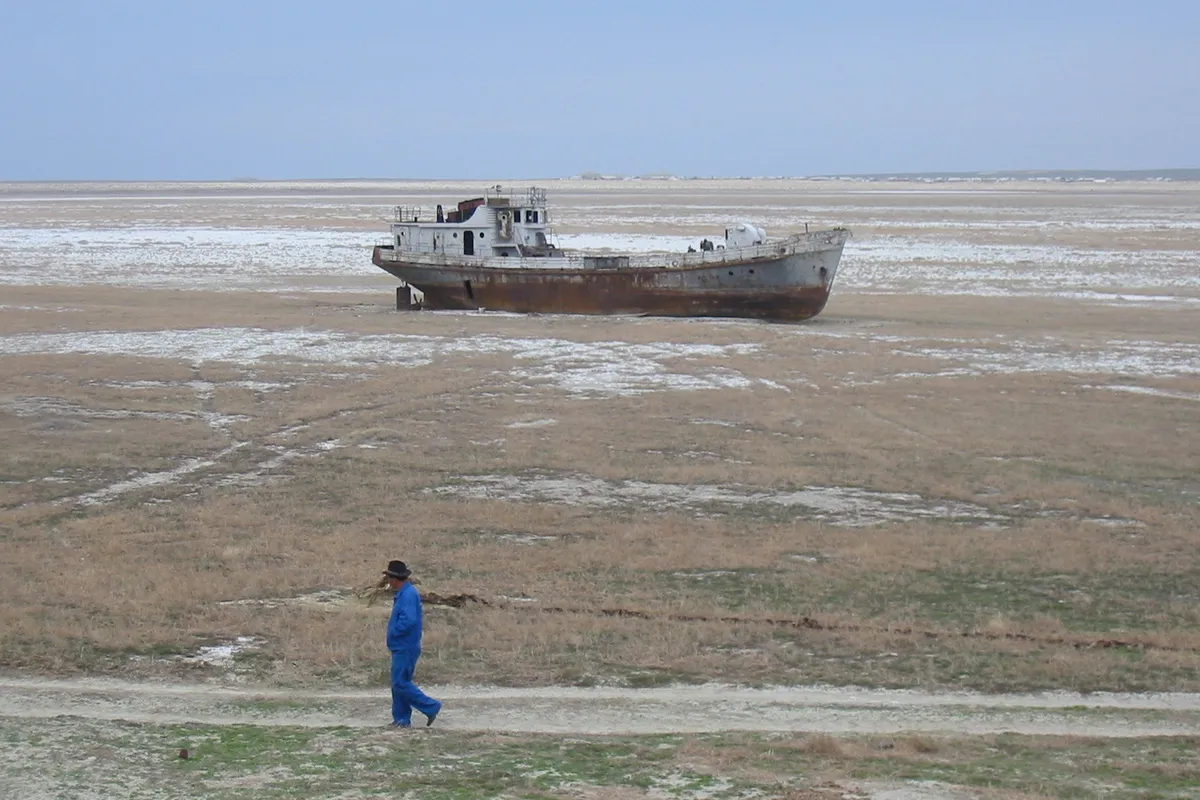
Perhaps the most serious problem is unfolding far from the public eye. "Very soon, most plants will simply no longer be able to reach that groundwater with their root systems," warned Kisić, announcing the onset of desertification that is already present in Croatia.
As confirmation, he cited data from colleagues at the Faculty of Forestry who have recorded the disappearance of large concentrations of ash forests precisely due to the lowering of groundwater levels. The situation on Croatian rivers is concerning, although there are exceptions. "Perhaps the best situation is on the Drava because it has an opposite trend in water levels," he pointed out.
Southern Europe under attack, the north profits
Kisić emphasized that Croatia is not alone in this struggle. "In Europe, the further south you go, the sadder it gets. We had fires in Spain, fires in France, fires in Greece. The entire south of Europe is threatened by climate change."
The dividing line, according to him, breaks right around Croatia, from Rijeka through Slovenia, Vojvodina, Bulgaria, and Romania. North of that line, the situation is different. "These climate changes suit Poland extremely well. The probability of frost and everything else decreases for them," concluded Kisić for HRT.