Artificial intelligence is no longer just a tool for analyzing biological data. According to a report by Lika Online, which draws on an analysis from The Conversation, AI is increasingly entering the realm of genetic engineering and synthetic biology, while existing laws meant to regulate such technologies are falling behind their progress.
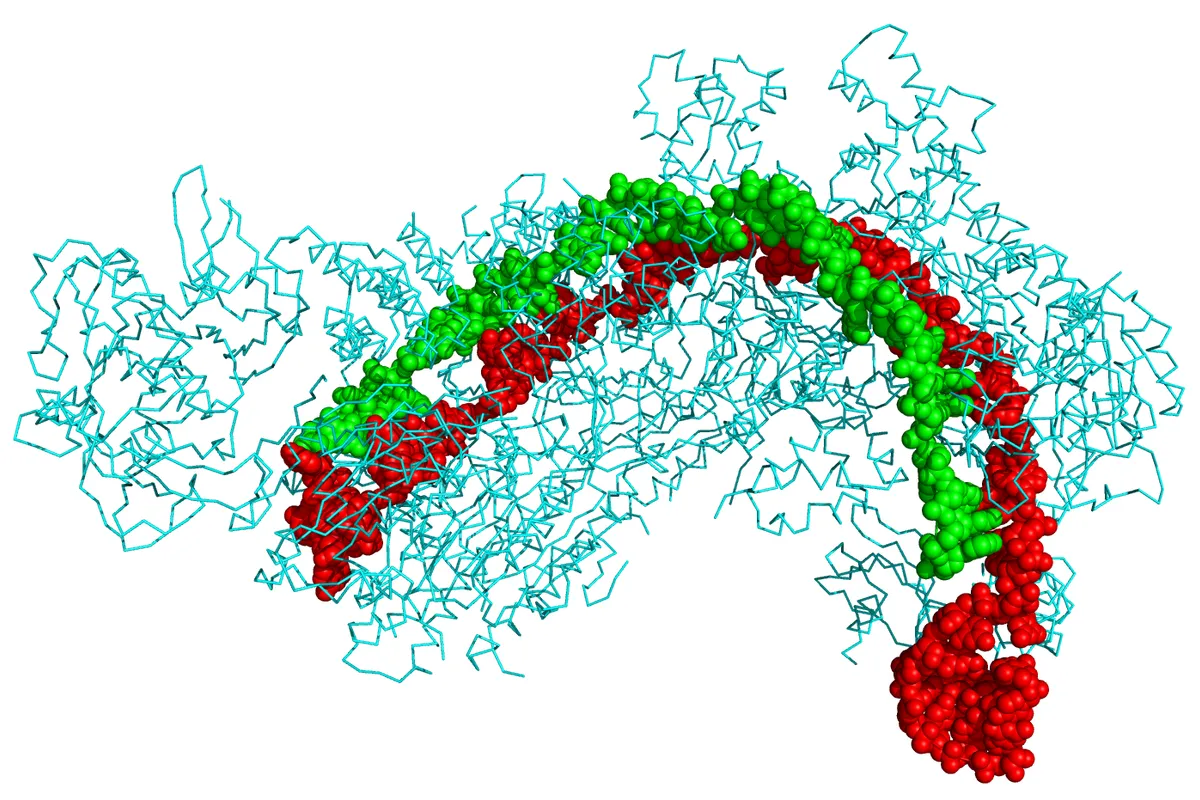
This issue became particularly evident after an experiment in which AI models designed entirely new bacteriophage genomes, and scientists, using those digital blueprints, successfully created functional viruses in the lab.
How AI Created Viruses
It's important to clarify right away what actually happened. AI did not independently produce a virus in a computer or release it into the real world. Instead, the system generated genetic blueprints-DNA sequences-after which researchers physically synthesized selected genomes and tested them under laboratory conditions.
Using the genome language models Evo 1 and Evo 2, a team of experts from Stanford and the Arc Institute led the research. These systems operate on biological sequences in a manner similar to how large language models work with text, learning patterns that exist in genomes and generating new genetic sequences.
The starting point was the bacteriophage ΦX174, a small virus that attacks bacteria. AI generated thousands of potential new genomes, and scientists selected about 300 candidates, which they then synthesized and tested. Of those candidates, 16 indeed produced functional bacteriophages.
Medical Potential, Not a Threat to Humans
It's crucial to emphasize that no viruses that attack humans were created. These are bacteriophages-viruses specialized in attacking bacteria. The experiment focused on E. coli, and the scientists deliberately limited their work to bacteriophages; the system was not trained to create pathogens that could harm humans, animals, or plants.
For this very reason, this research has potentially highly beneficial medical applications. Antibiotic-resistant bacteria are a growing problem, and bacteriophages are already being explored as a potential replacement or supplement to antibiotics. In laboratory tests, a combination of new bacteriophages managed to overcome the resistance of two E. coli strains that had become resistant to natural bacteriophages.
Regulatory Systems Not Keeping Pace with Technology
Chelsea R. Francek, in an analysis for The Conversation, particularly highlights that many existing laws were created at a time when today's combination of AI and biotechnology did not exist. Regulatory frameworks are often organized by organism type, product, or specific technology.
A good example is New Zealand. Its Gene Technology Bill is intended to replace parts of a regulatory system that relies on rules nearly three decades old, introducing an approach where the level of oversight depends on the risk of the specific technology. The bill remained at its second reading during 2026.
Australia already has a national system based on the Gene Technology Act of 2000, with a dedicated Gene Technology Regulator. In 2026, new consultations were held on amendments to the regulations.
The United States employs yet another, different model. Its Coordinated Framework for the Regulation of Biotechnology was introduced in 1986, with responsibilities distributed among the FDA, EPA, and USDA. In the U.S., more attention has traditionally been paid to the properties of the final product and its danger, rather than the technique used to create it.
The European Union has always had one of the most rigorous policies toward genetically modified organisms. In 2026, the EU finalized a new legislative framework for plants created using certain new genomic techniques, such as targeted mutagenesis. It's important to note that the new provisions apply exclusively to specific plants, not to all biotechnology or to viruses designed by artificial intelligence.
CRISPR Is Already Changing Medicine
The medical benefits of the convergence of AI and biotechnology are not hypothetical. In 2023, the U.S. FDA gave the green light to Casgevy, the first drug to use CRISPR/Cas9 for genome editing, intended for treating sickle cell disease. In July 2026, U.S. approval was expanded to children over two years old with specific forms of sickle cell disease or transfusion-dependent beta-thalassemia.
AI-created bacteriophages currently do not prove that artificial intelligence could trigger a new pandemic or that it will soon independently develop dangerous organisms. However, this experiment confirmed something that until recently was largely hypothetical: AI is no longer limited to analyzing existing life but can propose genetic sequences from which scientists can create something innovative in the lab.