Zagreb boasts a long and rich history that spans centuries, with its archival documents having been explored by writers such as August Šenoa and Marija Jurić Zagorka as they gathered material and inspiration for their literary works. Yet, the most famous enigma associated with Zagreb is likely the network of hidden passages beneath the old part of the city, particularly in the Upper Town and Kaptol, and even at Medvedgrad.
Three Tunnels Beneath the City
The truth about the tunnels under Zagreb was revealed by archaeologist Boris Mašić from the Zagreb City Museum in the podcast "Zagreb Talks" by the Zagreb Tourist Board. "The tunnels that exist are part of the infrastructure built during World War II. They served, like the Grič Tunnel, as shelters," Mašić explained.
He added that he believes there are a total of three tunnels beneath the city and pointed out that the Grič Tunnel also functioned as a shelter during the Homeland War. "It is one of the good examples of how infrastructure can be used for tourist and cultural purposes," he said.
The Medvedgrad Myth and the Hidden Passage
Mašić debunked the popular story about a connection between the tunnels and Medvedgrad. "There was also a story that one of them was connected to the Medvedgrad well. I have been in the Medvedgrad well; there is no tunnel whatsoever," the archaeologist stated candidly.
However, there is indeed another tunnel in the center, one that connects Tkalčićeva Street and Dubravkin put. "That's the one about which nothing is known; I think it's still in use, which is precisely why we know nothing about it," Mašić claims.
Sewage from the Century Before Last
The story about the tunnels, the archaeologist believes, may be linked to old sewage drains. "Recently, we had a story about a tunnel on Kaptol, but it was actually sewage from the century before last," he recalled. "These are large channels that lead down from Medveščak, etc., when the Medveščak stream was redirected," he elaborated.
He also explained how archaeological layers beneath the surface are protected. "Since Kaptol and the Upper Town are archaeologically protected zones, there is something called the protected historical urban whole of the City of Zagreb. Within it, during any works, archaeological supervision is required to prevent damage to the layers beneath," he said.
Walking Over a Cemetery on Cvjetni Square
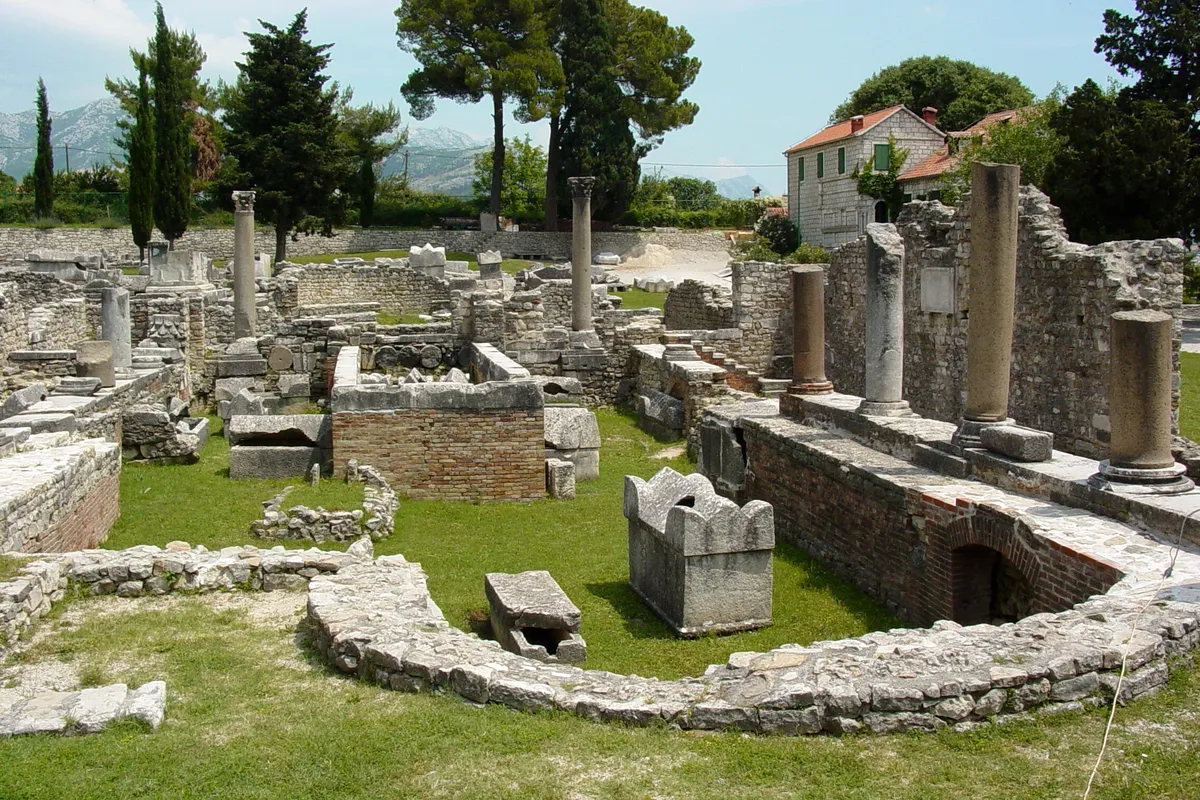
Mašić also spoke about the oldest cemeteries found in the wider city area. "The oldest are in Vrapče and Horvati; these are prehistoric cemeteries. Then you have roadside cemeteries from antiquity, from Roman times. That includes the cemetery at the intersection of Savska and Vukovarska, in Maksimir... Everywhere where Roman roads once ran," he said, then continued with more recent ones.
"The cemetery near the cathedral, next to the former Church of St. Emerik, the cemetery on St. Mark's Square, the early medieval cemetery in Držićeva Street. You have as many as you want throughout the city, those starting from the medieval period and the modern era. There you have them from St. Mark's, Grič, you walk over a cemetery on Cvjetni Square, under the maternity hospital in Petrova," he pointed out.
Burials in Grave Pits
These graves, however, differ in a certain way from what we today understand as a grave. "These are usually burials in grave pits; the deceased is placed in a coffin or without one, perhaps wrapped in something. You find them lying on their backs, sometimes on their sides when it's crowded. We had that example in the Franciscan monastery on Kaptol, where they layer one on top of another because of the crowding-everyone wants to be buried in that holy place," Mašić said.
Cemetery in Grič Park
When work began on the arrangement of Grič Park in 2003, a cemetery was discovered there. "That location is the only one in the Upper Town where there has never been any construction activity, except that we know part of the ramparts was demolished during its arrangement. We started digging in 2003 and stayed quite a long time; everything ended after 2015," the archaeologist concluded.