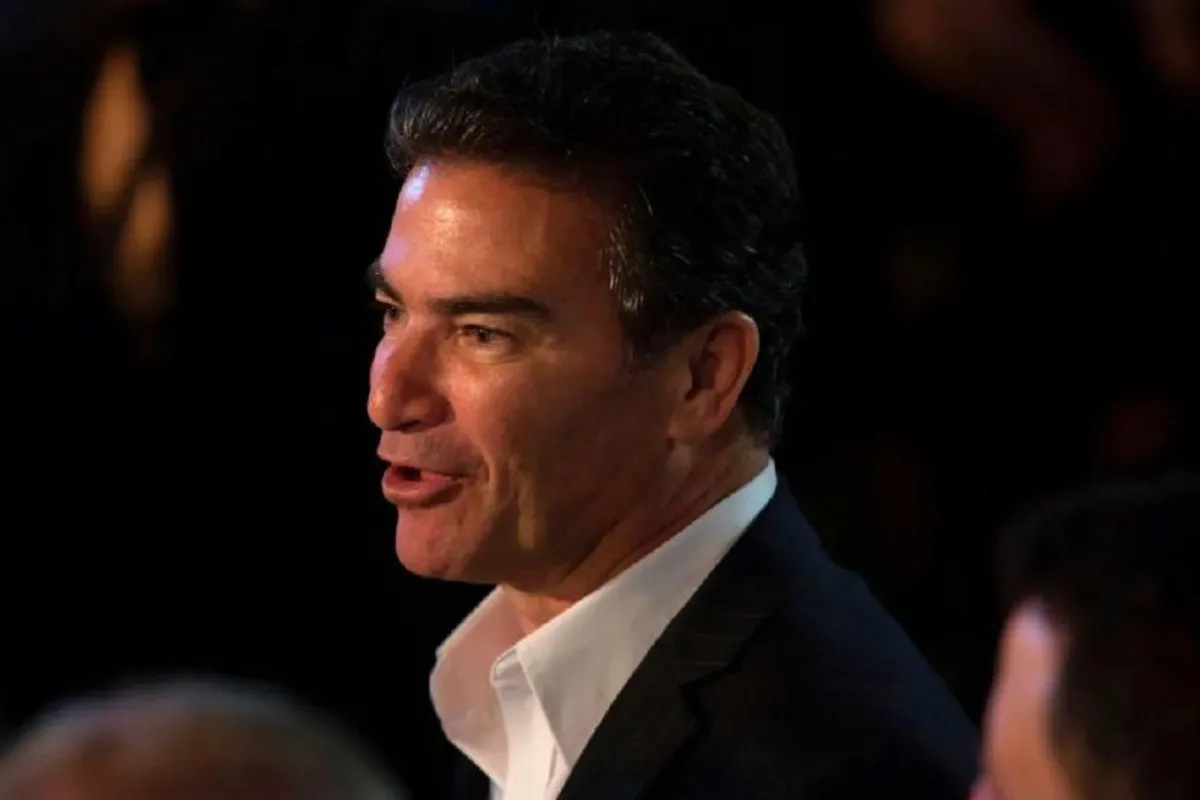
The former head of Israel's intelligence agency, the Mossad, Yossi Cohen, stated on Tuesday that its operatives had visited Iran's underground nuclear facility at Fordow "many times" in the past, with the aim of gaining a detailed understanding of the site. This revelation sheds new light on the scope of Israeli intelligence operations targeting Iran's nuclear program, which has been a focal point of tensions between the two countries for years.
"We toured the Fordow nuclear facility many times to understand the location," Cohen said at a conference of local authorities held on August 11, 2026, according to reports in Israeli media. However, he declined to elaborate on when exactly these visits took place or who carried them out.
A Dream Come True and a Long-Range Threat
Cohen, who led the Mossad from 2015 to 2021, also reflected on the American bombing of Fordow during the brief war in June 2025. "The bombing of that facility by the Americans was the fulfillment of all my dreams," Israeli media quoted him as saying. In the same address, Cohen assessed that Iran's uranium, enriched to 60 percent, was "still far from a bomb."
Israel launched a war against Iran in June 2025 with the aim of degrading its nuclear and ballistic missile programs, which it claimed posed an "existential threat." During the 12-day conflict, U.S. military forces briefly joined Israel, using their advanced aircraft to bomb three Iranian nuclear facilities: Fordow, Natanz, and Isfahan. Tehran has consistently denied seeking to produce nuclear weapons.
Close to Netanyahu and Linked to Scientist's Killing
Cohen, who is close to Israeli Prime Minister Benjamin Netanyahu, played a prominent role in brokering normalization agreements between Israel and several Arab states, including the United Arab Emirates, Bahrain, and Morocco, with U.S. mediation. Sudan also signed the Abraham Accords but never ratified or implemented them due to the subsequent war.
His name has also been linked to the killing of leading Iranian nuclear scientist Mohsen Fakhrizadeh in 2020, although Israel has never officially commented on the incident. After his tenure as head of the Mossad ended, Cohen remained in the public eye, giving frequent interviews to Israeli media and repeatedly hinting at a possible entry into politics, which has not yet materialized.