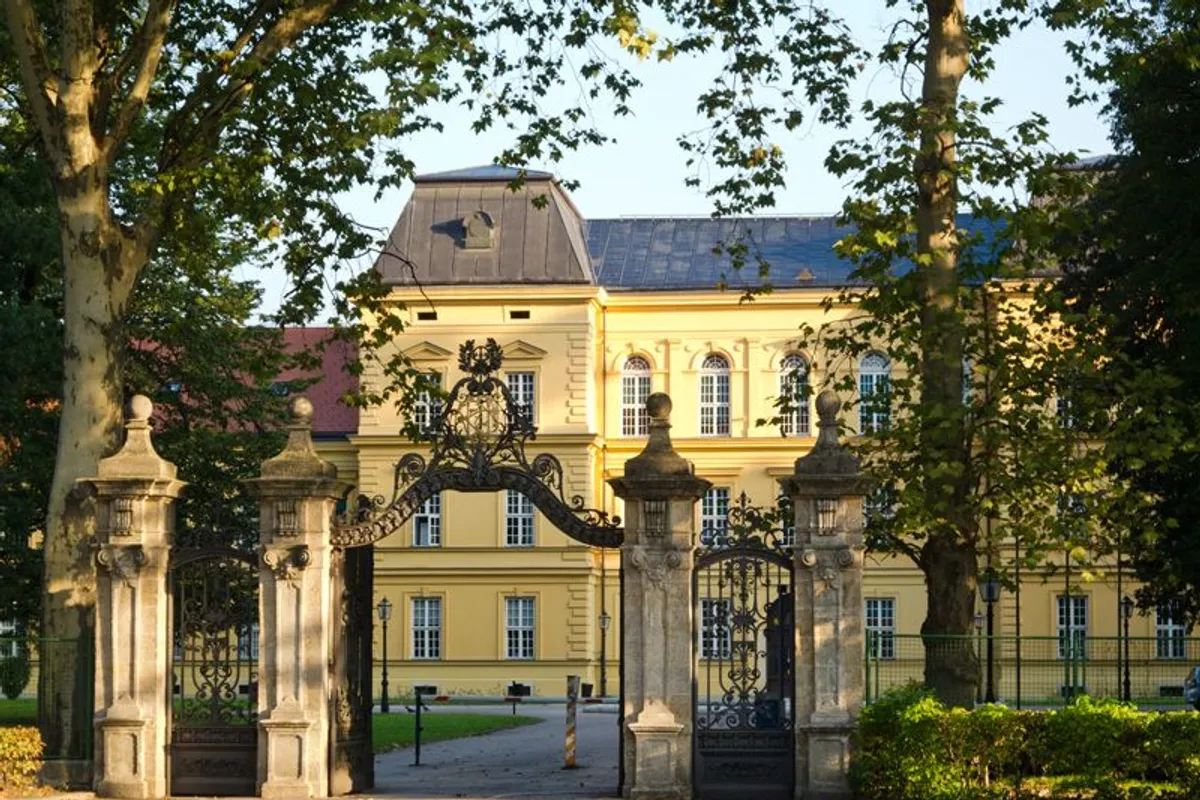
In the western part of Zagreb, spanning 1.7 hectares, lies the Vrapče Hospital Cemetery. Although little known to the general public, it represents a space of rich history where approximately 3,500 people have found their eternal rest over the years. The last burial at this site took place in 1977.
Founded for Hospital Needs and an Unusual Way of Maintenance
The Vrapče Psychiatric Clinic became the owner of the land in 1899 with the intention of securing space for burying its deceased patients. Over time, the number of graves rose to nearly 2,000, and in addition to patients and staff of the institution, their relatives and residents of the surrounding settlements of Vrapče and Kustošija were also buried there.
Interestingly, while the cemetery was under the hospital's jurisdiction, patients themselves were involved in its care. As part of work-occupational activities, they engaged in gardening and maintaining the surroundings, which for decades connected the daily life of the institution with this place. Just one year after the last burial, in 1978, the then Susedgrad Municipality made a decision to officially close it.
Wartime Tragedy and Notable Names
The darkest day in the hospital's history occurred on March 14, 1945, when 37 patients and nine staff members lost their lives in an Allied air raid. At the Hospital Cemetery, two mass graves still stand today, holding the victims of that attack, preserving the memory of the tragedy that unfolded just before the end of World War II.
This site also initially served as the final resting place for the renowned Croatian painter Slava Raškaj, who died in 1906 during treatment at Vrapče. Her remains were later transferred to the cemetery in Stenjevec, and in 1999 they were exhumed and returned to her birthplace, Ozalj. Also buried here is Dr. Ivo Žirovčić, the long-time hospital director, whose name is associated with the beginnings and development of modern psychiatry in Croatia.
From Plans for a Church to Legal Barriers
In 1994, the institution Gradska groblja took over the management of the cemetery. A few years later, in early 1998, at the initiative of parish priest Marijan Pavlović, the idea arose to build a church and a memorial ossuary where the remains of all the deceased would be consolidated. A competition was held, a contractor was selected, and an execution project for a pastoral center was developed, but the plan was abandoned after citizens requested replacement burial plots at Mirogoj.
The pivotal moment for the fate of this area came the same year with the enactment of the new Law on Cemeteries. Its provisions stipulate that a cemetery or part of it can only be relocated after at least one hundred years have passed since the last burial. Given that the last person was buried here in 1977, this timeframe becomes a decisive factor for any future interventions.
A Green Monument Out of the Public Eye
Today, this old cemetery has sunk into the greenery of Vrapče, mostly out of sight of everyday city bustle. Although the ravages of time and nature have left visible scars on many graves, the space still bears witness to the history of the Vrapče Psychiatric Clinic and the development of mental health care in Croatia. Behind the headstones lie the life stories of people who spent a significant part of their existence within hospital walls, during times when the stigma against mental illness was even more pronounced. The paths with benches that lead through the cemetery are now used by many walkers and cyclists as a shortcut between two Zagreb neighborhoods.