Married Couple Šincek Dumped 55,000 Tons of Waste Across Croatia
While the public is horrified by the pollution in Lika, the daily dumping of waste into the karst underground of Dalmatia goes without any reaction or sanctions.
While the public is horrified by the pollution in Lika, the daily dumping of waste into the karst underground of Dalmatia goes without any reaction or sanctions.
Josip and Monika Šincek, a married couple, did not dump municipal waste exclusively in Lika, where locals are concerned about possible groundwater contamination with PFAS chemicals, but also in Benkovac, Varaždin, and Senj. According to current findings, they have dumped over 55,000 tons of waste.
According to publicly available data, 37,000 tons were dumped in Gospić, 11,000 near Benkovac, 5,000 in Varaždin, and 2,640 tons in Senj. Transporting this amount of waste required 2,292 semi-trailer trucks, each with a capacity of 24 tons. If this waste were laid out in a line, it would stretch 41.3 kilometers, longer than the road between Split and Marina.
It has long been known that waste with toxic components was dumped at these sites. The alarm was raised after Chief State Attorney Ivan Turudić recently stated that analyses by the Faculty of Geotechnical Engineering showed that Lika is contaminated with hazardous waste.
In this ugly and sad story that speaks of a lawless state, since it took a full 20 years from the start of waste dumping in Lika to react to obvious illegalities, attention has been drawn to the information that the main suspect in the investigation into illegal waste management, Josip Šincek, participates in the "Wine Alka in Kutjevo" as part of the Graševina Festival.
He also participated in the international innovation exhibition in Geneva, where his work received a special gold award. Instead of "hiding in a mouse hole" because of the poisoning of such a large area of the state, Šincek is enjoying himself, perhaps even proud of his deeds, states the author of the article in Slobodna Dalmacija.
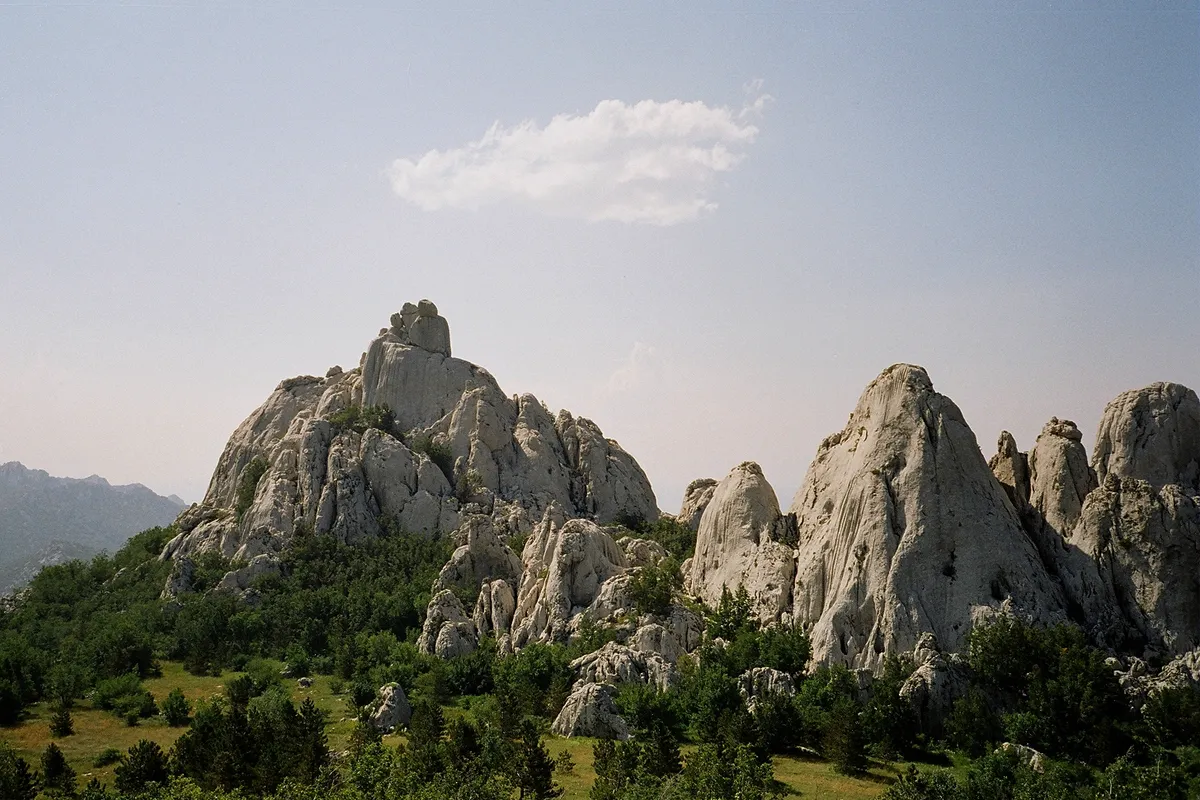
Like hundreds, thousands, and tens of thousands of others in Croatia, whose ecological awareness is "frozen" deep below the level of common sense. This especially applies to those who pollute in Lika and Dalmatia, where the underground consists of typical Dinaric karst. In that underground, due to the dissolution of limestone under the influence of water, a complex subterranean system has formed with thousands of caves, pits, sinkholes, and large underground reservoirs of drinking water.
Speleological organizations from Dalmatia are increasingly conducting waste removal actions from pits, especially those in the Dinaric karst. Their work is like that of Sisyphus because after cleaning one pit and moving to another, the first one becomes polluted again.
Šincek was a professional polluter; he charged handsomely for waste disposal. There are probably more such cases in Croatia, but they have not yet been discovered, and it is unknown whether they will be discovered or if efforts are being made to cover them up. Smaller polluters of the underground beneath the Dinaric karst are not prosecuted at all.
Also, no one reacts when a truckload of construction waste, mixed with plastic, construction chemicals, and other additives, is unloaded along a local road. Even when it is completely clear who is responsible for the pollution, no measures are taken.
Because of this, today in the hinterland of Dalmatia, along streams and rivers, there is no place where various types of waste have not been dumped, in smaller or larger quantities. A well-known speleologist and biologist from Split has publicly confirmed this many times, and during 50 years of work in speleology, he has entered the underground more than 1,500 times.
In the underground, he has seen all types of waste: plastic, construction materials, old furniture, household appliances, dead animals, weapons, ammunition, mine-explosive devices, packaging with pesticide and herbicide residues, and many other things.
And all this happens because, looking at us as a whole, we are great hypocrites. Today we are shocked by the knowledge of the pollution in Lika, but at the same time, we have difficulties separating our own municipal waste. Even worse, we find it easier to throw our own waste into nature than to make the effort to take, for example, electrical appliances to recycling yards, which exist in almost all cities and municipalities.
That's us. Citizens without ecological awareness. Not all of us, but a large number of people do it. Many of us are Šinceks. He took a significant amount of money for disposing of hazardous waste. We still do it every day, but unlike Šincek, without compensation. However, in the end, everything will have to be paid for. If not immediately by us, then certainly by our descendants, concludes the article in Slobodna Dalmacija.