A total of €5.57 billion, of which as much as €3.45 billion in EU grants, has been contracted and is being implemented through projects by the Ministry of the Sea, Transport and Infrastructure for the 2014-2020 and 2021-2027 financial periods. Croatia is thus in the midst of one of the largest investment cycles in transport infrastructure in its history, which will fundamentally change how citizens travel and live over the next decade.
Spaniards Build, Karlovac Becomes a Suburb
After four years since the first tender, construction of the second track on the Hrvatski Leskovac, Karlovac railway line has finally begun. The €348.5 million (incl. VAT) project is being carried out by Spanish company Comsa S.A., which signed a contract with HŽ Infrastruktura in July, with a completion deadline of 36 months, by the end of 2029. The project includes the reconstruction of the existing track and construction of a new one, electrification of 44 kilometers of line, new bridges, viaducts, power supply facilities, and the renovation of stations and stops, with trains set to reach speeds of up to 160 km/h on this section.
Karlovac Mayor Damir Mandić has repeatedly emphasized the project's importance for the city's development, many Karlovac residents work in Zagreb, and children go to university in the capital. With the new line, train travel will take just about 20 minutes, turning Karlovac into a highly desirable place to live outside the city bustle, with excellent transport links. A third lane for the motorway connecting the two cities is also planned.
Lowland Railway and Record-Breaking Tunnel Through Velika Kapela
The Hrvatski Leskovac, Karlovac section is just one part of the massive Zagreb, Rijeka lowland railway project, totaling around 175 kilometers, 56 kilometers shorter than the existing line. The project's centerpiece will be a future tunnel through the Velika Kapela massif, 14 kilometers long, making it the longest in Croatia, for comparison, the Sveti Rok and Mala Kapela tunnels together are just under 12 kilometers. The route also includes the construction of over 30 viaducts and tunnels, as well as five new stations and one stop. The entire corridor is expected to be completed by 2036.
New Bridge for Krk and the Istrian X
Among the major planned road infrastructure projects is the construction of a new bridge to the island of Krk with connecting roads, for which Croatian Motorways have already contracted study and design documentation up to the location permit level. Realizing this strategic project would improve the island's transport links with the mainland and create conditions for further development of logistics infrastructure.
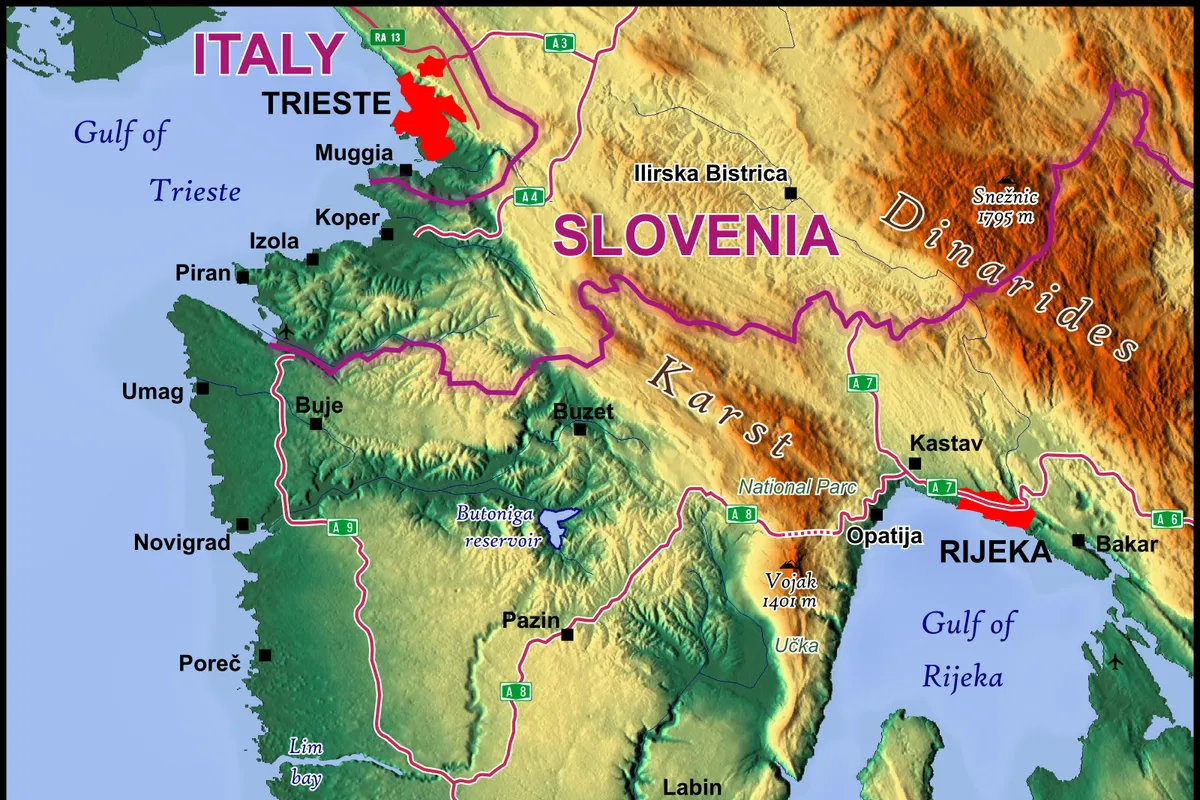
In Istria, the Istrian X project is being prepared, a new transport link connecting the eastern part of the peninsula with the Istrian Y, which entails the construction of a new motorway branch from the Žminj interchange toward Labin, about 20 kilometers long. Work is also underway to complete the Istrian Y in full profile, including the section from the Učka tunnel to Matulji, with a total value of around €200 million.
Trains, Ports, and Croatia Airlines' New Fleet
Minister Oleg Butković emphasized that never before has so much been invested in local and regional railways, in the railway sector, investments worth over €1.7 billion are underway, with a cycle of around €6 billion planned over the next ten years. Alongside infrastructure, the rolling stock is being renewed: 70 new low-floor trains are already in service, and by the first quarter of 2029, an additional €228.8 million will be invested in the procurement of 25 more trains.
Significant funds have also been directed to port infrastructure, with projects worth over €500 million. Croatia Airlines is in the midst of the largest project in its history, replacing its entire fleet with new Airbus A220 aircraft. By the end of July 2026, 10 of the 15 new aircraft had been delivered, with the tenth, named "Velika Gorica," being the world's first Airbus A220-300 finished in a special Star Alliance livery. The project is expected to be completed in 2027.
Slavonia No Longer a "Dead End"
Special emphasis has been placed on connecting eastern Croatia, where a network of expressways is being built, with the Podravski Y on the Vrbovec, Bjelovar, Virovitica, Hungarian border route being among the most important. Požega-Slavonia County Prefect Antonija Jozić, when signing the contract for the connection of Požega to the A3 motorway, stated that her county will no longer be "Croatia's dead end" and that the project will be a strong driver for the economy.
Investment is also being made in inland navigation, through EU funds and other sources, over €200 million has been invested in the 2014-2027 period, with a focus on developing infrastructure on the Danube River and at the Port of Osijek. The goal is to increase the share of river transport and connect Croatian ports with European transport corridors. The Ministry says the ultimate goal of all investments is to create a modern, safe, and connected transport system that will contribute to economic development, better connectivity of all Croatian regions, and a higher quality of life for citizens.