Croatia's industrial heritage loses yet another giant. After more than a century of continuous operation, the iconic paint and varnish factory Chromos ceases production in Croatia. The decision was made by its Japanese owner, Kansai Helios, which announced that production facilities will be relocated to Količevo in Slovenia and Gornji Milanovac in Serbia. In Zagreb, only the sales network will remain, closing one of the longest chapters in Croatia's chemical industry.
The end of domestic production marks the twilight of a tradition that began in 1920, when Chromos grew into the largest producer of paints, varnishes, plastics, and resins in the former Yugoslavia. At its peak in the mid-1980s, the conglomerate employed around 4,500 workers. Today, the picture is drastically different: only about a hundred people work at the Žitnjak plant, most of whom will lose their jobs, while Kansai Helios employs another sixty or so workers in Croatia.
From a Modest Workshop to Regional Leader
The story of Chromos began in 1920 when wholesaler Bernard Moster opened a small paint-mixing workshop on Radnička Road in Zagreb. The first facility employed about thirty workers, and in its first year, it produced around 500 tons of paints and varnishes. Rapid growth enabled the construction of the main factory building in 1923, after which the factory complex expanded to about ten buildings.
By 1940, the number of employees had risen to 162, and production exceeded 1,800 tons of paint. Alongside the parent company, Chromos is also the successor to the tradition of the eponymous Samobor printing ink factory, founded in 1923 by the German company Springer-Moller from Leipzig. The Samobor plant produced rotary ink used to print all newspapers in the then Yugoslavia, and by the late 1930s, they had also built a factory in Zemun.
After World War II, in 1947, Zagreb's Perunika (as the factory was briefly called) and Samobor's Chromos were merged into a single enterprise, "Chromos, Chemical Industry Zagreb," with a total of about two hundred workers. The founding of the Chromos Research Institute in 1955 marked the beginning of work on polymer synthesis, and a major merger in 1964 created the Chemical Combine Chromos-Katran-Kutrilin, which became the leading producer in the former state. In the 1970s, the combine was further strengthened by the companies Labud from Zagreb and Svjetlost from Slavonski Lužani.
Golden Era and Symbols of Power
Chromos reached its peak in the late 1970s and throughout the 1980s. In 1979, around 3,900 people worked in plants across Croatia, with annual production reaching 180,000 tons of various chemical products exported to about twenty countries, primarily to the then Soviet Union. Just a few years later, with 4,500 employees, Chromos was the absolute leader in the region, ahead of Slovenia's Helios and Serbia's Zorka from Šabac.
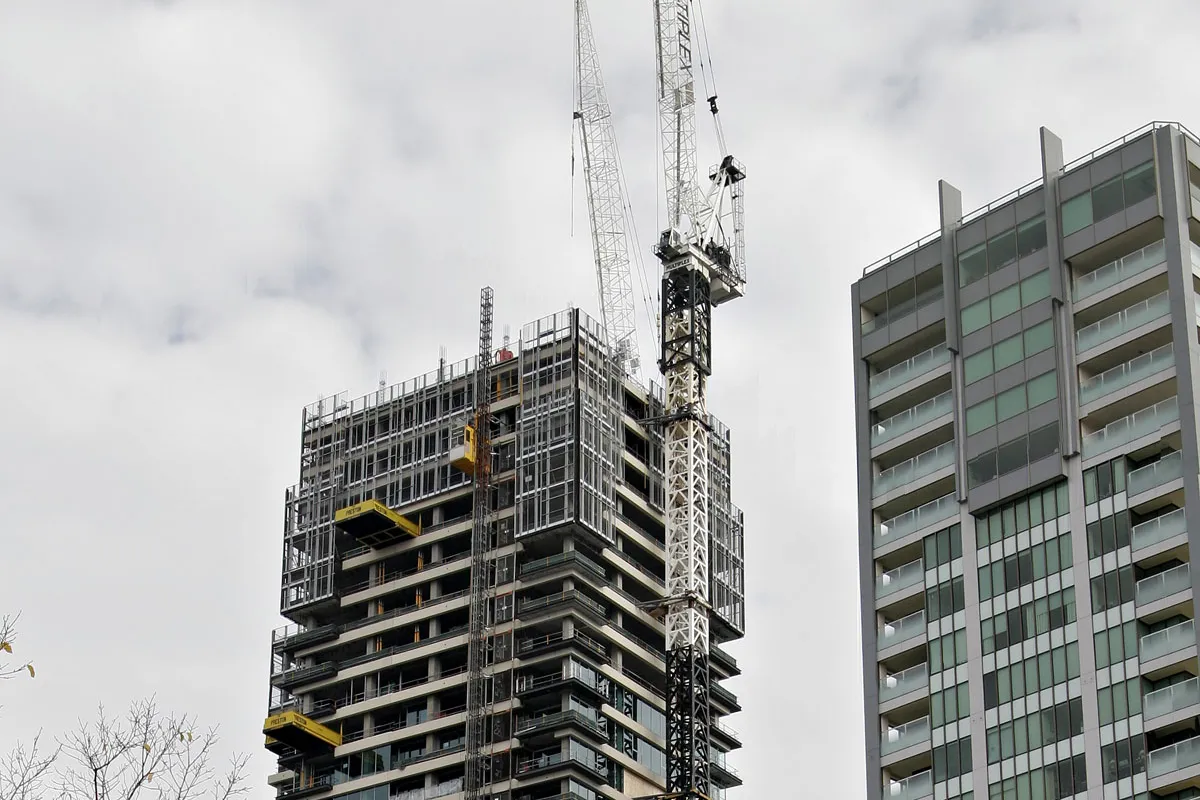
As the crowning achievement of that period, in 1989, the Chromos business tower was erected at the corner of Vukovarska and Heinzelova streets, designed by architects Marijan Turkulin and Petar Vovk. The fifteen-story, sixty-meter skyscraper is considered the last such building constructed in Zagreb before the Homeland War. Today, it houses offices for several dozen companies with around 600 employees, preserving the memory of the former headquarters of the combine.
Privatization, Controversies, and the Beginning of the End
The privatization in 1993 broke the giant combine into 16 independent companies. Four companies quickly went bankrupt, while the others continued operating under various owners. Chromos Tvornica smola (Resin Factory) now operates as part of the Scott Bader group, Samobor's Chromos d.d. produces printing inks as an independent company, and the former Chromos Aroma operates as Ireks Aroma in Jastrebarsko. The companies Chromos Argo, Katran, Kutrilin TPV, Komicro, Svjetlost, and Hempel also continued their operations.
A particularly controversial chapter concerns the sale of land. From October 1995 to June 1996, the president of the Management Board of Chromos boje i lakovi d.d. was Croatian Army General Slobodan Praljak, later convicted by the Hague Tribunal. It was his company, Oktavijan d.o.o., that in 1999 purchased 27,000 square meters of land for 4.4 million German marks. In 2003, the State Audit Office determined that the price was significantly lower than the estimated value: "In the conversion process, the said property was valued at 5,198,383 DEM, and the cost of acquiring an additional 1,137 m2 amounted to 1,102,039 DEM, totaling 6,300,422 DEM. The said property was sold for 1,900,422 DEM less than the estimated value and the cost of acquiring the additional area."
The Path to Shutdown
The key turning point came in 2001 when Chromos boje i lakovi was sold to Slovenia's Helios from Domžale, its former main competitor. Although the exact transaction amount is unknown, media estimates suggest the remaining assets were worth around fifteen million euros at the time. Helios took over the stakes of small shareholders and acquired ownership of the plant, brands, and patents.
Sixteen years later, in 2017, the Austrian owners Ring International Holding sold Helios to the Japanese corporation Kansai Paint for as much as 572 million euros. Now, Kansai Helios has made the final decision to halt production in Croatia.
"Chromos is a brand with deep tradition and invaluable heritage in Croatia, built on decades of dedicated work by our employees," said Goran Dolenec, director of Chromos boje i lakovi d.d. and KANSAI HELIOS Croatia d.o.o., in a media release. Ironically, the company that ended last fiscal year with a profit, after 106 years, becomes what it started as-a wholesale operation.