DFSK E5 Test: Hybrid SUV for 52,000 KM Shakes Up the Competition
The Chinese plug-in hybrid offers generous equipment, impressive fuel efficiency, and space for the whole family, at a price that's half that of its European rivals.
The Chinese plug-in hybrid offers generous equipment, impressive fuel efficiency, and space for the whole family, at a price that's half that of its European rivals.
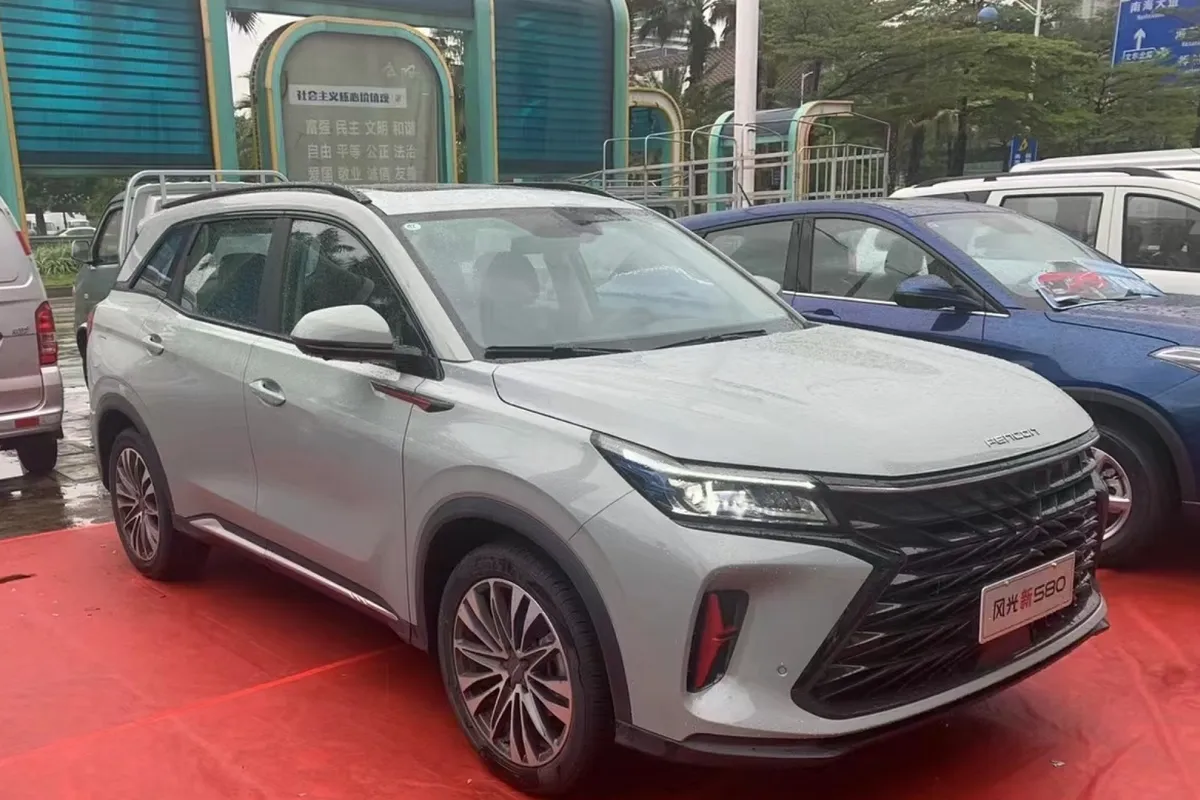
In a market where large seven-seat family SUVs with hybrid powertrains are often reserved for those with deeper pockets, a model has emerged that seriously disrupts the established rules. This is the DFSK E5, a plug-in hybrid that, for a price of around 52,000 KM in Bosnia and Herzegovina, offers what the competition charges twice as much for. The test conducted by Klix.ba reveals how many compromises this affordability entails.
Although it shares the basic silhouette with the petrol-powered 600 model, the hybrid E5 brings a series of subtle yet striking changes. The front is dominated by a modern "Dot Matrix" grille that gives it a futuristic look more befitting an electrified vehicle, and differences are also visible on the bumpers and the light bar. Inside, passengers are greeted by a dual-screen setup, with the 12.3-inch central infotainment display standing out. The materials, both visually and to the touch, far exceed expectations for this price class.
The base trim already includes a panoramic sunroof, heated and ventilated seats, and advanced driver assistance systems. But the real star is the space: with a length of 4,760 mm and a wheelbase of 2,785 mm, the E5 comfortably accommodates three rows of seats in a 2+3+2 configuration. Even with all seven passengers, the trunk offers a usable 347 liters, while folding down the rear rows provides a flat floor and a significantly larger space of 465 liters in the five-seat configuration.
At the heart of the E5 is a combination of a 1.5-liter naturally aspirated petrol engine (102 hp and 128 Nm) and a powerful electric motor (177 hp and 300 Nm). Together they deliver a total system output of 217 hp and 310 Nm of torque, enough for a 0-100 km/h sprint in just 7.4 seconds. The top speed is limited to 165 km/h, a common characteristic for plug-in hybrids.
The 17.52 kWh battery allows up to 87 kilometers of pure electric driving, meaning daily urban commutes can be completed without a drop of fuel. During the test, the overall average consumption ranged between 3.5 and 5.5 liters per 100 kilometers, which is very impressive for a vehicle of this size and power. The E-CVT transmission delivers power smoothly and without jerks.
However, the biggest drawback of the powertrain reveals itself on long highway drives when the battery is depleted. Then, all the burden falls on the naturally aspirated petrol engine, and cabin noise during harder acceleration becomes pronounced, while engine response weakens. An additional challenge is the power delivery exclusively to the front wheels, which makes wheelspin easy during sharper starts or on wet roads. The factory-fitted Atlas tires don't help either, and the test recommends replacing them with better-quality tires as the first step after purchase.
The suspension, combining MacPherson struts at the front and a multilink setup at the rear, is entirely tuned for maximum comfort. It excellently absorbs bumps and road imperfections, providing an extremely relaxed ride. On the other hand, body roll in corners is noticeable, and the steering offers little feedback, making it clear that dynamic driving is not a priority for this model.
With a price of 52,990 KM for the tested model, the DFSK E5 practically has no direct rival in the BiH market. For comparison, European or renowned Asian hybrid SUVs of similar dimensions and with seven seats, such as the Škoda Kodiaq PHEV or Hyundai Santa Fe, require an outlay of between 80,000 and 100,000 KM. The DFSK E5 may reveal savings on tires and doesn't offer a sporty feel, but the value for money, along with a seven-year or 150,000-kilometer warranty, is currently unmatched.
A key note for potential buyers remains that this kind of plug-in hybrid only makes sense with regular and disciplined battery charging. Otherwise, not only are the benefits of the technology not utilized, but performance is also not available to its full extent.