DHMZ issues red alert: Temperatures up to 38°C, weekend brings even greater danger
Rijeka region under highest warning level, doctors give advice on how to protect against heat
Rijeka region under highest warning level, doctors give advice on how to protect against heat

Since Thursday, July 30, 2026, Croatia has been hit by a powerful heatwave. The Croatian Meteorological and Hydrological Institute (DHMZ) has issued a red warning for the Rijeka region, with temperatures expected to reach up to 38 degrees Celsius. According to forecasts, the weekend will bring even greater danger from extreme heat.
According to the DHMZ report, Thursday will bring sunny and very hot weather across the country. Daytime highs will range between 33 and 38 degrees, with Zagreb expecting around 35°C. Morning lows in the interior will be between 13 and 18 degrees, and on the Adriatic between 21 and 26 degrees.
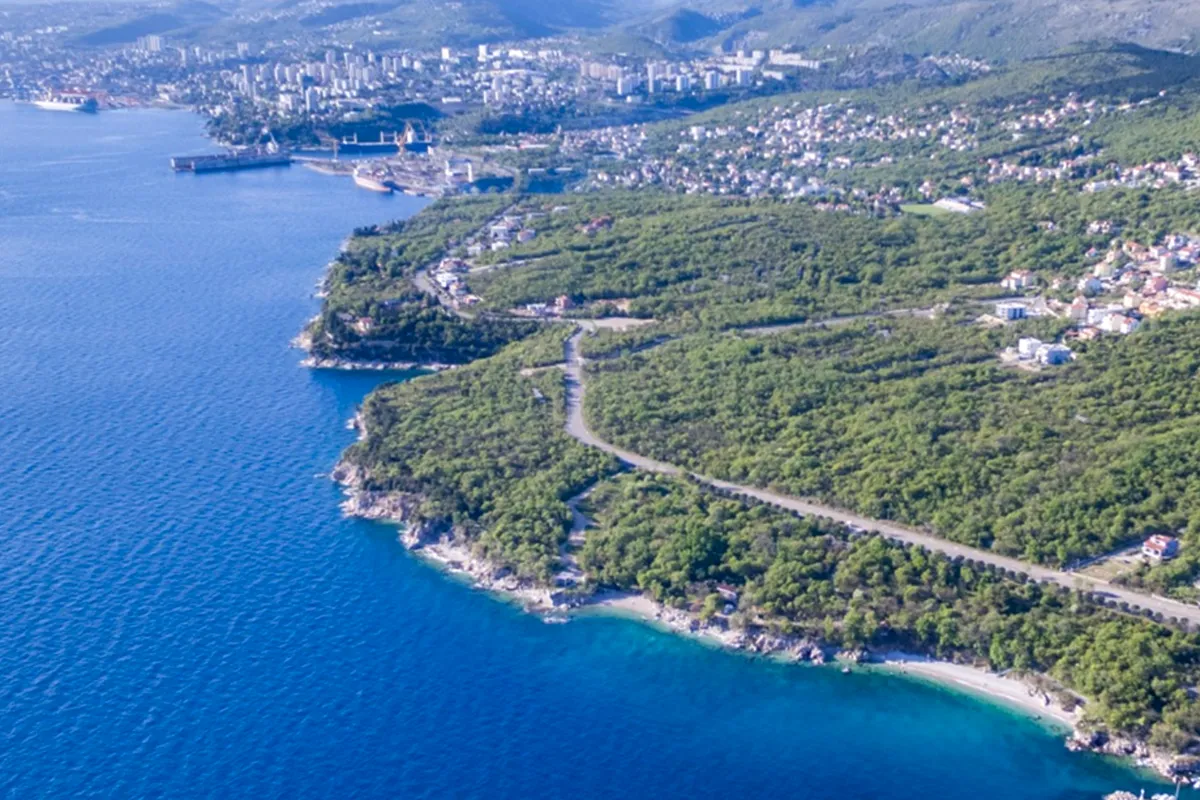
A red warning, indicating extremely dangerous weather, has been issued for the Rijeka region. Temperatures there are expected to exceed 35 degrees, with nighttime lows not dropping below 24°C, making rest difficult. An orange warning, signifying dangerous weather and increased health risks for sensitive groups, applies to the Zagreb, Split, and Dubrovnik regions, while the Osijek, Karlovac, Gospić, and Knin regions are under a yellow warning.
The heatwave will not let up on Friday, July 31. DHMZ predicts a red warning for the Rijeka and Dubrovnik regions, and orange for Zagreb, Karlovac, Knin, and Split. In Gorski kotar, there is only a very low probability of local showers.
On Saturday, August 1, a very high danger from the heatwave has been declared for the Zagreb, Rijeka, Split, and Dubrovnik regions. Additionally, on Sunday, August 2, the highest warning level will expand to include Karlovac and Knin. Until Sunday, winds over land will be light to moderate from the southwest, then turning north, reports 01Portal.
High temperatures particularly endanger people with high blood pressure. As Prof. Dr. Hrvoje Tiljak, a family physician in Utrine, explains to 24sata, the heat causes blood vessels to dilate and blood pressure to drop. 'If blood pressure drops below 90/50 mmHg, it can be dangerous. However, if you have a healthy heart and don't feel unwell, it will probably be enough to raise blood pressure by drinking more fluids,' he advises.
'It is a different matter if symptoms that cause concern appear, such as dizziness, especially when standing up suddenly, extreme weakness and fatigue, feeling like you might faint, or if the person actually loses consciousness, or if they have trouble concentrating. Then you must definitely see a doctor,' warns Dr. Tiljak for 24sata.
The doctor further emphasizes that chronic patients, including diabetics, need to be careful because dehydration can increase blood sugar concentration. Elderly people and young children are also especially vulnerable. In babies younger than one month, the body has great difficulty regulating temperature; the thermoregulation system begins to develop by the third month and is usually mature by six months.
The Croatian Institute of Public Health (HZJZ) recommends avoiding direct sun between 10 a.m. and 5 p.m. and drinking water regularly, even without feeling thirsty. Wear light, light-colored clothing made of natural materials like cotton and linen, and always a wide-brimmed hat.
Dr. Tiljak advises for 24sata: 'Stay away from the hottest part of the day, and spend as much time as possible in an air-conditioned or heat-adapted space.' If you don't have air conditioning, close windows and lower blinds in rooms where the sun shines directly. Air out rooms early in the morning, preferably between 4 and 7 a.m., because the temperature does not drop enough late in the evening.
For quick cooling, it is recommended to cool wrists, face, front and back of the neck, and the bends behind the knees with cool water. A battery-powered fan or a hand fan can be useful on public transport; a small fan can be bought for as little as one euro.
Air conditioners should be set to 5 to 6 degrees lower than the outside temperature to avoid thermal shock. When entering or leaving a cooled space, gradual adjustment is necessary.
'During the hottest part of the day, avoid heavy physical exertion or exercise, as well as going to town or shopping, and even gardening. Try to do what you must early in the morning,' added Dr. Tiljak for 24sata.
Additionally, it is advised to drink enough fluids (water, herbal teas, vegetable soups) and avoid alcohol and coffee, which dehydrate. Do not leave anyone, especially children and the elderly, in a parked car. As 24sata has previously reported, this year's heatwave has already claimed more than 250 lives, and the number of drownings is also rising.