The Ten-Engine Giant: B-36 Peacemaker
On this day, one of America's largest bombers took to the skies for the first time, designed for deterrence rather than destruction.
On this day, one of America's largest bombers took to the skies for the first time, designed for deterrence rather than destruction.
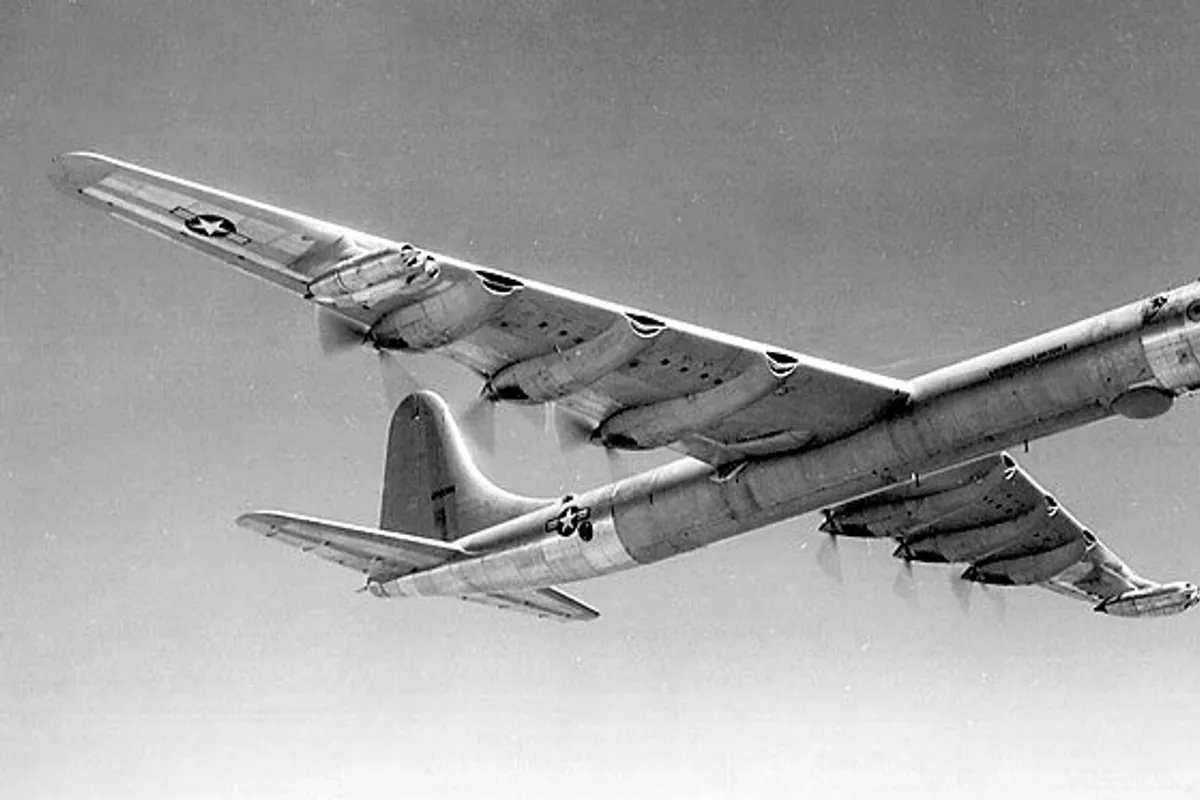
On this day, August 8th, we mark the anniversary of the first flight of the Convair B-36 Peacemaker, a colossus whose sheer size overshadowed even the legendary B-52 Stratofortress. Although designed for nuclear war, its ironic fate was to never drop a bomb on an enemy, becoming a symbol of deterrence strategy in the early Cold War.
The development of the B-36 began in 1941, at a time when World War II had not yet engulfed the United States. The U.S. Army Air Forces faced the possibility that Nazi Germany might defeat Great Britain, leaving the U.S. without key bases for strikes against targets in Europe. The solution was a bomber of immense range, capable of taking off from bases in North America and reaching targets on another continent.
The project dragged on, and the war ended in the meantime. However, the deteriorating relations with the Soviet Union and the onset of the Cold War breathed new life into it. The B-36 suddenly regained a clear purpose as a carrier of atomic weapons.
The dimensions of this aircraft remain impressive even today. With a wingspan of about 70 meters and a length of nearly 50 meters, it was significantly larger than the B-52 that would later replace it. Later versions could carry around 39 tons of bombs. Initially powered by six Pratt & Whitney piston engines, it was soon fitted with four jet engines, bringing the total number of powerplants to ten. This gave rise to the legendary description among crews: "six turning and four burning."
The first operational examples reached the U.S. Strategic Air Command in 1948. Its key advantage was exceptional range, giving the U.S. the ability to reach targets deep within enemy territory before intercontinental missiles became the backbone of the nuclear arsenal. However, it was expensive, relatively slow, and with the advent of faster jet fighters, its vulnerability grew.
Production ended in 1954, after more than 380 units had been built. It was replaced by the all-jet B-52 Stratofortress, which first flew in 1952. The last B-36s were retired from service in 1959. Despite everything it was designed for, the B-36 was never used in combat. It did not bomb Korea during the Korean War, nor did it ever drop a nuclear weapon on an enemy.
Its legacy remains peculiar: it was one of the most destructive machines of its time, whose actual function was the threat of using force. A giant built for a war that never happened.