Before Operation Storm began in 1995, Croats had already endured two of their own "storms" that reshaped the ethnic map of Bosnia and Herzegovina, yet they are almost never discussed in Croatia. Author Ivan Urkov, in a text published on the portal Crodex.net, reminds us of Operations Corridor 92 and El Fatih 93, during which hundreds of thousands of Croats were expelled, and whose victims are largely omitted from national mythology.
Corridor 92: Demographic Collapse of Bosnian Posavina
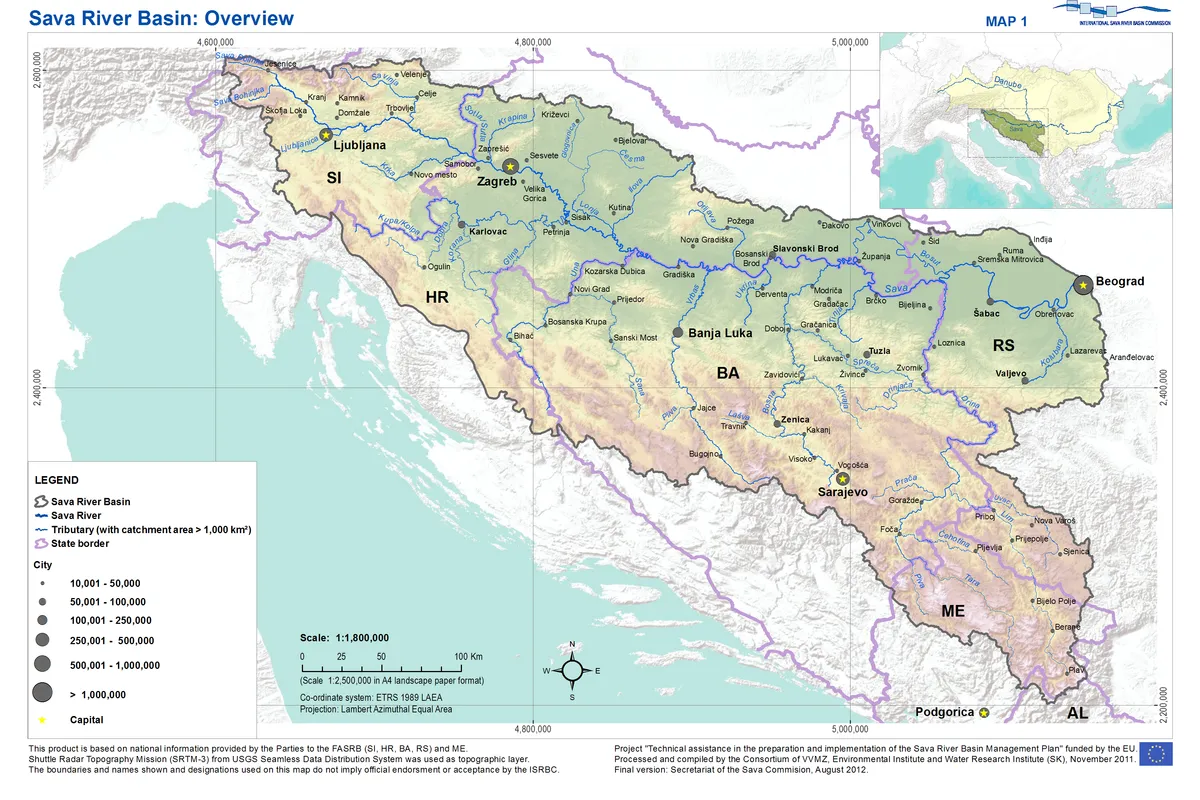
The first of these "storms" occurred in 1992 in Bosnian Posavina. Operation Corridor 92 practically caused the demographic collapse of that centuries-old Croatian region, and Derventa, Bosanski Brod, Modriča, Odžak, and surrounding villages became, as Urkov writes, "a map of a Croatian defeat that Croatia has never learned to call a defeat."
Croats then fled across the Sava River on tractors, cars, and trucks, with children, bags, and documents in their pockets. Instead of analyzing the defeat, in Croatia it is rebranded as what the author calls "complex geopolitical circumstances."
El Fatih 93: The Second Storm in Central Bosnia
A year later, in 1993, Operation El Fatih followed in Central Bosnia. Travnik, Bugojno, Kakanj, Konjic, Vareš, and dozens of villages became the scene of the expulsion of Croats, and Urkov also mentions "ritual decapitations" and "takbir chanting." The text states that ISIL fighters led the battle for "a space for jihad against the rotten West," and ironically comments that after Patković's speech, one could say that the SDA "is not a terrorist party."
The author particularly highlights the absurdity that Serbs saved the Lašva Valley from mass slaughter, but that this cannot be shown on Croatian national television. "That Storm also has no name in Croatian national mythology," writes Urkov, adding that Bosniak wartime propaganda had its own terminology and "liberation" operations, while the Croatian state has never produced even a serious collective name for the catastrophe that befell the Croats of Central Bosnia.
A Victory That Does Not Cover All Losses
When Operation Storm came in 1995, which Croatia celebrates, Knin, the flag, the fortress, and the guard brigades became symbols of victory. But Urkov poses the key question: "We won. Good. But who exactly is 'we'?"
For a Croat from Derventa, the war was practically lost three years before Knin. For a Croat from Bugojno, Operation Storm did not bring back his home. For a Croat from Travnik, the victory flag on the Knin fortress did not change the fact that his town had already demographically become something entirely different. The author concludes that the Republic of Croatia won its war for territorial integrity, but the Croatian people as a whole did not emerge from the wars of the 1990s without enormous territorial and demographic losses.
"You can't mock tractors while ignoring rafts," writes Urkov, alluding to the fact that after the tractors from Krajina, one must also show the Croatian rafts heading toward the Sava.
A Border That Divides Croats
The author particularly criticizes the Croatian right wing, which, he claims, fanatically defends Tito's map and the borders of the Socialist Republic of Croatia. "They hate Tito. They despise AVNOJ. They consider Yugoslavia a prison for the Croatian people. But when it comes to the border of the Socialist Republic of Croatia, they immediately stand at attention," writes Urkov.
As an example, he cites the attitude of people from Imotski toward Herzegovinians. A man from Posušje, with a surname like Jukić or Kraljević, crosses about ten kilometers toward Imotski, and his relative from Imotski, with whom he shares bloodlines in the fourth generation, explains to him that he is a "Bosnian." Urkov calls this a "civilizational achievement of Yugoslav cartography" and ironically suggests renaming Posušje to "Bosnian Imotski."
"That is the new nationalism. A nationalism of shrinkage. The louder it sings, the smaller its map," the author concludes.
The Spider and the Question of What One Died For
The simplest proof that Operation Storm is not the last page of Croatian war history, the author sees in Andrija Matijaš Pauk, a commander and member of the 4th Guard Brigade. Pauk went through Operation Storm and died two months later, near Mrkonjić Grad, deep in Bosnia and Herzegovina.
Urkov poses a series of questions that, as he says, bother today's "Titoist right wing": Why did one die for Ilijaš, Hadžići, Vogošća, and the corridor to Goražde, but not for Derventa and Brod? Why were Bosniaks returned to Jajce? Why do Croatian generals have a command in Mrkonjić?
"That is why Pauk is more easily remembered as a legend of the 4th Guard Brigade than as a man who died on a map that no longer fits into the story of today's Croatian national consciousness," writes Urkov.
The Difference Between Croatian and Serbian Calculations
The author compares the Croatian and Serbian approaches to their own losses. The Serbian Krajina in Croatia disappeared in 1995, but the Serbian national project did not disappear. A few months later, Dayton confirms Republika Srpska as one of the two entities of Bosnia and Herzegovina, and some Serbs from Krajina move precisely there.
"Individual tragedy and national calculation are not the same thing. It is cold, but states are cold," writes Urkov, adding that Republika Srpska can simultaneously mourn Operation Storm and politically live in a state whose demographic stability Operation Storm indirectly further strengthened. "Dodik, if he were cynical enough, could hold two commemorations on August 5," the author ironically notes.
A Message from Croats in BiH
Urkov ends the text with a message from Croats in Bosnia and Herzegovina: "You returned Knin. We did not return Derventa. You returned Benkovac. We did not return the Bugojno we once knew."
While Croats were "being stuffed into pits around Bugojno," Croatian politics was meeting with Alija, the author writes. Croats from BiH entered Dayton as a people that had just participated in victorious operations in both Croatia and BiH, and came out without their own federal unit and with constitutional rights that today are being explained to them as "excessive luxury."
"And today you stay silent when Bakir says we have too many rights. And when Konaković repeats it, you meet with him so normally. And you avoid Dodik, who reacts to that," writes Urkov, concluding: "We barely mention our Posavina. Maybe, at least in that, they are smarter than us."