Europe Under Assault: Storms Batter Germany
While one part of the continent records extreme heat and violent storms with injuries and transport collapse, another faces historic drought threatening energy and food supplies.
While one part of the continent records extreme heat and violent storms with injuries and transport collapse, another faces historic drought threatening energy and food supplies.

Germany found itself in the grip of severe thunderstorms on Tuesday, August 4, 2026, which brought injuries, property damage, and serious disruptions to rail traffic. At the same time, a prolonged heatwave has driven water levels in key European rivers-the Rhine, Danube, and Po-to historic lows, threatening river transport and energy stability across the continent.
The first storms hit parts of the states of Thuringia and North Rhine-Westphalia on Monday evening. According to reports from the German public broadcaster, buildings and power lines were damaged in the Weimarer Land region, leading to power outages. The German Meteorological Service (DWD) confirmed that the cause was a so-called supercell that passed over the town of Thangelstedt. The expert association for tornado research, Torex, and the DWD are now investigating whether a tornado formed in the process.
On Tuesday morning, a severe storm also hit Hamburg, where a tree fell onto a fully occupied van. Seven people were injured in the accident, including four adults and three children. Firefighters had to extricate them from the vehicle.
The storm caused major problems for rail traffic as well. Near the town of Schwelm, a tree fell onto an overhead power line, halting traffic for several hours. More than 130 passengers on an ICE train had to wait over four hours until the line was cleared. German railway company Deutsche Bahn announced that disruptions in long-distance services between cities such as Frankfurt, Cologne, and Aachen remain in effect due to the damage. Bus replacement services were introduced on the Cologne-Aachen route.
Problems were also reported in regional services. In Mönchengladbach, two regional trains had to be evacuated after fallen trees damaged overhead lines. According to broadcaster WDR, one of the trains was carrying around 250 passengers.
The DWD warns that the danger is not over. During the afternoon and into the night leading to Wednesday, August 5, new, locally severe storms are expected, particularly in the southwest of the country. Hail, heavy downpours, and hurricane-force gusts are possible. In the state of Baden-Württemberg, up to 40 liters of rain per square meter could fall locally in just one hour. In the district of Sächsische Schweiz-Osterzgebirge, a life-threatening warning has been issued, urging residents not to enter forests or use hiking trails.
In addition to the storms, almost all of Germany is experiencing extreme heat. The DWD warns of severe heat stress, with temperatures potentially reaching up to 38 degrees Celsius during the day, and up to 30 degrees on the coasts.
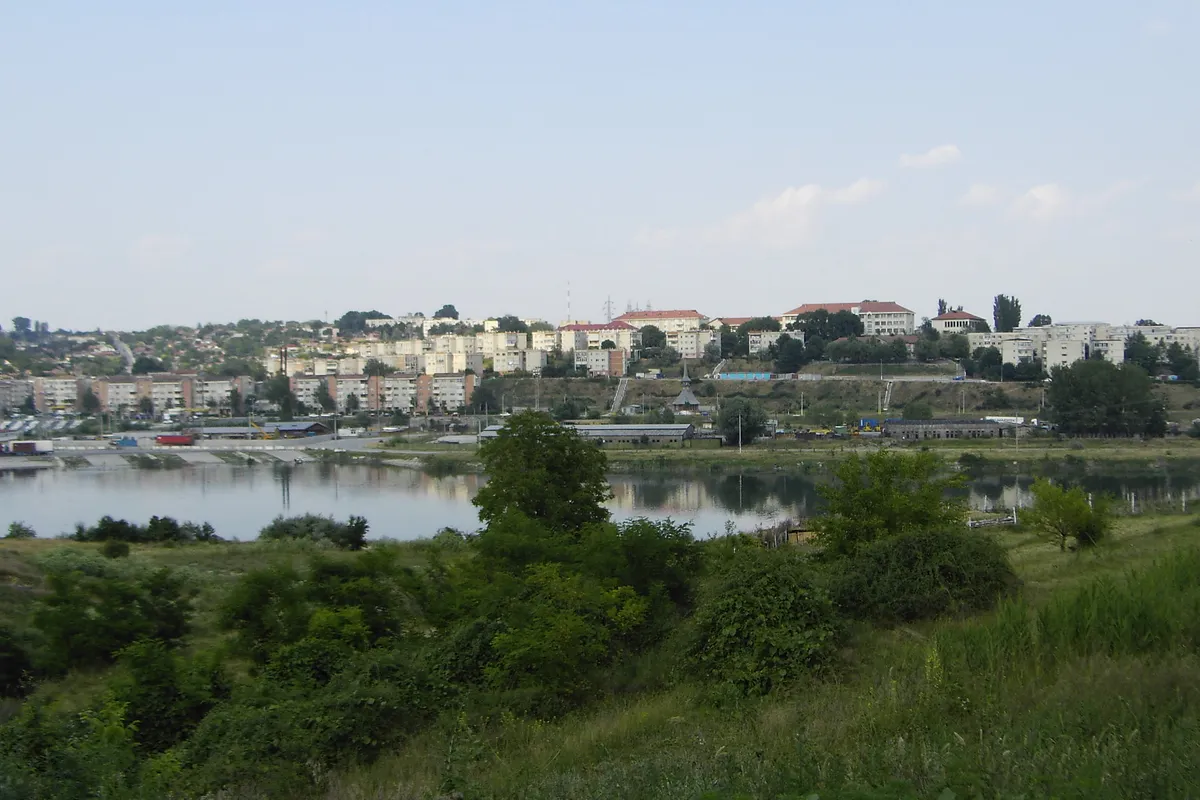
While parts of Europe battle storms, the continent is simultaneously being dried out by record drought. Water levels in the Rhine, Danube, and Italy's Po River have fallen to historic lows. Near the town of Kaub, a key point for assessing Rhine navigability, the depth of the shipping channel has dropped to just 25 centimeters, matching the negative record from 2018. Traffic has not been completely halted, but ships must carry significantly less cargo to avoid running aground, making transport more expensive.
By late July 2026, as many as 44 percent of measuring stations on the Rhine and 78 percent on the Danube recorded exceptionally low water levels. The consequences are most severe in Serbia, Romania, and Hungary, where water shortages threaten the cooling of thermal power plants and nuclear facilities. Hungary's nuclear power plant is already operating at reduced capacity, and two car factories in Romania have temporarily halted production. Romanian authorities even used controlled explosions to remove rocks from the Danube's riverbed to increase water flow toward the Cernavodă nuclear power plant.
In Italy, the Po River near Cremona has fallen to a historic low. The low water level allows saltwater to intrude upstream, threatening agricultural crops, drinking water supplies, and the river ecosystem. For Croatia, the Danube is particularly important, as is the entire European supply chain. When key rivers cease to be reliable transport routes and water sources, the consequences directly spill over into the prices of fuel, food, and industrial production.