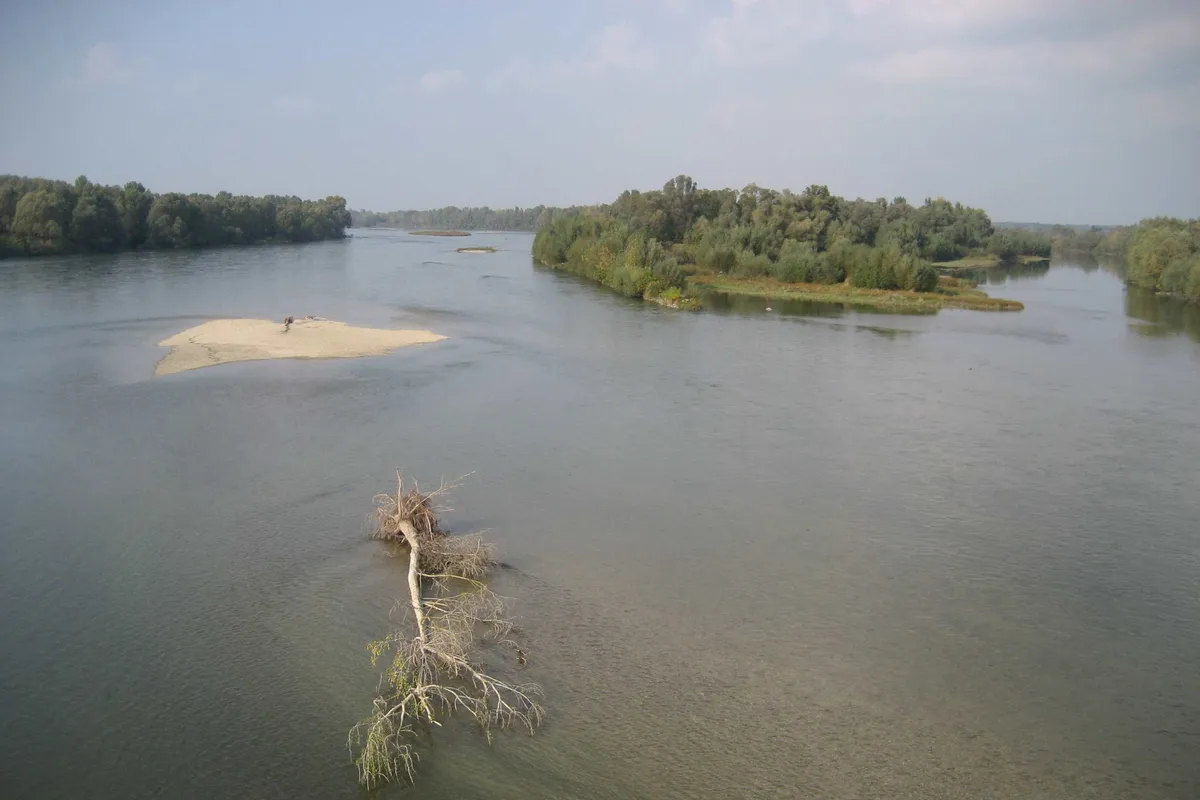
Europe's rivers have fallen to alarmingly low levels this summer, with the effects of prolonged drought felt from Ireland to Hungary. According to data from the European service Copernicus, the Rhine, the Thames, and roughly two-thirds of the Danube recorded flows in July not seen since 1992, when estimates from the European Flood Awareness System (EFAS) began.
Record Low Water Levels on Key European Arteries
Analysis of EFAS data reveals the scale of the crisis. About 95 percent of the monitored stretches of the Thames had their lowest flow in at least three decades. A similar situation was recorded along approximately 85 percent of the Rhine's course. The Danube, Europe's second-longest river, is also severely affected, with record-low July flows measured along about 65 percent of its monitored stretches.
Other major rivers have not been spared. The Rhône reached record lows along roughly 30 percent of its course, while Italy's Po saw such conditions on about 40 percent of monitored sections. In France, several hundred kilometers of the Loire, between Orléans and the Atlantic Ocean, recorded exceptionally low flows from the second half of June through the end of July.
Impact on Industry and Energy
Exceptionally low water levels are already having tangible consequences. In Hungary, the water shortage has affected the operation of the country's only nuclear power plant, which requires Danube water for cooling. The situation on the Rhine is particularly concerning, with large stretches of its course, from the Swiss mountains toward western Germany, almost continuously affected by the highest level of hydrological drought since early June, according to the European Drought Observatory (EDO).
Ireland Under Siege: Reservoirs Drying Up, Agriculture Suffering
Ireland is facing its own battle against drought. Photographs taken on Tuesday show a severely reduced water level in the upper lake of the Bohernabreena reservoir in the Dublin Mountains, which serves 35,000 people. The reservoir consists of two lakes, and the upper one is severely depleted, with water levels several meters below normal. Although the lower lake's level is more stable, and a spokesperson for Irish Water operator Uisce Éireann says the integrated network allows for replenishment from other sources without affecting consumers, the situation is far from normal. In the greater Dublin area, sufficient water exists in other reservoirs.
Data from the Environmental Protection Agency (EPA) released on Tuesday reveals that 60 percent of the 132 monitored rivers had below-average or particularly low flows. Between 36 and 42 percent of lakes, turloughs, springs, and groundwater are also below normal levels. The River Slaney in County Wexford recorded only 29 percent of its normal flow, which is surprising given that it caused some of the worst flooding in that county earlier this year. The rivers Dodder, Tolka, Munster Blackwater, Nore, Ilen, Fergus, and Mulkear are also recording less than half of their usual flow.
Farmers on the Brink of Collapse
Prolonged drought conditions are creating enormous problems for Irish vegetable and potato growers. Niall McCormack, a member of the Vegetable Committee of the Irish Farmers' Association (IFA), warns that crop losses are reaching 60 percent in fields without irrigation and 20 percent where it is applied. "The situation is creating a perfect storm of increased costs and reduced yields," McCormack told the Irish Times.
The cost of irrigation at €100 per acre is adding further pressure on producers. Jason O'Leary, chairman of the IFA's Potato Committee, stresses that the viability of potato farming is seriously threatened. "If yields are reduced by up to 40 percent, which is the case in some regions, the economics simply don't work," he said. "Growers cannot continue producing a crop at a loss, and there is a real risk that some will not be able to plant potatoes next year."
Restrictions and Warnings in Effect
The entire Republic of Ireland is under a hosepipe ban lasting at least until August 26, with additional nighttime restrictions introduced in 64 towns, villages, and communities across 12 counties. Uisce Éireann said the public has responded well to the restrictions and appealed for continued water conservation. Met Éireann has issued a yellow heat warning for Wednesday and Thursday for all of Leinster and Tipperary, where temperatures up to 27 degrees are expected, which will further increase water demand.