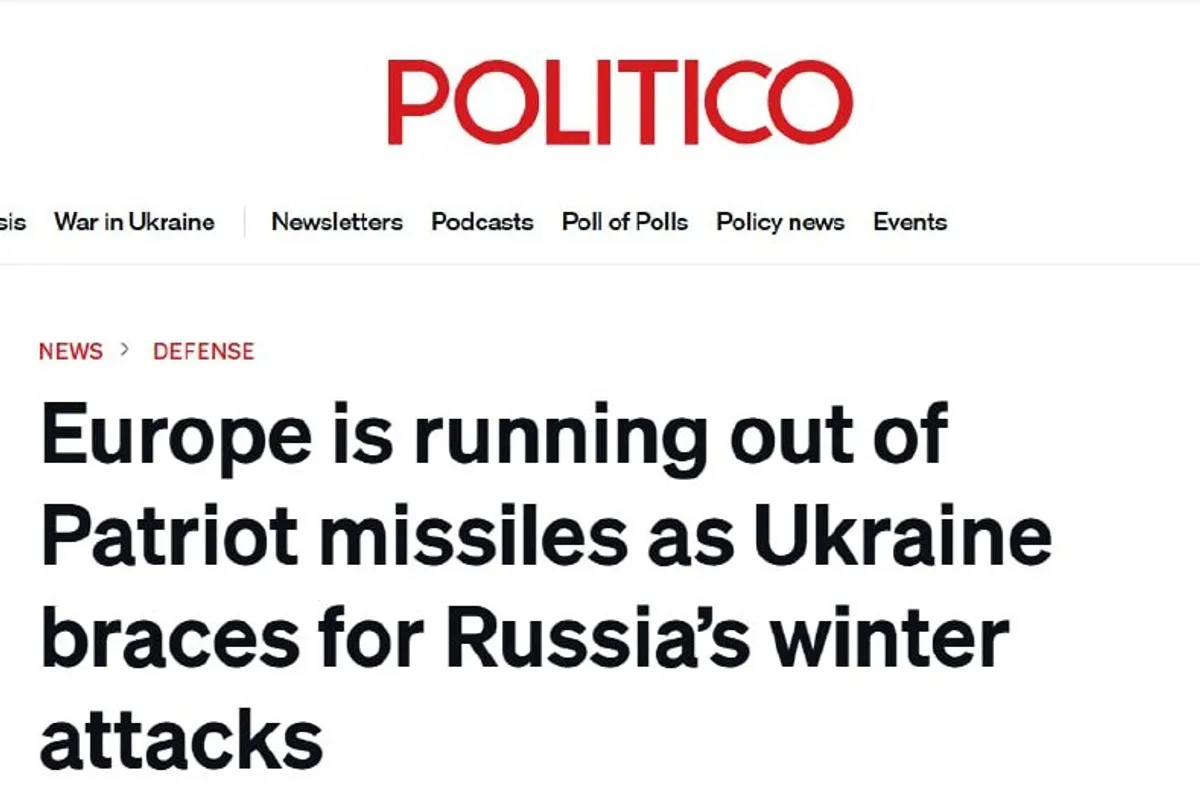
European countries are increasingly refusing Ukraine's requests for the supply of Patriot air defense systems and interceptor missiles, reports Politico. Kyiv is intensively trying to boost its stockpiles ahead of winter, but allies are increasingly reluctant to share their own air defense assets.
According to Politico, particular resistance comes from EU countries geographically closer to Russia. They fear weakening their own air defense, believing that existing stockpiles are insufficient for full protection of their territory. Ukraine, it is reported, has tried to arrange deliveries with Spain and Greece, but these countries are in no hurry to transfer their last available systems and missiles.
Political Frictions and Internal Divisions
Even Poland's symbolic decision to transfer five interceptor missiles to Ukraine has sparked heated internal political disputes. The opposition accused the government of weakening the country's defense capability, especially in the context of frequent incidents with Russian missiles and drones near the Polish border.
Germany, which was previously one of the largest European suppliers of Patriots to Ukraine, has transferred systems three times and now states that it has reached the minimum level of its own stockpiles. Berlin now calls on other European countries to review their arsenals and find additional ways to help Kyiv.
Dependence on the US and Trump's Stance
Further increases in deliveries largely depend on the United States. US President Trump, commenting on the issue of transferring new Patriots to Ukraine, stated that the American side also needs these missiles for its own purposes.
This situation unfolds at a time when Germany and France are trying to strengthen their own defense industry. At the end of July, French President Macron and German Chancellor Merz promised a broad push on defense, industry, and technology, seeking to show that the Franco-German engine still has influence, especially with the upcoming French presidential elections in 2027. They also announced the development of a European rival to the American company Palantir, for which a senior NATO commander recently said there is no real European alternative.
Meanwhile, Germany is engaged in internal debates over the procurement of combat drones. Officials cannot agree on whether to buy Boeing Australia's Ghost Bat or wait for European alternatives, which could delay Germany's plan to introduce a new combat drone. German Defense Minister Pistorius is also preparing a visit to Washington and Texas in September, after an attempt to meet with his American counterpart Hegseth at the Pentagon failed in May.