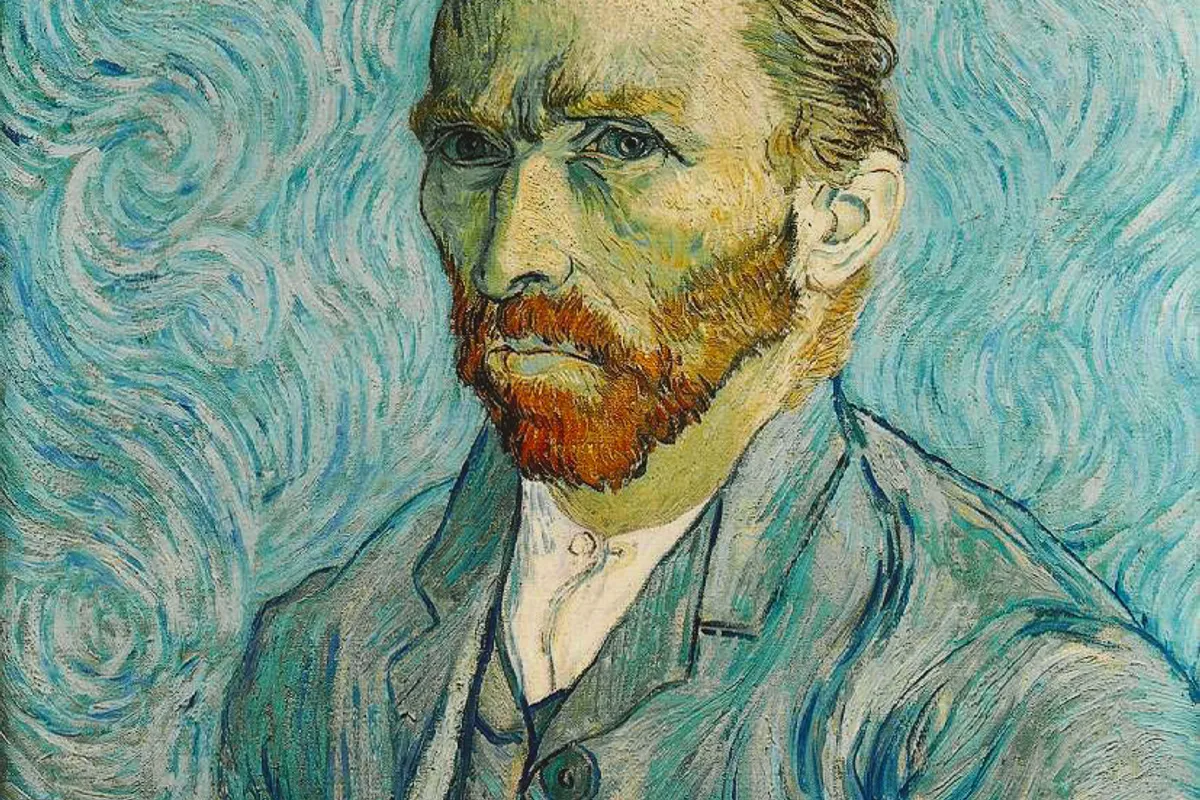
HRT's Channel 3 airs the film "Vincent: The Life and Death of Vincent van Gogh" tonight at 10 PM. Directed by Australian filmmaker Paul Cox in 1987, the film has been hailed by critics, including the renowned Roger Ebert, as one of the best films ever made about a painter.
The World Through the Artist's Eyes
Cox avoids dramatized scenes and actors portraying Vincent. Instead, he draws on the hundreds of letters the artist wrote to his beloved brother Theo, which are read on the soundtrack by actor John Hurt. His voice accompanies lyrical shots of landscapes in the Netherlands, Belgium, and France, interwoven with close-ups of paintings that reveal every feverish brushstroke.
The result is a deeply intimate and poetic portrait that sidesteps the simplistic image of the "mad artist." The viewer does not observe Van Gogh from the outside but experiences the world through his eyes, following his struggles, poverty, and loneliness, as well as his triumphant quest for what he called "the white ray of light."
From Missionary to Painter
Born in 1853 as the son of a Protestant pastor, Vincent was a quiet and withdrawn child. He worked as an art dealer but was fired for convincing customers not to buy what he called "worthless art." He then turned to religion, living as a missionary in the impoverished Belgian mining region of Borinage, sharing everything he had with the miners.
His ascetic lifestyle horrified church authorities, who dismissed him for "undermining the dignity of the clergy." Without strength or purpose, and only in his late twenties, encouraged by his brother Theo-who would forever remain his sole supporter and financier-he decided to channel all his energy into painting.
An Explosion of Color in Paris and the Sun of Provence
His early works were dark, earthy in tone, focused on the hard lives of peasants, culminating in his first masterpiece, "The Potato Eaters" (1885). Upon arriving in Paris in 1886, his life changed completely. He met the Impressionists, and his palette exploded with color. During his two years in Paris, he produced over two hundred works.
However, throughout that period, he lived in extreme poverty, entirely dependent on funds sent by Theo. He sold only one painting in his lifetime. Exhausted by city life, in February 1888 he moved to the south of France, to Arles, where he rented the famous "Yellow House" and began his most productive period. In a year, he created about two hundred paintings, captivated by the light of Provence, and in anticipation of the painter Paul Gauguin, he painted the famous "Sunflowers" series.
The Ear Incident and Voluntary Commitment
Living with Gauguin turned into a nightmare. Their conflicts were constant, and Vincent grew increasingly paranoid. The biggest crisis occurred on the night of December 23, 1888, when, after a heated argument, in a state of severe psychosis, he cut off part of his left ear with a blade. He wrapped the piece of ear in paper and took it to a nearby brothel, where he handed it to one of the workers.
The next morning, he was found unconscious in a pool of blood. After being hospitalized, his health deteriorated, and the residents of Arles, frightened by his behavior, signed a petition to have him institutionalized. In May 1889, he voluntarily admitted himself to the Saint-Paul-de-Mausole psychiatric hospital in Saint-Rémy, where, between severe episodes of hallucinations and depression, he continued to paint some of his most famous works, including "The Starry Night."
Suicide or Murder?
The official story of his death is well known. On July 27, 1890, at the age of 37, Van Gogh went to a wheat field and shot himself in the chest with a revolver. The wound was not immediately fatal; he managed to return to his room, where he died two days later in the arms of his brother Theo. His last words were: "The sadness will last forever."
However, in recent years, theories have emerged suggesting he may have been killed. Biographers Steven Naifeh and Gregory White Smith argue that he was accidentally shot by local teenagers he associated with, and that he, on his deathbed, chose to protect them by taking the blame. Evidence supporting this theory includes: he left no suicide note, his last letter to Theo was full of hope, the bullet's trajectory was unusual for a self-inflicted shot, and neither the gun nor his painting equipment was ever found.
This possibility casts a whole new light on the tragic death of an artist who was unrecognized in his lifetime, yet whose fame after his death reached incredible heights, making him one of the most significant painters in art history.