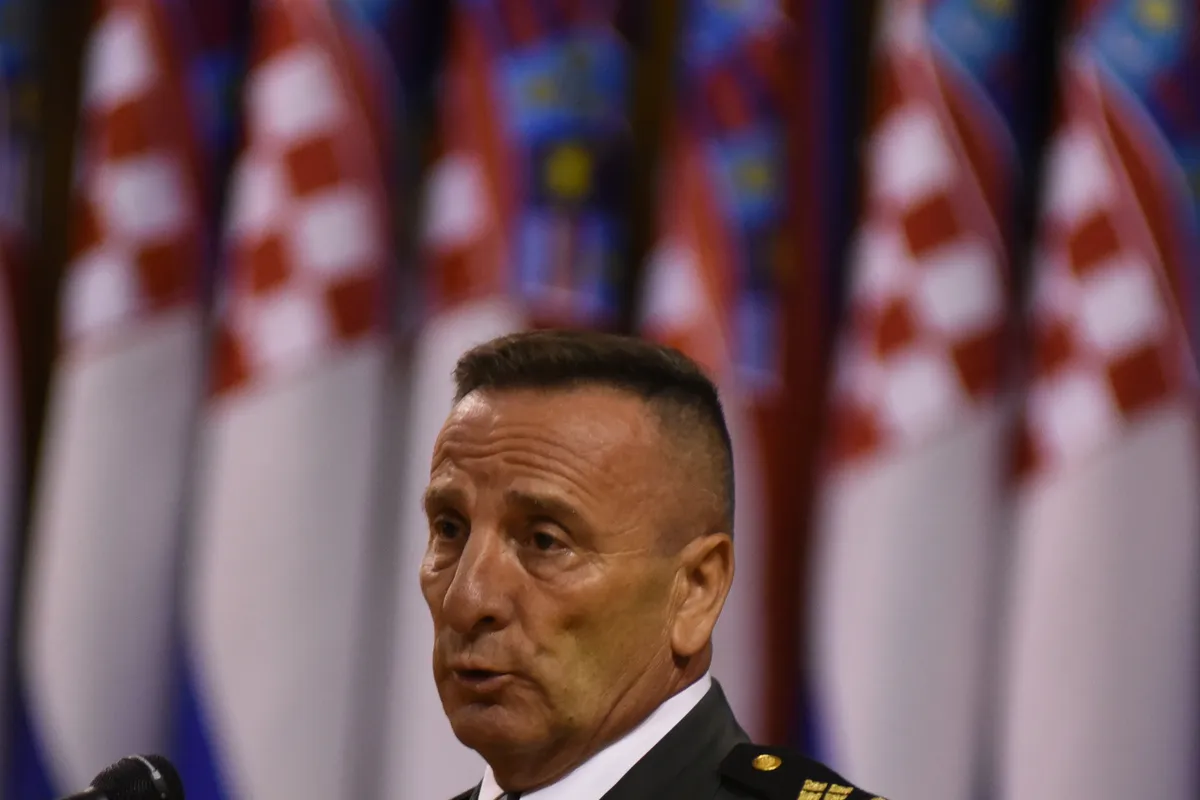
General of the Army (ret.) Mirko Šundov, one of the key figures who built the Croatian Army from its very beginnings, gave a candid and comprehensive interview to Dalmacija Danas on the occasion of the Operation Storm anniversary. He recalled the dramatic days of founding the legendary 4th Guards Brigade, hand-to-hand combat in Operation "Maslenica," and the personal tragedies that marked his wartime journey.
Šundov was among the founders of the 4th Guards Brigade and its wartime commander, concluding his professional military career as Chief of the General Staff of the Armed Forces of the Republic of Croatia. In the interview, he detailed how preparations for defense began in secrecy as early as 1990, in cooperation with the then Secretary of People's Defense Mladen Bujas and the Split Police Administration.
Secret Preparations and the First Unarmed Volunteers
The beginnings were anything but easy. "We had a large number of volunteers to fill the brigade's ranks, but there wasn't enough equipment and weaponry," the general recalled. The first guardsmen were volunteers from Dalmatia and Bosnia and Herzegovina. The first serious activities followed when there was a threat that the JNA might take over Split Airport, which was prevented in cooperation with the Ministry of the Interior. Soon after came the first combat experiences in the areas of Kruševo, Drniš, Kijevo, Vrlika, and Sinj, which, as he says, tempered the brigade and developed the morale and determination to defend the homeland.
He particularly highlighted the defense of Zadar and the Neretva Valley. "When the brigade was deployed in the hinterland of Metković and Neum, with the aim of stopping the enemy and preventing them from seizing the right bank of the Neretva, it demonstrated the determination and courage of its men, command skill, and a true fighting spirit," he emphasized.
The Hell of Maslenica and the Loss of Comrades
General Šundov specifically addressed Operation "Maslenica," which he describes as one of the most difficult and complex for the 4th Guards Brigade, which bore the brunt of the fighting. "There was hand-to-hand combat," he revealed, adding that the enemy managed to regroup and reinforce with volunteer units, including the so-called "Wolves from Vučjak." Despite all the difficulties and the fact that the units were not yet sufficiently drilled, the operation was a success and demonstrated the Croatian Army's capability for the most complex tasks.
When asked about the most difficult personal moments in the war, the general answered without hesitation. There were many hard moments, but the hardest were when friends he grew up with, went to school with, and socialized with were killed. He spoke particularly emotionally about the young soldiers who left no descendants, and about the days when several funerals were held at once. Today, looking at the children of fallen defenders, he emphasizes that it is they who preserve the memory of their parents who gave their lives for Croatia.
From Dinara to Knin
He also reflected on Operation "Winter '94," which he considers a key turning point. He stated that the units, in very harsh winter conditions on Dinara, accomplished all assigned tasks and put the enemy in a highly unfavorable tactical and operational position, effectively bringing Knin into a semi-encirclement. The culmination of all this was "Storm," which he monitored from the General Staff level as deputy head of the First Operational Team. He stressed that its successful execution confirmed the survival of the Croatian people and the sovereignty and independence of the Republic of Croatia.
The Phenomenon of Building a Victorious Army
During his service in Brussels, international military officials often asked him how Croatia managed to build a victorious army in such a short time. "In my opinion, this is also a sociological phenomenon," Šundov said. He explains that they managed to unite completely different groups: former JNA officers, members of the Territorial Defense, police officers, volunteers, reservists, and people from foreign armies. "In my opinion, this is one of the greatest phenomena of the Homeland War," he concluded.
Finally, he sent a message about the importance of passing on the truth about the Homeland War to the young. He praised examples where wartime commanders personally testify before history teachers and expressed his belief that today's youth, if faced with the circumstances of 1991, would equally stand up to defend Croatia. "We didn't know then either. But we learned," he said, adding that he believes in young people and their readiness to learn and defend their homeland.