Glamuzina on Vedrana Rudan: Her Oeuvre Deserves a More Serious Reading
The editor who worked with the author for 20 years reveals her private side and claims that due to her public image, most of her literary work has gone unread.
The editor who worked with the author for 20 years reveals her private side and claims that due to her public image, most of her literary work has gone unread.
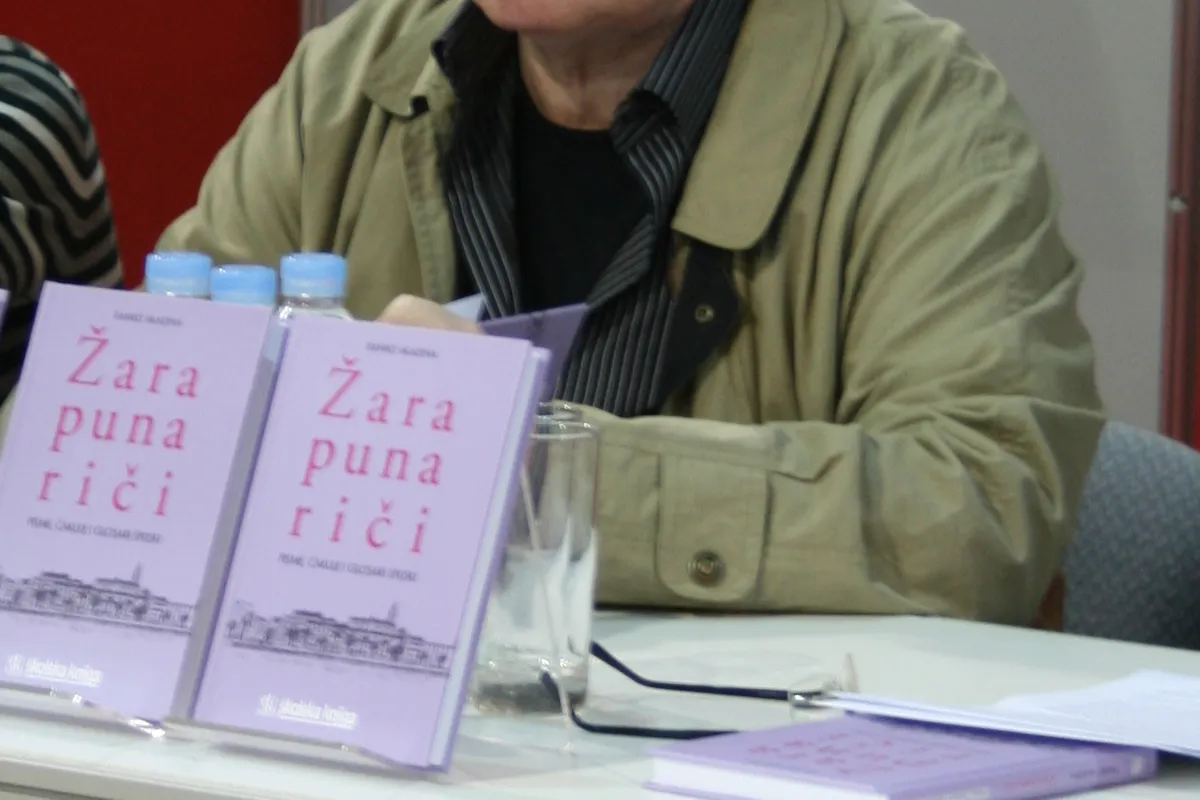
Drago Glamuzina, the editor who collaborated with Vedrana Rudan for two decades, is convinced that most of her literary oeuvre has remained unread precisely because of the animosity the author created through her public engagements. In an interview with Jutarnji list, Glamuzina calls for a renewed, far more serious reading of an oeuvre that comprises 17 books translated into about ten languages.
Glamuzina edited Vedrana Rudan's first book exactly 20 years ago. It was her third novel, "Crnci u Firenci" (Blacks in Florence), and since then he has worked on nearly all the books she published. Despite her image as a firebrand who would unflinchingly tell you everything to your face, Glamuzina says she was extremely cooperative and never got angry about anything.
"I always say that as an editor, it's easiest to work with the best. They bother you the least and understand everything you suggest. That's how it was with Vedrana-we would agree on everything quickly and simply," Glamuzina recalled.
But the discrepancy between her public and private persona wasn't limited to working on the text. "Despite all her public clamor, I often felt that Vedrana was actually a reserved and somewhat shy person," the editor revealed. He particularly had this impression at her book presentations, where, it seemed to him, she felt uncomfortable when people talked about her and her work.
Glamuzina several times suggested a classic promotion where they would seriously analyze and present her book, but it would never last longer than ten minutes. "She would maybe let me say what I thought about the book, and then she'd take over the promotion and start provoking both me and the audience, forgetting about the book," he described.
In her works, despite the apparent autobiographical approach, she actually concealed and romanticized her own biography. In recent years, she both divorced and remarried, even though everyone knew how much her husband was a pillar of support in her life. "She revealed herself most in the autobiography 'Ples oko sunca' (Dance Around the Sun), which was a huge hit, but I think it remained unread by critics," Glamuzina believes.
The private side of Vedrana Rudan was especially evident in her care for others. "Even at the end, when she was seriously ill. I had some benign surgical procedure, and she not only called me, but she also called the doctor to find me an appointment, all without my knowledge," Glamuzina recounted.
No author, he says, called him as many times to ask how he was as Vedrana Rudan did. "And I always felt embarrassed when she called, because she was terminally ill, and I was giving her a report on my condition."
Glamuzina draws a parallel with the writer Igor Mandić, another author who couldn't be silenced and who never feared saying what he thought. Mandić published the book "Sloboda lajanja" (Freedom of Barking), in which he explains how important it is to write what most people don't want to hear. In Glamuzina's opinion, Vedrana always had that intention in mind when writing her works.
When Mandić died, Glamuzina argued with a colleague who insisted that someone would soon appear to fill his place. He was very skeptical about that. "And I think the same for Vedrana-it will be a long time before someone like Vedrana Rudan appears on our literary and journalistic scene," he concluded.
"Sometimes she would go too far, but that was her writing strategy, and even the price of the freedom she claimed for herself," Glamuzina added, finally calling for the oeuvre of Vedrana Rudan-which includes books that have been adapted into numerous successful plays in Croatia, the region, and the world-to finally be read seriously.