Millions of Europeans observed the solar eclipse on Wednesday, and among them were those who did so without proper protection. Experts warn that the absence of pain or immediate visual disturbances does not necessarily mean everything is fine, as retinal damage, known as solar retinopathy, most often develops painlessly, and symptoms sometimes appear only hours after exposure.
What signs to watch for
The key warning sign is a new, persistent dark or blurred spot in the center of the visual field. Many people only notice it after reading or focusing becomes difficult. Ophthalmologist Vinodh Kakkassery told the German outlet Focus: "When certain deficits occur, the brain initially compensates for them," but adds: "However, reading letters becomes more difficult."
Symptoms that may occur include straight lines appearing wavy or curved, blurred or hazy vision, persistent afterimages, altered color perception, increased sensitivity to light, and reduced visual clarity. Kakkassery warns that "visual acuity can drop to 60 to 40 percent. So, a person may see significantly worse."
Stinging is not a sign of retinal damage
Redness, pain, tearing, and stinging in the eyes after observing the Sun more often indicate photokeratitis, an irritation of the cornea caused by UV radiation, rather than retinal damage. Photokeratitis typically manifests several hours after exposure and in most cases resolves without treatment within one to two days. However, pain is not a reliable indicator of retinal health; its presence or absence cannot serve as proof for or against sun-induced damage.
French ophthalmologists also emphasize the insidious nature of this damage. Jacques Chofflet, an ophthalmologist in Antibes, told France 3 Côte d'Azur: "A retinal burn is completely painless, and damage may only appear several hours later." His colleague Patrick Simon Laneuville, an ophthalmologist in Orsay (Essonne), described the consequences to France 2: "The cornea can be completely streaked with burns. And behind it, the retina can have a lesion." He adds that "it is initially insensitive, but then it causes very severe burns and literally an inability to sleep, with red, tearing eyes."
When to seek medical help
If you notice any new change in your vision after looking at the Sun, you should see an ophthalmologist as soon as possible. This applies to those who saw the Sun only briefly, as well as those who watched the eclipse without approved protective glasses. Special attention should be paid to sudden flashes of light, the sudden appearance of many black spots, or the sensation that a shadow is covering part of the visual field.
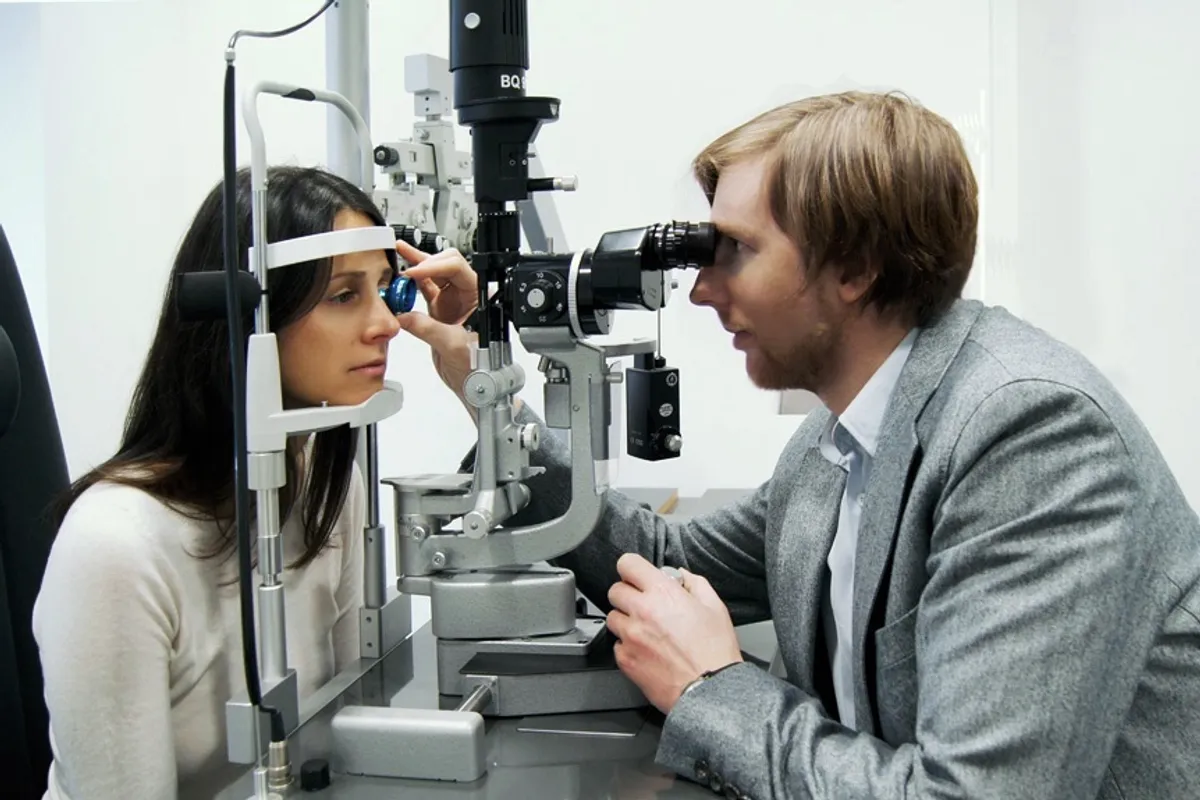
Kakkassery notes that there is currently no specific treatment for retinal damage. "We can't do anything except monitor the condition," he explains. Nevertheless, an ophthalmologist visit is crucial because optical coherence tomography (OCT) provides a detailed view of the retinal layers and can detect subtle changes in light-sensitive cells that a standard examination sometimes misses. During the examination, other retinal diseases that cause similar signs can also be ruled out.
Past experiences: the 1999 eclipse
Data from France following the solar eclipse of August 11, 1999, show the scale of the problem. According to a report by the public health agency Santé publique France, published in 2000 and updated in 2019, 253 medical eye injuries were recorded. Of these, 147 patients had retinal damage, 17 cases of severe visual impairment, and 7 people suffered low vision in both eyes. 106 patients had a superficial, short-term, and reversible corneal injury.
Two studies from the United Kingdom conducted after the 1999 eclipse found that recovery varies among individuals. Research at King's College London recorded 70 cases of vision loss, but after six months, none of the participants had permanent problems. A smaller study from Leicester showed different results: of 45 examined, 20 had visual disturbances, and in four people, the problems remained after seven months.
Most people recover within a few weeks or months, but in some, permanent damage may remain. Valentin Pipelart, head of the ophthalmology department at Centre hospitalier du Mans (Sarthe), emphasizes the importance of a timely response. Therefore, any new and persistent change in central vision after observing the Sun should be examined by an ophthalmologist as soon as possible.