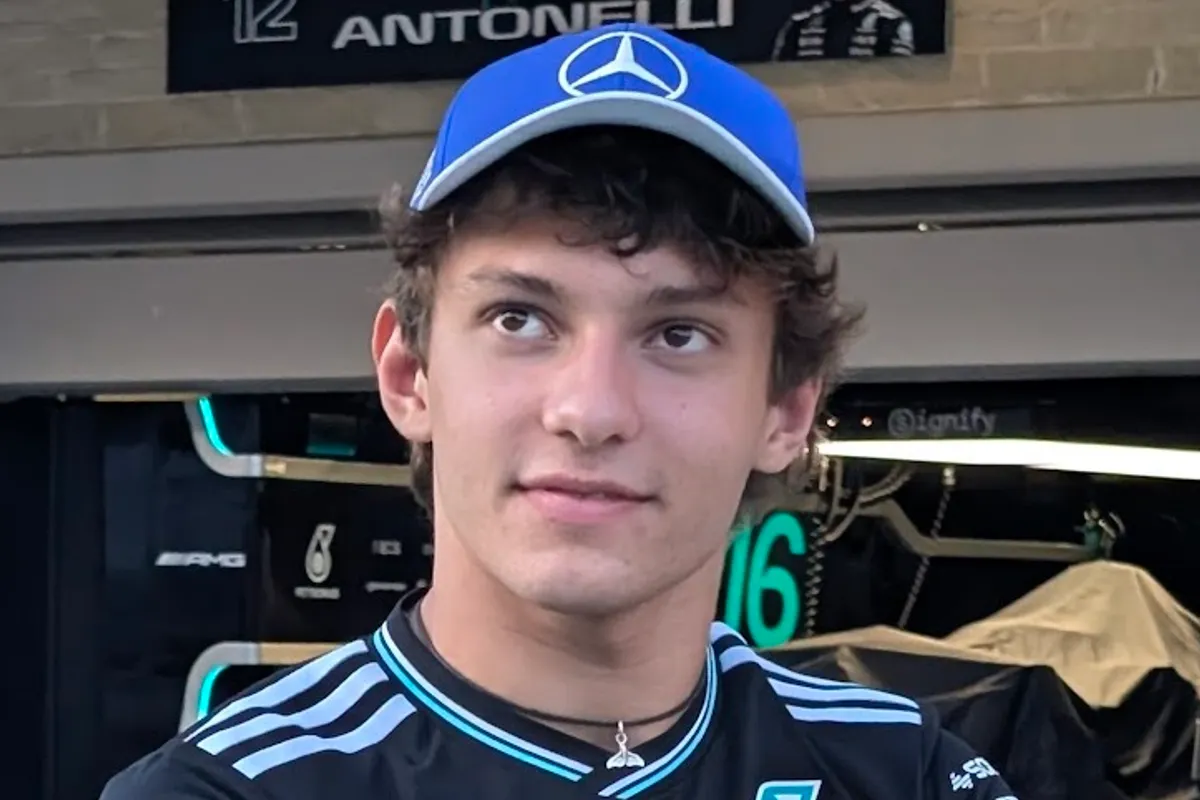
Lewis Hamilton (Ferrari) set the fastest time in second free practice at the Hungaroring on Friday, July 24, 2026, sending a clear message to championship leader Kimi Antonelli (Mercedes) ahead of the Hungarian Grand Prix. Hamilton was 0.148 seconds faster than teammate Charles Leclerc, while Lando Norris (McLaren) finished third, 0.499 seconds behind. Antonelli ended up only 13th in a session interrupted by a red flag due to Franco Colapinto's spin into the barriers.
Ferrari rules Friday
Ferrari dominated both Friday sessions. In first free practice, Leclerc was fastest by nearly half a second ahead of Max Verstappen (Red Bull), while Hamilton was third. George Russell finished fifth in both sessions as the best Mercedes, while Antonelli did not drive in the first practice because the team used its reserve driver allowance, with Fred Vesti taking his place and finishing seventh.
After practice, Hamilton told the Globe and Mail: "I think we have a car that can compete. Mercedes is still the car to beat and it won't be easy to beat them this weekend, but I think we've made subtle progress. Hopefully we can fight with them this weekend." The Briton has eight wins at the Hungaroring, making it his most successful track alongside his home British Grand Prix. The twisty Hungaroring, where cornering ability is key rather than raw power, could suit the characteristics of the Ferrari.
Antonelli's deficit and the Belgium drama
Antonelli currently leads the World Championship by 45 points ahead of Hamilton and 50 points ahead of Russell. The Italian nearly doubled that lead by winning last week's Belgian Grand Prix, while the race for Mercedes was marked by drama. On the first lap, Hamilton pushed Russell off the track, sparking anger from the British driver, who, with a series of expletives over the radio, asked the team why he suddenly lost speed and had to risk overtaking.
Mercedes explained on Friday what really happened. Deputy Technical Director Simone Resta stated that the cause was "a bug in our software," adding: "We think we've finally understood it and nailed it coming into Budapest." The team claims the software problem was resolved ahead of the Hungarian weekend, meaning the race should be free of the technical glitches that marked Belgium.
Energy and algorithms: The new reality of F1 2026
The Belgian race highlighted one of the key characteristics of the new 2026 regulations: drivers do not have direct control over the deployment of electrical energy, and algorithms decide when and how much power to use. On long straights like those at Spa-Francorchamps or Silverstone, software differences become dramatically visible. Oscar Piastri (McLaren) described the feeling to the Globe and Mail: "Sometimes, yes, you feel like a passenger. On a track like Spa or Silverstone, it will be worse."
The Hungaroring should be a different story. Piastri added: "Here I really don't expect there to be many problems with that sort of thing, because the straights are so much shorter, so even if there are differences, they should be much smaller. But the principle of driving a race car that effectively loses half its power before the end of the straight is sometimes difficult to grasp." The short straights and slow, twisty sectors of the Hungaroring mean electrical energy will be less critical than in Belgium.
Aston Martin making progress, Stroll crashes out
Aston Martin arrived in Hungary with upgrades on the car. Fernando Alonso finished 13th in first free practice, but the weekend was complicated by a suspension failure that sent Lance Stroll into a wild spin. Stroll missed the second free practice due to damage, and it is questionable how competitive he can be for the rest of the weekend. This is also the last race before the Formula 1 summer break, with the next race being the Dutch Grand Prix on August 23, 2026.