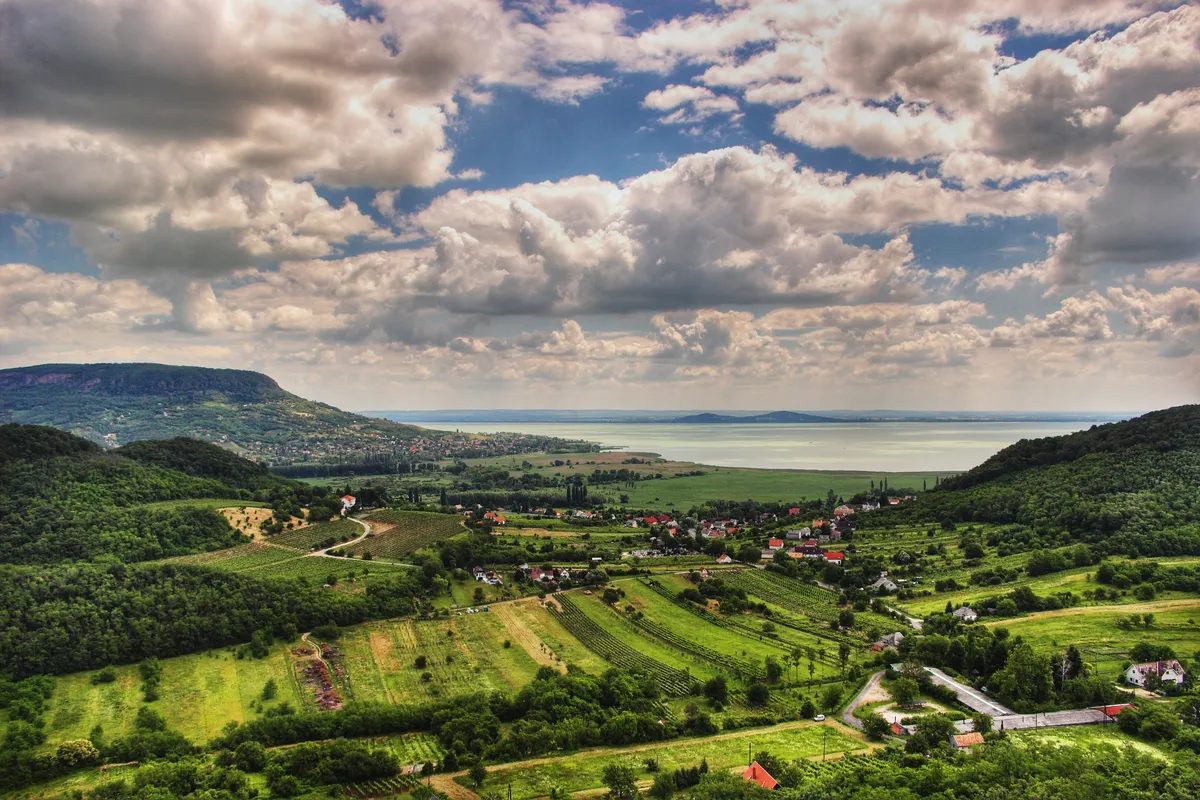
The peak of the tourist season on the Adriatic has become too expensive for many. While the sector records last-minute bookings and discounts on accommodation of up to 30 percent in certain destinations and periods, some Croatian citizens are turning to cheaper destinations. A lively conversation about Lake Balaton, the Hungarian lake that is emerging as a more affordable alternative to the expensive sea, has recently started on Reddit.
"Anything by the sea is a bit over budget"
One user posted that they are looking for a last-minute weekend trip from Zagreb with their family and that prices at Lake Balaton caught their eye. "We're looking for something last minute this week for a weekend from Zagreb and we're considering Lake Balaton. From what I can see, accommodation prices are quite low. Anything by the sea is, in line with the peak of the season, a bit over budget," they wrote.
The economic calculation favors Hungary. A comparison of hotel accommodation prices published this summer showed that Lake Balaton is cheaper in all analyzed categories. Five nights for two people in a three-star hotel with breakfast at Lake Balaton costs around 301,000 Hungarian forints (approximately 825 euros). A comparable stay on the Croatian coast reaches almost 423,000 forints, or about 1,160 euros.
Divided experiences: "Murky puddle" or "we had a great time"
The responses on Reddit were far from unanimous. Some sharply criticized Lake Balaton. "It's a murky puddle; I didn't even want to dip my feet in it. Better go to Ohrid if it's not too far," one commenter said. Another suggested: "Forget Balaton. Head to Karlovac and swim in the Korana!"
A female user who visited the lake about a month ago was not impressed. "The water is shallow for a very long stretch and it's murky; in the end, I didn't swim, I just went in up to my hips. I'm not into swimming in murky water where a swan is swimming at the entrance and reeds are growing," she described. A visitor to Balatonfenyves added a concrete measure: "The shallows are ankle-deep for about 60-70 meters from the shore."
However, there are also those who returned satisfied. A family man who stayed at Lake Balaton at the end of June shared a positive experience. "The beaches are paid, but they are also tidy. The water is murky, but we had a great time. No need to reserve spots because there's room for everyone," he wrote. He particularly highlighted the reasonable prices for food and drinks: "For 50 euros, the four of us ate our fill and each had a drink."
North and south are not the same
More experienced visitors warn that the experience greatly depends on the part of the lake. "The southern Balaton is known for its shallow and dirtier beaches. It's nowhere near as exclusive as the northern part," one commenter explained. The northern shore, with places like Balatonfüred, is known for its vineyards and wine tourism, and the Tihany Peninsula with its view of the lake also stands out.
"Balaton is great for a day trip in spring or autumn. Tihany is a beautiful peninsula with a view of the lake and is great for a stroll. For swimming-I always compare it to our sea, and it's just not the same," one user wrote, summarizing the view that Balaton is not a substitute for the Adriatic, but it can be a completely different type of vacation.
Discounts on the Adriatic and a serious warning from the sector
While some tourists are turning to alternatives, the Croatian coast is seeing a trend of last-minute bookings. Adriano Palman, director of the Croatian Camping Association, assesses the season as very interesting and challenging, from gaps in bookings to ultra-last-minute reservations and slight market reshuffles. Regarding prices in campsites, he says there have been some corrections where individual campsites deemed it necessary, but these are isolated cases, far from widespread.
Barbara Marković, president of the Croatian Association of Family Accommodation, says this is not surprising. "It's true that this year more than ever, accommodation is being filled with last-minute bookings. Guests don't just look at the price of accommodation; they calculate the total cost of the vacation-transport, restaurants, excursions, amenities. Small differences often decide whether someone chooses Croatia or another Mediterranean destination," she stated.
After spending the past month touring Dalmatia and Istria, Marković noticed that there are fewer tourists in certain destinations, and those who do come behave differently-they spend more time in their accommodation and less in restaurants. She warned that one cannot expect guests to come solely for the sun and sea. "This should be a serious warning: you can't expect tourists to come just for the beautiful sea and sun, because today they know very well what they can get for their money in Croatia versus Italy, Spain, or Montenegro," she said.
Josipa Jutt Ferlan, president of the Hoteliers' Association of the Croatian Chamber of Commerce, gives a somewhat more optimistic picture of the hotel sector. "Hotels with medium capacity up to 150 rooms are well occupied and at solid prices. The trend is ultra-last-minute, which is normal because Croatia is more accessible as a destination, so travel doesn't need to be planned long in advance," she commented. She added that hotels with comprehensive facilities and consistent quality have no booking problems.
Marković believes the key problem is that tourism in many destinations is still not managed properly. "It's not about organizing a few events, walking around trade fairs, printing brochures, and waiting for the season to take care of itself. You need to know what kind of guest you want, how to develop the offer, manage prices, and be competitive in the long run. I think it's time we stopped living on the belief that we are a God-given destination. Tourism today is planned and managed, and you have to fight for every guest. Whoever realizes this sooner will be more successful," she concluded.