Ivana Lovrić Jović Reveals
After the triumph of 'Lokrum', the Dubrovnik scientist and writer publishes her tenth book, her second novel 'Nine Receptors for Bitter', which follows a woman's life through the entire 20th century.
After the triumph of 'Lokrum', the Dubrovnik scientist and writer publishes her tenth book, her second novel 'Nine Receptors for Bitter', which follows a woman's life through the entire 20th century.
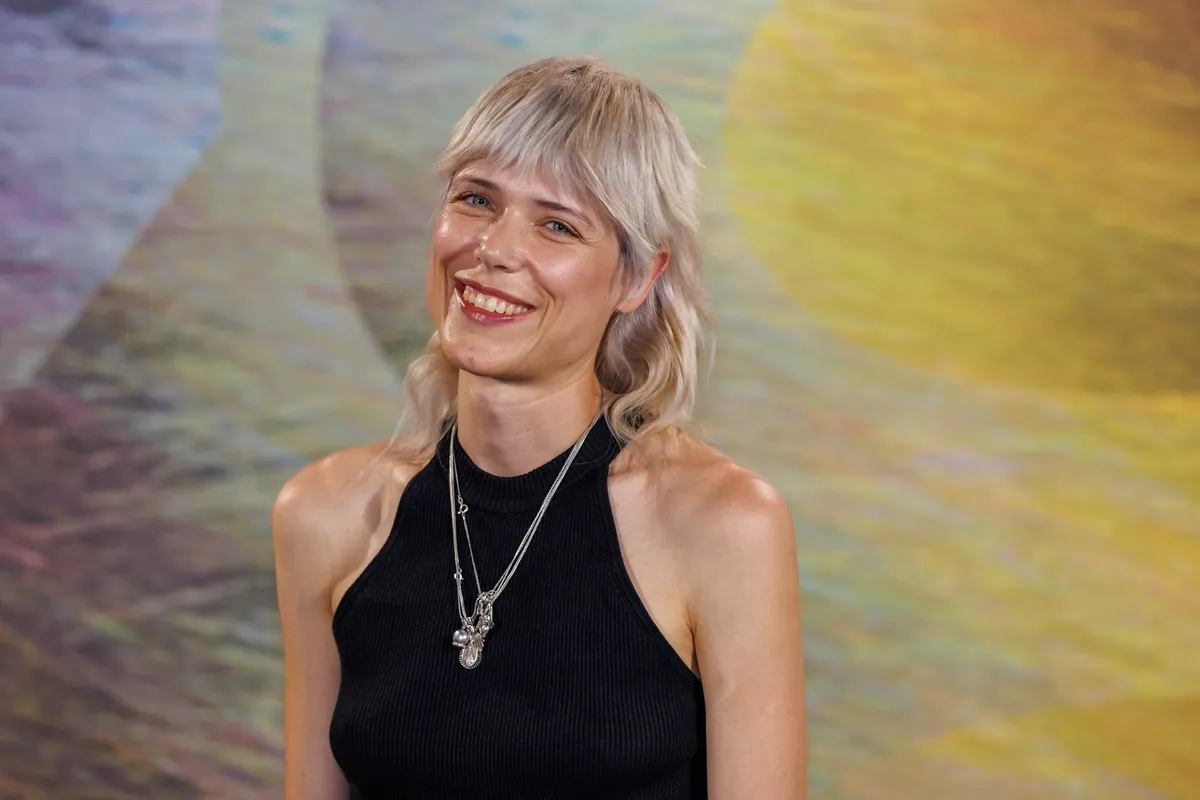
After her hit debut novel 'See How Lokrum Brushes Its Teeth' completely won over readers and theater audiences, Dubrovnik scientist and writer Ivana Lovrić Jović has published a new novel. The tenth book in her oeuvre, 'Nine Receptors for Bitter', has been released by publisher Vuković & Runjić, and the launch will take place at the Bokar Fortress in Dubrovnik, as reported by Dulist on August 17, 2026.
Unlike her debut, which was distinctly Dubrovnik-flavored for readers, the new novel brings a universal story unfolding across several cities during the turbulent 20th century. The plot follows a woman's life from birth to old age, through pre-war, war, and post-war periods, and through her fate, the author speaks about humanity amidst relentless historical upheavals.
In an interview with Dulist, Lovrić Jović revealed that writing her second novel was aided by experience she gained long before she even started writing. "It wasn't clear to me then why I wanted to study acting until I began to write. Now I know that I was interested in what someone who isn't me feels. Instead of writing workshops, I went through 250 hours of Stanislavski-based acting. Recently, I came across the fact that he was also a writer," she said.
Unlike her first novel, which she says served as a story about everyone, in 'Nine Receptors for Bitter' she created characters and events from her imagination, placing them in real space and time. "And then I had to feel the same as they did, and I'm convinced that the acting workshops I attended for years long ago helped me with that," she added.
Speaking about her own poetics, the writer emphasizes that every artistic act is aimed at the betterment of the world. "Every artist creates an artifact primarily to express their truth, which they believe will contribute to the improvement of the world. The main goal of art is liberation. That's why the greatest success of a literary work is to leave a mark on the reader, to make them a slightly better person," she said.
When asked how the novel will resonate with today's times, she replied that readers will ultimately decide. She says the theme came to her out of nowhere, and she describes the process of accepting the theme as slow and lengthy. "The theme forms somehow outside of us, seeks us out, and if we feel it's ours, we bow deeply and open the door to it. It goes slowly, over years, along with everything else," she explained.
The novel is also associated with her statement 'Either one kills oneself honestly, or one kills oneself to survive', which comes at the end of a description of the protagonist's extremely difficult life. Lovrić Jović clarifies that this sentence describes extreme challenges, but although it sounds exaggerated for ordinary life, it effectively conveys that every life is hard. "Some people are surprised by this all their lives, bewildered, and they die. Instead of rolling up their sleeves and starting to seek answers on how to accept that fact with less anger," she said.
Despite the great success of her first novel, the author says she has no stage fright before the release of the new book. "I'm just excited at the thought of someone opening that book and starting to read it. Of course, I hope that in the first ten pages, all their other plans for that day fall away," she admitted.
She chose the Bokar Fortress for the novel's launch, and when asked why that particular place, she replied that she doesn't exactly know. "Maybe because Bokar was built for defense against attacks, and the novel deals with the consequences of war... Maybe because my body remembers visits to Aretej, or rather, tours of Bokar during Aretej," she revealed. She also added a connection to Krleža's play, which speaks of the twilight of civilization through ancient Rome and Europe on the eve of World War II.
When asked whether this novel will also be turned into a theater play or a film, she answered briefly and clearly: "No. Let's not overdo it. Not every drawing has to become a sculpture."