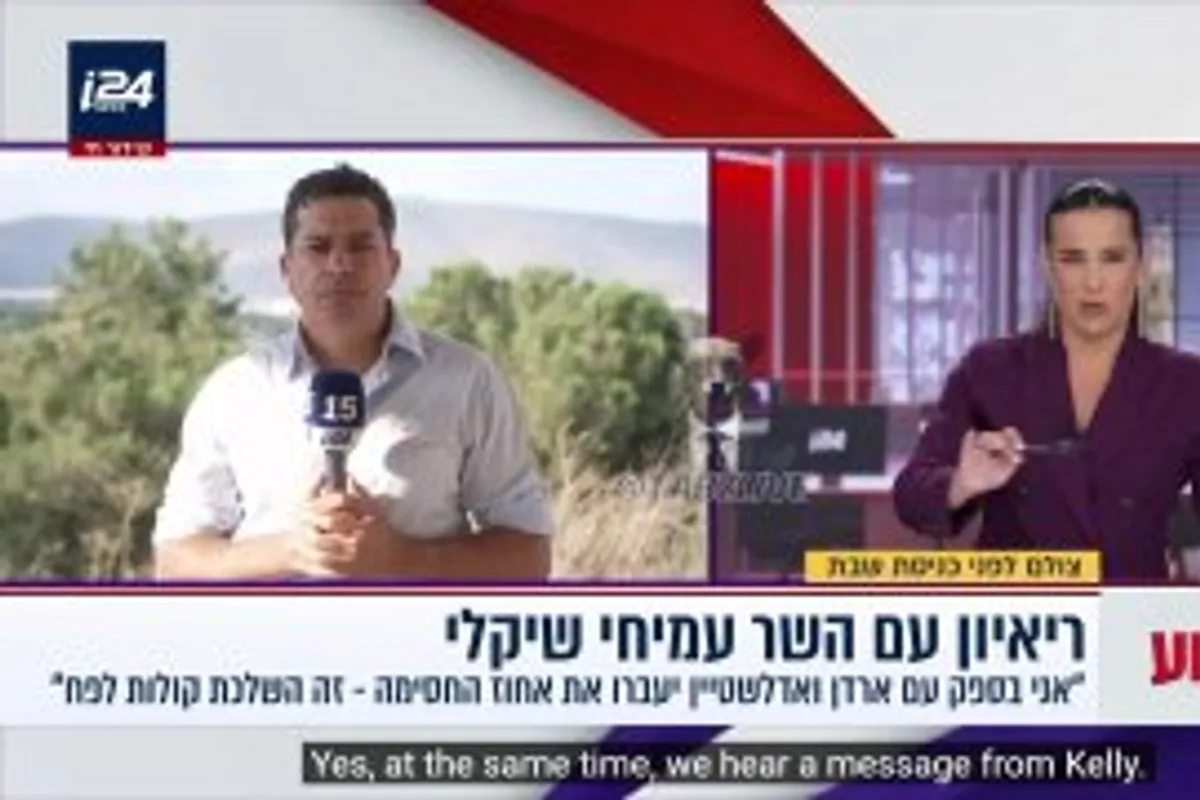
Israeli Diaspora Minister Amichai Chikli described the new defense alliance between Saudi Arabia, Turkey, and Pakistan, signed on Friday in Mecca, as a "very dangerous and very disturbing development." His statement followed Pakistani Defense Minister's call for a "united military front" against Israel, further escalating regional tensions.
The agreement, signed on August 7, 2026, by Saudi Crown Prince Mohammed bin Salman, Turkish President Tayyip Erdogan, and Pakistani Prime Minister Shehbaz Sharif, stipulates that an attack on any of the three countries will be considered an attack on all. Turkish Foreign Minister Hakan Fidan stated on Saturday that the arrangement is "technically equivalent to NATO's Article 5 on collective defense."
Israel's Concerns: Turkish Confrontation and the Syrian Front
Chikli specifically highlighted the danger of Turkish involvement in the alliance. "Saudi Arabia was essentially sitting on the fence. It already had a defense agreement with Pakistan, but the moment it moves forward with the Turks, who are in direct confrontation with us, which could escalate to dimensions with extremely serious consequences, both in the Mediterranean and on the Syrian front, that is a development that is very, very bad for us, for Israel," Chikli said.
In response to the emerging situation, the Israeli minister called for deepening alliances with Greece, Cyprus, the United Arab Emirates, and Somaliland. His words reflect the urgency Jerusalem attaches to creating a counterbalance to the new bloc.
Call for a 'United Military Front' and the Question of Normalization
A day after the signing, Pakistani Defense Minister Khawaja Asif called for a "united military front" against Israel, describing it as "a threat to the entire Muslim world." Asif linked his call to the unresolved Palestinian issue and urged the Islamic world to unite.
Despite the harsh rhetoric, analysts do not close the door on the possibility of normalization between Israel and Saudi Arabia. Dr. Yoel Guzansky, head of the Gulf Research Program at the Institute for National Security Studies (INSS), said the pact "does not completely close the door to normalization." "Countries need stability. The Saudis need stability," Guzansky said, describing Riyadh's approach as "hedging."
A Diplomatic Message to Washington
Jacob Nagel, former head of Israel's National Security Council, assessed that the agreement is "more of a diplomatic maneuver intended to pressure the American administration." According to him, Riyadh is seeking alternatives because it feels increasingly exposed. That vulnerability has escalated since the attacks on Saudi oil facilities at Abqaiq and Khurais in 2019, which exposed the limits of the kingdom's defense capabilities.
The Jerusalem Post, in its analysis, notes that Washington should pay attention to what happened in Mecca. A longtime American partner has sought additional security assurance from Ankara and nuclear-armed Islamabad, a warning about declining trust in U.S. security guarantees.
What Next?
The alliance will establish a ministerial committee and a general secretariat based in Saudi Arabia, with the possibility of Egypt joining in the future. Turkish President Erdogan said the agreement is based on "the principle of collective deterrence" and will expand security, defense, and counter-terrorism cooperation.
Israel, on the other hand, seeks to keep the door open to Riyadh, emphasizing the strategic potential of normalization that goes beyond embassies, tourism, and trade. However, as the Jerusalem Post notes, a defense partnership with countries whose senior officials portray Israel as a regional enemy will inevitably cast a shadow over that process.