On the 81st anniversary of the atomic bombings of Hiroshima and Nagasaki, Japan finds itself in the midst of an intense political debate that could fundamentally alter its pacifist defense policy. At the center of the controversy are the so-called 'three non-nuclear principles,' adopted in 1967, which prohibit Japan from possessing, producing, or allowing the introduction of nuclear weapons into its territory.
These principles, the cornerstone of Japan's postwar identity, are increasingly being questioned by the ruling establishment, faced with the growing military power of China and North Korea and uncertainty over the long-term role of the United States as a key security ally in the region.
Avoiding a Clear Answer and Calls for a 'No Taboo' Discussion
A pivotal moment occurred on Thursday at the Hiroshima commemoration when survivor Satoshi Tanaka directly asked Prime Minister Sanae Takaichi about a possible policy shift. Takaichi responded that Japan is 'currently' adhering to the three principles but declined to clarify whether she intends to maintain them in the future. This response immediately raised alarm among survivors and pacifist groups.
Just a month earlier, Defense Minister Shinjiro Koizumi openly advocated for a 'no taboo' discussion on nuclear weapons. His statement further fueled an already sensitive topic that had been nearly unthinkable in Japanese political discourse for decades. According to major Japanese media outlets, including national broadcaster NHK and the Asahi Shimbun newspaper, in December an unnamed senior government official even suggested in an off-the-record conversation with journalists that Japan should possess nuclear weapons.
Pressure for Change and Reactions from Neighbors
Prime Minister Takaichi's administration has already taken concrete steps toward a more active defense policy, increasing military spending, lifting a self-imposed ban on arms exports, and advocating for a revision of the pacifist Constitution. In this context, some proponents of change are focusing specifically on the third principle, the one prohibiting the introduction of nuclear weapons. Their goal is to allow the United States to bring nuclear weapons onto Japanese territory as part of an extended deterrence strategy.
Hirofumi Yoshimura, leader of the Japan Innovation Party, a coalition partner in the government, stated on the anniversary of the Hiroshima bombing that he believes there is room for discussion on that specific point. 'Of course, we must work toward building a world without nuclear weapons. But when we think about how to ensure the effectiveness of extended nuclear deterrence within our alliance with the United States, I believe we should... continue to adhere to the principles of 'not possessing or producing' nuclear weapons. As for 'not allowing their introduction,' I think there is room for discussion on that,' Yoshimura said.
This shift in Japanese policy has not gone unnoticed in the region. China has already accused Japan of 'new militarism,' referring to the strengthening of Japan's military capabilities.
Concerns of Those Who Remember Best
Survivors of the atomic attacks, known as hibakusha, have for decades been the cornerstone of Japan's anti-nuclear and pacifist culture. Their organization received the Nobel Peace Prize in 2024 for its work. However, this population is rapidly aging and shrinking. As of March this year, Japan recognized just over 91,000 survivors, a drastic decline from more than 164,000 a decade ago. Their average age is now 86.7 years.
Satoshi Tanaka, an 82-year-old activist and survivor from Hiroshima, did not hide his concern and frustration after meeting with the prime minister. 'That only explains the current situation. It says nothing about the future. It just worries me more. I'm concerned,' Tanaka told media. He added that he cannot shake the feeling that the prime minister actually desires change: 'If I look at it cynically, I can't help but think she actually wants change.'
Tanaka also criticized political leaders' focus on military capabilities at the expense of diplomacy. 'There's so much talk about national security. What about building peace through diplomacy?' he asked.
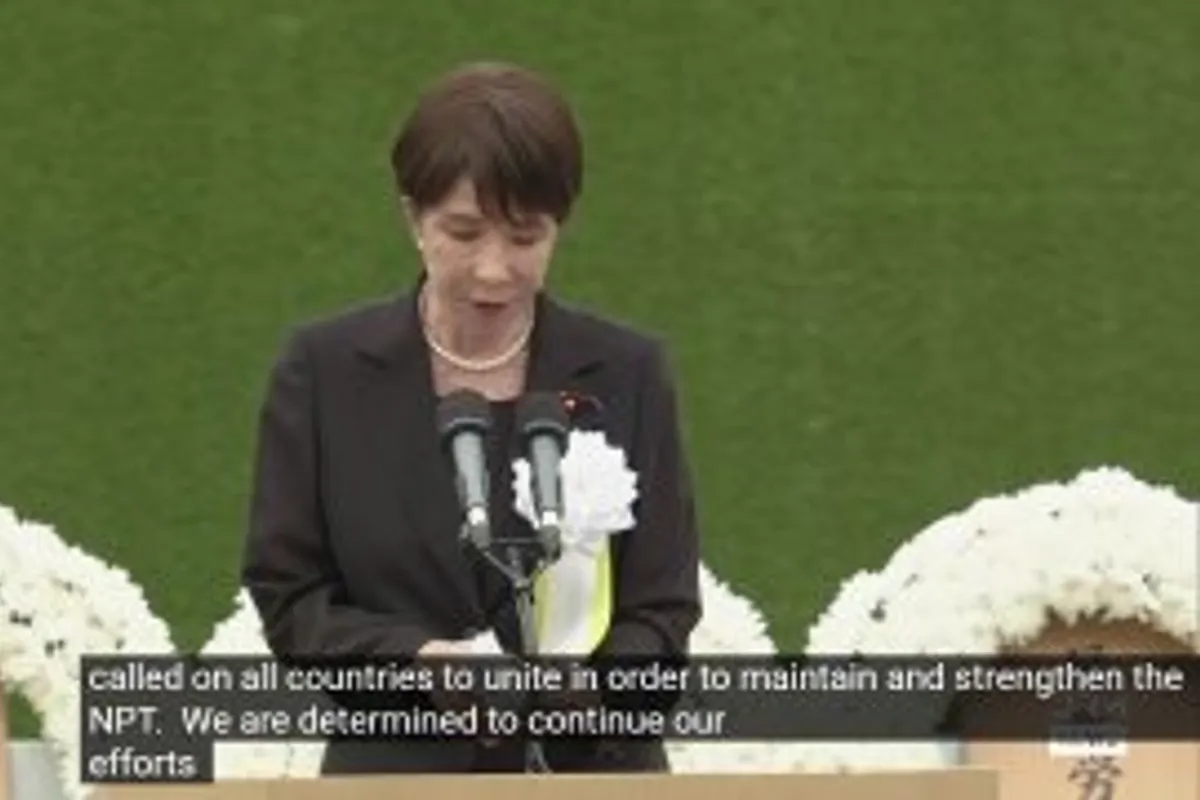
Meanwhile, Prime Minister Takaichi appealed to world leaders to visit Hiroshima and Nagasaki. 'The importance of spreading an accurate understanding of the reality of the atomic bombings around the world is becoming increasingly significant. We call on leaders around the world and future leaders to visit the sites of the atomic bombings and experience the reality of what happened there,' she said.
The atomic attacks on Hiroshima on August 6 and Nagasaki on August 9, 1945, carried out by the United States, killed more than 210,000 people, including those who later died from the effects of radiation. These attacks remain the only instances of nuclear weapons use in armed conflict.