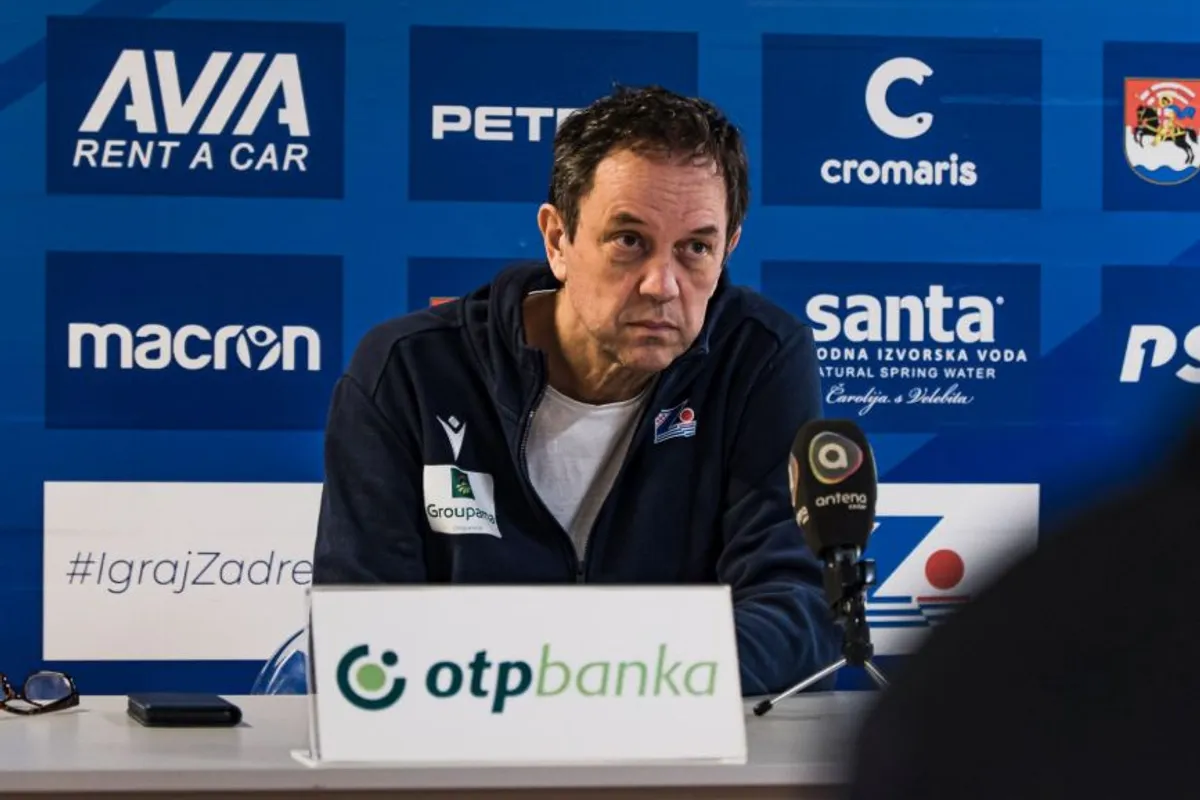
This summer, Višnjik experienced a true tectonic shift whose real dimensions will only be felt with the start of serious regional challenges in the ABA League. After four years filled with trophies, Danijel Jusup left the bench of KK Zadar, concluding one of the most striking periods in the club's history. The scorching coaching seat was inherited by 47-year-old Stipe Modrić, a native of Sinj who finds himself facing an almost impossible mission.
Jusup left behind not just silverware, but an almost legendary status. He built a recognizable "Jupa's basketball", a demanding, isolation-heavy, and physically devastating system that crushed opponents with sheer force. With minimal resources, he achieved maximum results, turning overlooked players like Luka Božić into the ABA League's most valuable players. The void he left is immense, and Modrić is only at the beginning of the road to try to fill it.
Modern Vision vs. Traditional Audience
Modrić's announcement of modern basketball, fast transitions, and aggressive pressing is met with caution. Zadar's fans are highly conservative and above all pragmatic. They are not attracted by attractive defeats, but exclusively by points and victories. With a budget of 800 thousand euros net allocated for reinforcements, the new strategist has yet to prove he knows how to select players and build the fighting chemistry that Jusup managed to create season after season.
Until that happens, every lost ball and every misstep in regional competition will only intensify the longing for the former coach. Jusup's shadow will be his toughest opponent this season. Modrić's vision is bold, but at Višnjik, patience wears thin faster than anywhere else.
The Eternal Tale of "Zadar's Kids"
There is, however, one topic where there is a danger of a painful repetition of history, the eternal Zadar myth of promoting homegrown talents. It is well known that during Jusup's tenure, local youngsters mostly served only to fill numbers in training. With his extremely short rotation, he hermetically closed the door to the inexperienced, where survival was possible only through the muscles and experience of battle-hardened veterans. "Zadar's kids" spent his trophy seasons deeply frozen on the edge of the bench.
Modrić's arrival and the quick inclusion of club youngsters during preparations sparked a glimmer of hope, but harsh professional reality will quickly extinguish that romance. His system demands a running hell, military discipline, and tactical maturity that kids simply do not possess in clashes with ABA League "heavyweights." When the pressure of results becomes unbearable in November and December, and the Krešimir Ćosić arena demands only triumphs, any talk of a wider rotation and youth development falls into oblivion.
Manuel Dundović made a smart move by going on loan to Zabok, and it is realistic to expect that some of the remaining Zadar prospects will follow the same path because there is simply no room for them in the first team. Everything points to the same epilogue, the fight for bare survival and the imperative of results will again return "Zadar's kids" to well-known positions of waving towels and waiting for crumbs in the semi-amateur and uninteresting Croatian Championship. At Višnjik, coaches come and go, but the unwritten rule that young players rarely get a real chance remains carved in stone.