Chinese Module in Russian Drones Evades Sanctions and Jammers
Russian unmanned aerial vehicles now use the Chinese XK-F358 communication module, which makes them resistant to electronic jamming, and the device remains freely available on the market.
Russian unmanned aerial vehicles now use the Chinese XK-F358 communication module, which makes them resistant to electronic jamming, and the device remains freely available on the market.
Russia has installed Chinese communication modules in its Geran and Gerbera drones, allowing them to stay connected even under intense Ukrainian electronic jamming. The system in question is the XK-F358, which creates a so-called mesh network, and according to Euromaidan Press, the device is still freely sold and is not covered by Western sanctions.
The XK-F358 communication module enables multiple drones to interconnect in a network that can maintain communication even when individual links are jammed or completely severed. This very characteristic makes it a key component in Russian efforts to make their drones more resilient to Ukrainian electronic warfare systems, which have so far been highly effective at disrupting navigation and communication.
Particularly telling is the fact that the XK-F358, despite its proven wartime use, can still be purchased on the open market. The price of a single module ranges from approximately $8,100, and it is not on American, European, British, or Ukrainian lists of sanctioned goods. This leaves Russia with the ability to acquire key components through commercial channels, despite years of Western efforts to cut off supply chains that provide the Russian military industry with electronics, chips, and other dual-use components.
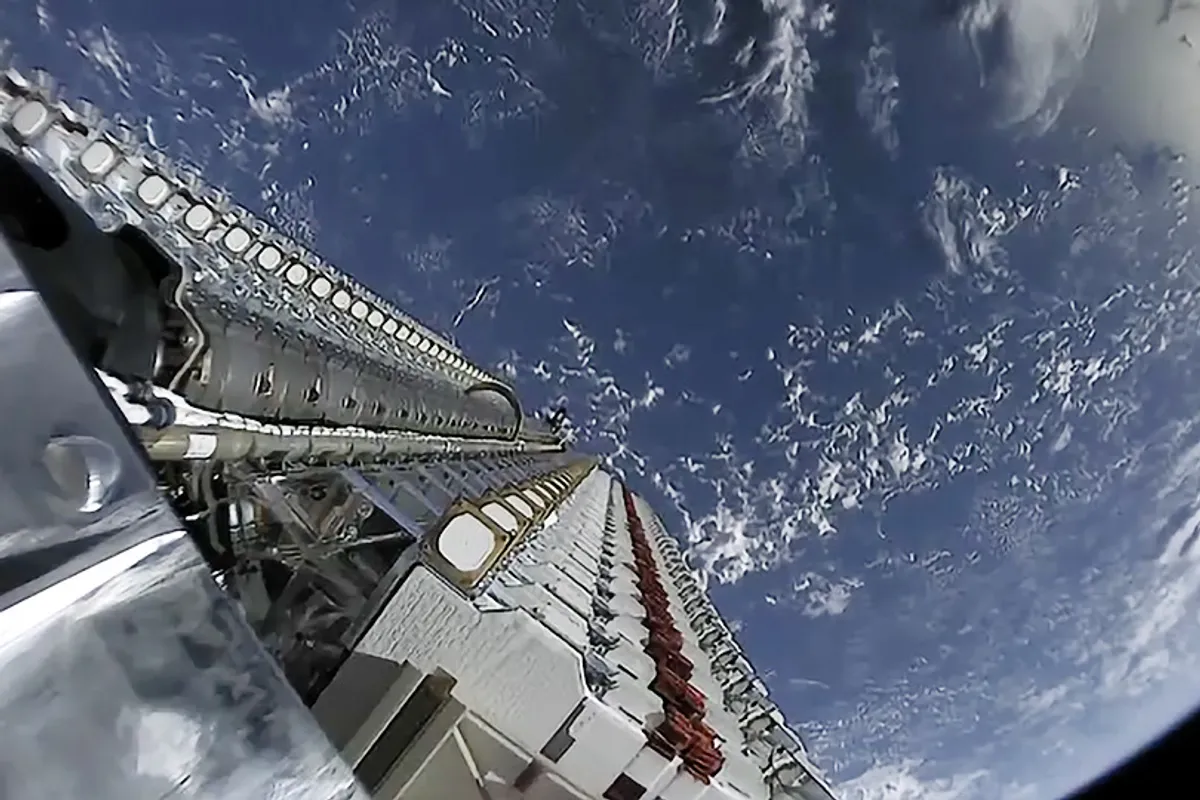
Alongside the use of Chinese modules, Moscow is attempting to reduce its dependence on foreign communication systems by developing its own satellite network. According to information reported by Euromaidan Press, Russia plans to have 292 satellites in the Rassvet system by 2027, designed as a domestic alternative to Starlink.
The network already allows for short-lived communication links as individual satellites pass over Ukrainian territory, and Kyiv is reportedly considering ways to limit its military use. All of this indicates that the drone conflict is increasingly taking place not only in the airspace but also in the domains of communication, electronics, and satellite systems.
While Russia seeks ways to bypass Ukrainian defenses, Kyiv is simultaneously developing its own technological solutions. Among the newer solutions, the Spider interceptor drone stands out, which does not destroy the enemy drone with a direct hit but releases a net, after which it can return and be reused.
A new platform, Avengers Labs, is also in preparation, where artificial intelligence algorithms are trained on millions of battlefield videos. In parallel, Ukraine is working on new electronic warfare systems designed to protect its own, more expensive drones. The technological race between the two sides thus shows no signs of slowing down.