Krka launches restoration of tufa barriers: Project worth €2.3 million
Restoration of tufa barriers at Skradinski buk, Roški slap, and Brljan is a priority for Krka National Park, with initial results expected within two years.
Restoration of tufa barriers at Skradinski buk, Roški slap, and Brljan is a priority for Krka National Park, with initial results expected within two years.
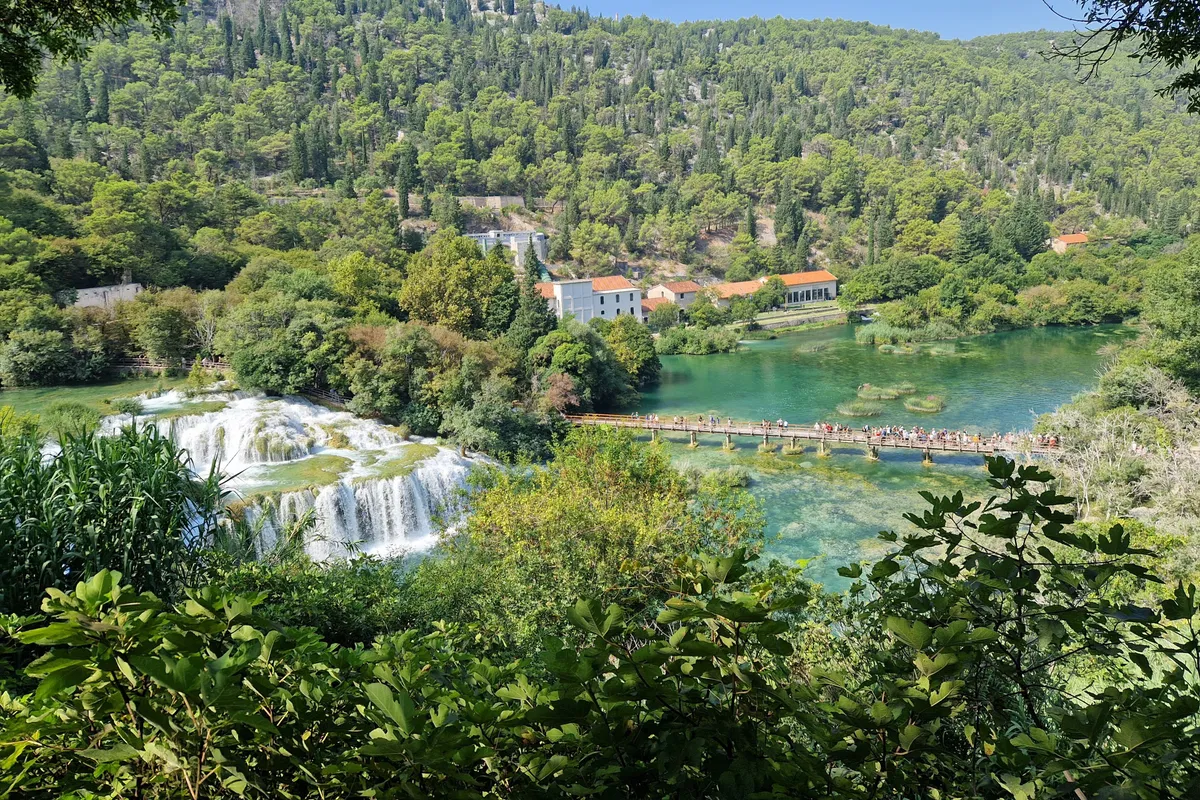
Krka National Park has launched a project to restore and preserve tufa barriers, the park's signature phenomenon that creates its magnificent waterfalls. The total project value is €2.3 million, of which €1.9 million is covered by non-refundable funds from the Ministry of Environmental Protection and Green Transition, while the park will cover the remainder from its own budget.
The restoration will cover tufa barriers at Skradinski buk, Roški slap, and Brljan waterfall. Gordana Goreta, head of the Department for Water, Tufa, and Biodiversity Protection at Krka NP, explained that part of the woody vegetation will be mechanically removed to allow normal water flow and tufa regrowth. She emphasized that the goal is to maintain the current state and strive to improve it.
Due to the highly sensitive microhabitat where tufa forms, all work will be carried out exclusively by hand and mechanically, without heavy machinery, to minimize the impact on the system. Over the past five years, extensive tufa research has been conducted in the park, laying the groundwork for this project.
Nella Slavica, director of Krka National Park, pointed out that tourists and visitors no longer pose a threat to tufa, primarily thanks to the long-standing swimming ban at Skradinski buk. The real challenge, she said, comes from climate change, rising temperatures, and increased vegetation on the waterfalls themselves, which this project aims to bring under control.
"That's why we can already say today that tourists and visitors do not threaten tufa, but what does threaten it is certainly climate change. Rising temperatures, increased vegetation on the waterfalls themselves-that's what we will try to bring under control with this project."
The first visible results of the project are expected within two years. As part of the project, a study will also be developed to enable the application of Krka NP's experiences and methods in other parks. In the future, there are plans to restore the remaining waterfalls as well.