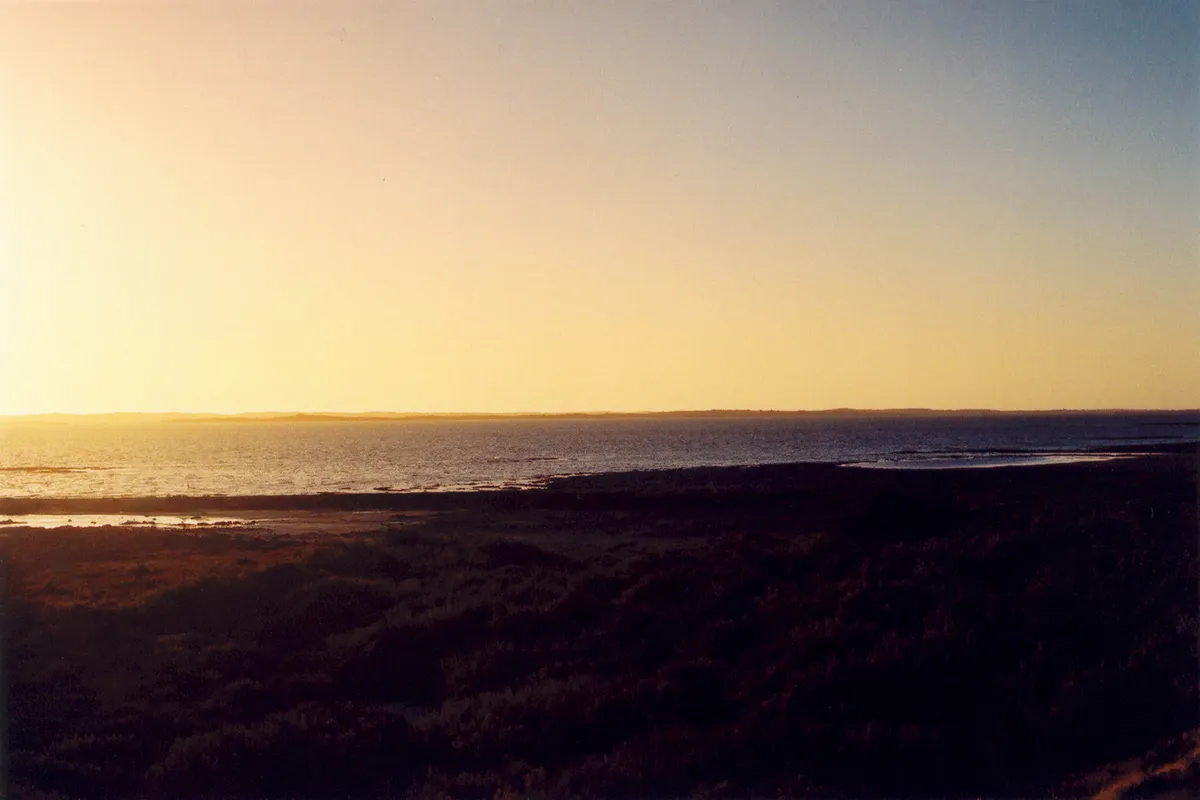
The other day, residents of the Colombian municipality of Galeras were surprised to see dark red clouds gathering above them. The sight, which occurred just a few days after a powerful earthquake, sparked many speculations and even thoughts of the apocalypse for some.
However, scientists quickly reassured the public and explained this rare phenomenon. It was a phenomenon known as candilazo, which has been seen before, for example, in Caracas, Venezuela, also after an earthquake.
What is candilazo and what causes it?
There is no scientific evidence linking red skies to any seismic activity. Although dust from collapsed buildings could have locally added fine particles to the air, scientists said the main cause was a natural atmospheric process.
The term candilazo is used to describe very vivid red or orange sunsets. Although the name is regional rather than scientific, the physics behind it is well understood and based on Rayleigh scattering.
The science behind red sunsets
As the Sun approaches the horizon, its light must pass through a significantly thicker layer of Earth's atmosphere. On this longer path, shorter wavelengths of light, such as blue and violet, are scattered by air molecules, while longer wavelengths, red and orange, pass through almost unimpeded and dominate the sky.
Rayleigh scattering, named after the British physicist Lord Rayleigh, explains the blueness of the sky during the day and the redness of sunsets. Scattering is inversely proportional to the fourth power of the wavelength, so blue light is scattered about nine times more efficiently than red light.
This effect is further enhanced when other fine particles, such as dust, smoke, or aerosols, are present in the atmosphere. These particles enhance the scattering of shorter wavelengths, allowing red and orange tones to become even more visible.
Meteorologists also point out that northern South America occasionally experiences episodes of Saharan dust, carried by trade winds across the Atlantic Ocean. According to NASA's explanations, dust clouds can intensify sunset colors by increasing the number of suspended particles that scatter sunlight.
Devastating earthquake in the background
Recall that western Colombia was hit about ten days ago by a devastating earthquake of magnitude 7.4, with official figures reporting at least 304 dead, more than 4,400 injured, and hundreds missing.