The Tiny Helicopter That Was Supposed to Fly for 30 Days on Mars Lasted Nearly Three Years
NASA's Ingenuity, weighing just 1.8 kilograms, shattered all expectations and fundamentally changed how other planets will be explored.
NASA's Ingenuity, weighing just 1.8 kilograms, shattered all expectations and fundamentally changed how other planets will be explored.
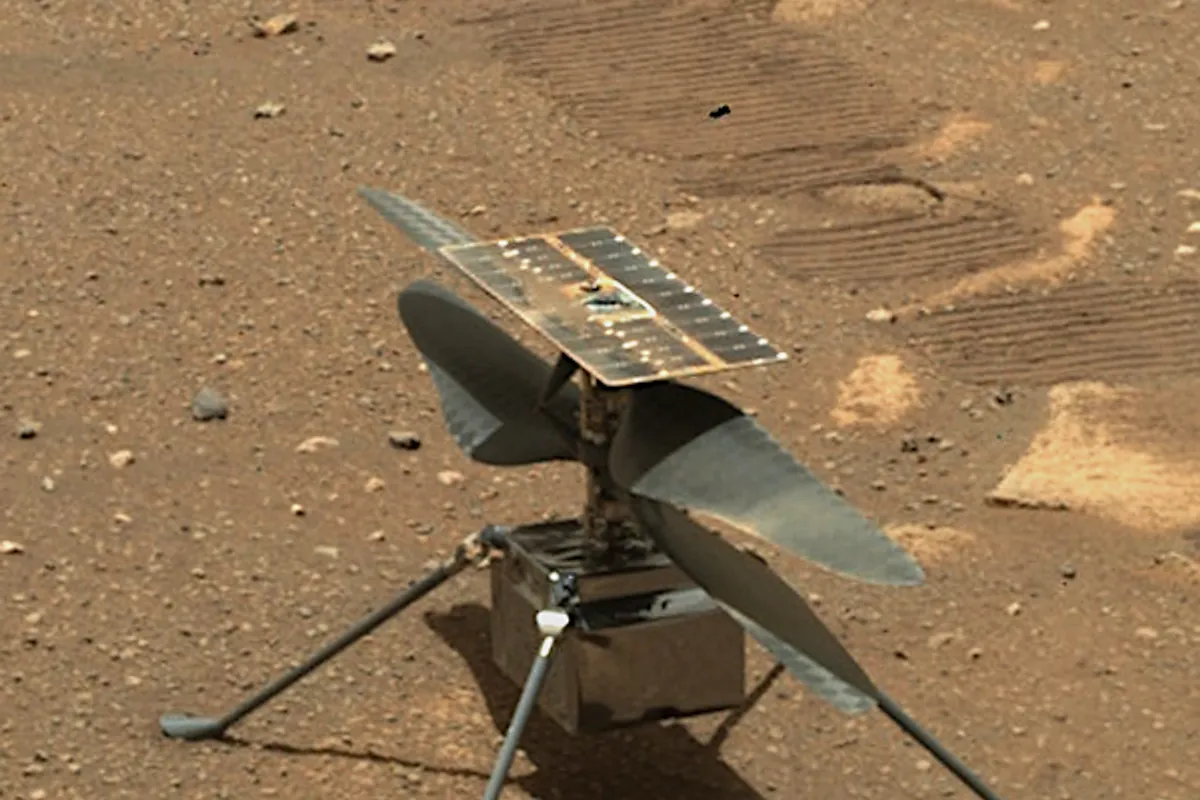
When NASA's helicopter Ingenuity first lifted off above the Martian surface on April 19, 2021, it was a historic moment comparable to the Wright brothers' first flight on Earth back in 1903. The aircraft, weighing just 1.8 kilograms with a rotor diameter of 1.2 meters, hovered at an altitude of three meters for a full 39 seconds, proving that controlled flight in the extremely thin atmosphere of the Red Planet is possible.
The initial plan was modest: survive 30 sols (Martian days) and perform up to five demonstration flights. However, the small helicopter, which arrived on Mars attached to the Perseverance rover in Jezero Crater on February 18, 2021, exceeded all expectations and became one of the most successful technology demonstration projects in the history of space exploration.
Flying on Mars is an unprecedented engineering feat. The atmosphere there is about 100 times thinner than Earth's, with less than 1% of its density. To generate lift at all, Ingenuity's carbon-fiber rotors had to spin at speeds between 2,400 and 2,900 revolutions per minute, several times faster than the rotors of a conventional helicopter on Earth.
Additionally, the aircraft had to contend with temperatures that dropped below -90°C during Martian nights. Solar panels charged the batteries during the day, while heaters protected the sensitive electronics from freezing. Due to communication delays between Earth and Mars, each flight was fully autonomous, guided by pre-programmed instructions and navigation sensors.
As engineers gained confidence in its performance, Ingenuity evolved from a technology demonstrator into an operational scout that actively assisted the Perseverance rover in its scientific mission. It flew ahead of the rover, photographed potential routes, identified hazards, and helped mission planners choose safer paths across the rocky terrain.
By the end of its mission, the helicopter had achieved incredible numbers: it flew for a total of 1,004 sols, conducted 72 flights, covered more than 17 kilometers, reached a maximum altitude of 24 meters, and achieved speeds of nearly 10 meters per second. This surpassed the planned mission duration by more than 33 times and exceeded the planned number of flights by 14 times.
Ingenuity's final, 72nd flight took place on January 18, 2024. Although it landed successfully, one or more rotor blades were damaged during that landing, most likely due to contact with the Martian surface. Images later confirmed that part of a blade had broken off, making further flights impossible. NASA officially announced the end of the flight mission on January 25, 2024.
Although grounded, Ingenuity continued to send meteorological data to the Perseverance rover before communication was permanently lost. Its legacy, however, is just beginning to unfold. NASA is already applying the lessons learned to future aircraft concepts for the Moon, Mars, and the Dragonfly mission, which will explore Saturn's moon Titan. What began as a modest 30-day experiment turned into a 1,004-sol success story that proved flight in Mars' thin atmosphere is not only possible but can also redefine how humanity explores the solar system.