On Monday, August 17, 2026, Željko Mihelić, who heads the Croatian Chamber of Agriculture, sent an open letter addressed to farmers, the public, and the Government of the Republic of Croatia. The occasion was the catastrophic drought that continues to affect agricultural production this year, as well as major disruptions in the agricultural products market across nearly all sectors. The letter was published a day later on the portal Vinkulja.hr.
In the letter, written in his capacity as a farmer and livestock breeder, Mihelić states that the time has come to say things to one another that may not always be pleasant to hear. "I write this letter as a farmer. As a man who knows what it means to sow, wait, invest, and finally look at the sky," he says at the outset.
Drought Is No Longer a Matter of One Bad Year
The key message of the letter is that drought is usually only seriously discussed when it is already too late, when the damage is visible, and when calculations begin on how much less was produced. Mihelić warns that production conditions are changing, temperatures are rising, heatwaves are becoming more frequent, and dry periods are becoming a more serious production risk.
"If production conditions are changing, then the way we produce must change too. And this is not a matter of ideology. It is a matter of survival," emphasizes Mihelić, adding that Croatia has water, but it must know how to bring it where it is needed and use it where it can create economic value.
In doing so, he highlights the fact that at the EU level in 2023, only about 6.5 percent of utilized agricultural area was actually irrigated. "I don't want to turn one statistic into the whole story, but we cannot build the future of Croatian agriculture on the hope that rain will fall exactly when we need it," he says.
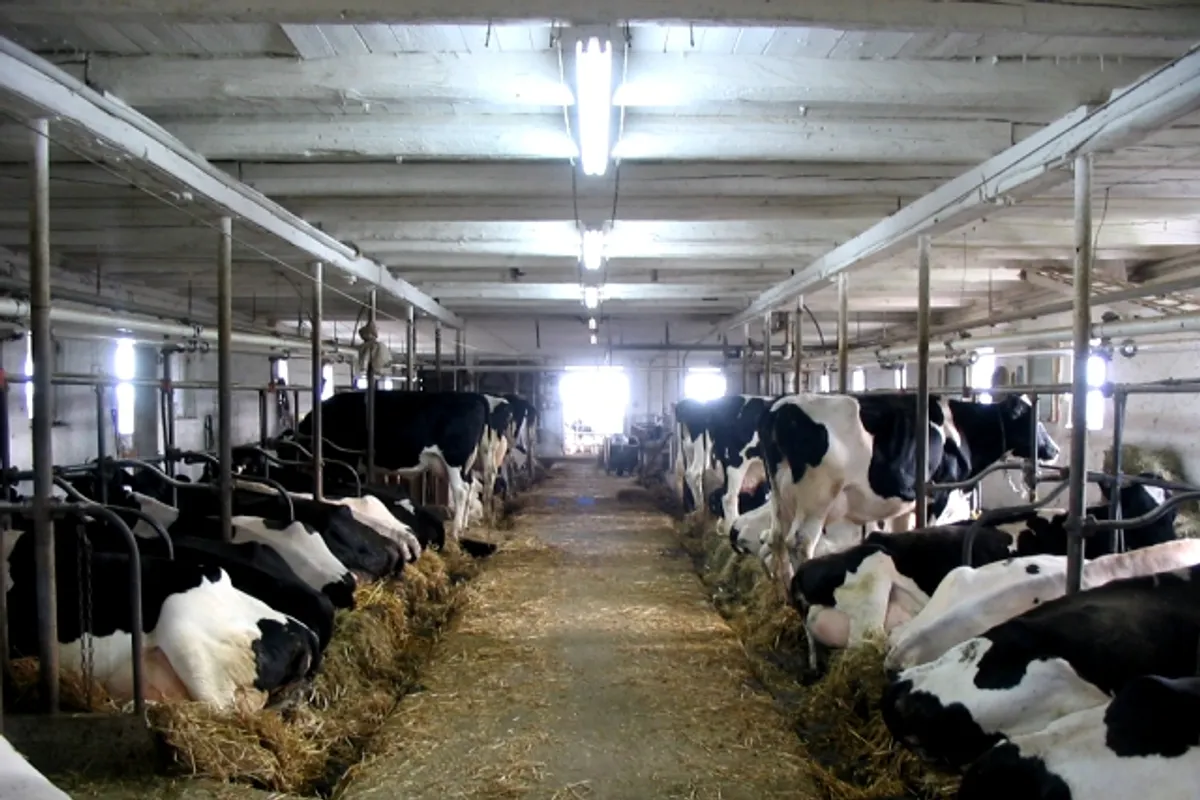
A 35 Percent Decline in Milk Production
Mihelić calls for an end to grand rhetoric and a look at the numbers. In vegetables, the picture is clear: production fell from 215,826 tons to 208,764 tons, while domestic production covers less than half of domestic needs. In cow's milk, the decline is even more serious: production fell from 696.1 million liters to 454.3 million liters, a drop of nearly 35 percent.
"I am not presenting these figures to point fingers at anyone. I don't want to find a culprit. I want to ask the question we must ask ourselves: Do we want Croatia to produce food for its citizens, or will we become increasingly dependent on imports?" Mihelić asks, adding that this question is not just a matter for farmers, but for all of us.
Livestock Farming and the Overgrowth of Pastures
As a livestock farmer, Mihelić cannot overlook what is happening in livestock farming. He warns that in Lika, Dalmatia, Istria, and other parts of Croatia, where livestock has maintained the landscape for centuries, its disappearance is causing areas to become overgrown-first with grass and weeds, then shrubs, and then forest. This increases the amount of combustible material and the risk of fire under conditions of high temperatures and drought.
"I am not claiming that the overgrowth of agricultural land is the cause of every fire. But it would be irresponsible to pretend that it doesn't matter what an area that no one has used for years looks like," he states. He therefore calls for livestock to be returned to pastures wherever natural and economic conditions allow-not just for the sake of livestock farmers, meat, and milk, but also for the land, the people, and the landscape.
A Restructuring Fund Instead of One-Off Aid
Mihelić then arrives at what he calls the most difficult part of the letter. It is not enough to tell the state what it must do; we must also tell ourselves what we must do. Change costs money: irrigation, new orchards, greenhouses, cold storage, warehouses, processing, new technology. And the Croatian farmer does not have unlimited capital, so the question arises: who will finance the change?
His position is unequivocal: neither can the farmer alone bear the cost, nor can the state fully take over financing on his behalf. Investing one's own capital and accepting part of the risk is the farmer's obligation, while the state should provide favorable conditions, and the financial sector should enable the implementation of investments. Therefore, he believes that Croatia needs a strong domestic fund for restructuring, adaptation to climate change, and increasing the competitiveness of Croatian agriculture.
"We don't need a fund to survive the old model. We need a fund that will help us create a new one. That is the difference between aid and investment. Between repairing the consequences and creating the future," Mihelić says.
"Nostalgia Is Not a Strategy"
Mihelić emphasizes that he is not asking for money because farmers have it hard, but because the conditions in which we produce are changing. The farmer, he says, is a producer, an entrepreneur, a person who invests his own money, labor, and risk, and the state should not be a substitute for the market, but a partner in creating conditions.
In the conclusion of the letter, Mihelić reflects on the future. Croatia has land, water resources, skilled producers, heritage, and expertise, as well as a domestic market of four million people, plus an additional EU market of hundreds of millions of consumers. But tradition, however important, is not a strategy.
In this context, he quotes Canadian Prime Minister Mark Carney, who said this year in Davos: "Nostalgia is not a strategy." Mihelić believes that this sentence must be understood in Croatian agriculture as well. "Tradition tells us where we come from. Strategy must show where we are going," he concludes.
Finally, he tells the citizens of Croatia not to look at Croatian agriculture only when food prices rise or when drought strikes. "Food does not just appear on the store shelf. Someone has to produce it," Mihelić reminds, warning that the bill for unchanged production will ultimately be paid by the consumer, the state, and the economy through greater import dependence and reduced security of domestic food production.