Muslim Defense Pact Rattles Israel
Saudi Arabia, Turkey, and Pakistan signed a historic joint defense agreement in Mecca on Friday, which Israeli media and analysts are following with undisguised unease.
Saudi Arabia, Turkey, and Pakistan signed a historic joint defense agreement in Mecca on Friday, which Israeli media and analysts are following with undisguised unease.
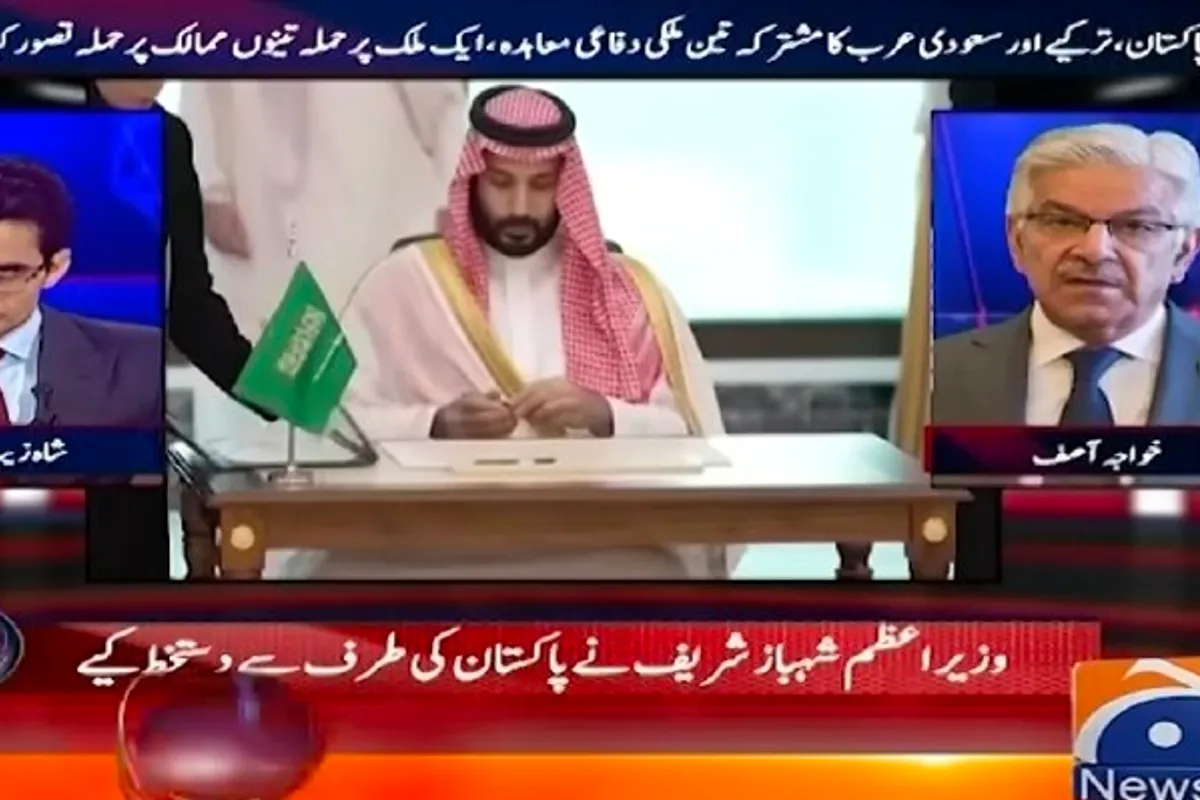
Saudi Arabia, Turkey, and Pakistan signed a joint defense agreement in Mecca on Friday, August 8, 2026, which treats any armed attack on one of the signatories as an attack on all three. The agreement, named the Mecca Joint Defense Agreement, unites NATO's second-largest army (Turkey), the Muslim world's only nuclear power (Pakistan), and the wealthiest Gulf state that guards Islam's holiest sites (Saudi Arabia).
Although the three governments described the agreement as defensive and not aimed at any specific country, Israeli and Western media largely interpret it as a response to moves by Israel and Iran. The Times of Israel noted that all three signatories are wary of Israel, while other reports explicitly characterized the pact as a signal to Israel, which has long been considered the Middle East's only nuclear power.
The day after the signing, Pakistani Defense Minister Khawaja Asif gave an interview to Pakistan's Geo News channel in which he called for unity among Muslim countries against Israel. "Regarding Israel, all Muslim countries must unite," Asif said. "Pakistan, Saudi Arabia, and Turkey have made available to the entire Muslim nation a joint framework. In this regard, the door cannot be closed to other countries. This agreement is the beginning of a process of unification of the Islamic world."
Asif, whose full name is Khawaja Muhammad Asif, has previously sparked anger in Israel. In April 2026, he described Israeli attacks on Lebanon as "evil" and Israel as "a curse on humanity." The Israeli Prime Minister's Office then called his social media post "a call for the destruction of Israel."
Israel has not yet officially responded to the agreement. Analysts and sources close to the government suggest that Israeli leadership will use Saturday's break, when Israeli politicians typically pause for Shabbat, to consider the full implications of the new regional alliance.
Bregman, an analyst, told Al Jazeera: "Above all, this defense pact reflects a lack of trust in the US and its ability or willingness to protect its allies in the Middle East. I believe this pact is more about 'holding hands' to counter Iran than Israel." However, he adds: "From Israel's point of view, the main negative aspect of the pact is that Turkey, which has become a serious challenge to Israel, is part of it."
Turkey is widely perceived as a threat among Israeli politicians of all stripes. Last month, Turkish Foreign Minister Hakan Fidan stated that Israel is "a burden that humanity can no longer bear," which Israeli Foreign Minister Gideon Saar called "a textbook incitement to genocide."
President Recep Tayyip Erdogan said in June 2026 that Israeli invasions in Syria and Lebanon pose a direct threat to Ankara. "Turkey's security does not begin in Hatay, but also in Aleppo, Damascus, and Beirut," Erdogan said. Prime Minister Benjamin Netanyahu responded by calling Erdogan an "anti-Semitic dictator."
Former Israeli Prime Minister Naftali Bennett, who will be Netanyahu's rival in the October 2026 elections, had already labeled Turkey as the "new Iran" in February this year and warned of a "hostile Sunni axis with nuclear Pakistan."
Daniel Levy, a former adviser to the Israeli government, believes the pact will become a key issue in the election campaign. "Everything is amplified in the election season. Netanyahu has been very critical of Turkey, but Bennett has been even more extreme on this issue, presenting it as a new challenge in the Iranian style in the region," Levy told Al Jazeera. "My assumption is that they will either use it as a tool to criticize Netanyahu and present it-especially the inclusion of Saudi Arabia-as a diplomatic failure."
For Saudi Arabia, the experience of the current war has confirmed an uncomfortable conclusion, explains Andreas Krieg, senior lecturer at the School of Security Studies at King's College London. "American military power remains indispensable, but the American relationship does not guarantee immunity from attack and does not necessarily mean that Washington will act according to Saudi priorities. Saudi Arabia therefore wants more strategic depth and more options," he told Al Jazeera.
Netanyahu has for years strongly pushed for Saudi Arabia's inclusion in the Abraham Accords, and his office described a potential nuclear agreement between Saudi Arabia and Israel as a "historic breakthrough for peace." However, Riyadh has stayed away from the normalization process since the Israeli war in Gaza began in October 2023, in which at least 72,000 Palestinians have been killed.
The day before the signing of the agreement in Mecca, Netanyahu spoke by phone with Indian Prime Minister Narendra Modi. "Thank you, my friend, Prime Minister of India Narendra Modi. Together we continue to strengthen the bond between Israel and India," Netanyahu wrote on Twitter on August 7. Modi confirmed that they "reviewed the progress in various aspects of the special strategic partnership between India and Israel."
Levy suggests that Netanyahu might try to downplay the significance of the new pact by pointing to the relationship with India, which he has "personally cultivated," as more important. India is part of Netanyahu's "hexagon of alliances," which also includes Greece, Cyprus, and other unnamed Arab, African, and Asian states.