Oil Spill Off Oman Becomes Worst Environmental Disaster
The tanker Caroline Bezengi, carrying Russian oil, ran aground in late June, and the spill has since spread uncontrollably, now threatening Oman's coast and a marine nature reserve.
The tanker Caroline Bezengi, carrying Russian oil, ran aground in late June, and the spill has since spread uncontrollably, now threatening Oman's coast and a marine nature reserve.

Oman's environmental protection agency has reported that a large oil spill, caused by damage to the tanker Caroline Bezengi, has already begun reaching the Omani coast. According to data reviewed by Reuters expert John Amos, the slick now covers an area larger than 2,000 square kilometers, making it one of the worst environmental disasters in the world in recent years.
The 25-year-old tanker Caroline Bezengi, under international sanctions, ran aground on June 30, 2026, on the islet of Al-Qibliyyah, part of a marine nature reserve that includes the Hallaniyat Islands off the coast of the Dhofar governorate. It was carrying approximately 800,000 barrels of Russian oil. According to authorities' warnings, the oil could cover a 40-kilometer stretch of coastline near Ras Madrake, including Masirah Island.
Numerous animal species are also at risk, including Arabian Sea humpback whales, Socotra cormorants, endangered turtles, and coral reefs.
According to a Greenpeace report, the spread of the slick has dramatically accelerated. Hanen Keskes, political campaign lead for Greenpeace in the Middle East, stated that the affected area expanded from about 45 square kilometers at the end of July to 150 in early August, then quadrupled to 600 square kilometers by August 4. Amos's estimate of 2,000 square kilometers means the slick has grown more than 40-fold since the beginning of August.
Omani authorities have stated that the slick covers nearly 400 square kilometers, which is several times smaller than the estimates of experts and environmental organizations. Oman said it used protective booms to try to halt the spread but did not respond to Reuters' inquiries for details or comments on containment efforts.
Amos, who heads the nonprofit SkyTruth, which analyzes satellite imagery for environmental protection, highlighted the danger of a spill of between 40 and 50 million gallons of oil. According to him, this would be comparable to the Exxon Valdez tanker spill in 1989. "The nightmare is that there is no adequate response to prevent the worst," Amos told the Straits Times.
The tanker first reported difficulties on June 8 near Yemen, following an explosion, according to maritime sources. No one claimed responsibility for the attack, but the vessel, en route from Russia to India, had passed through two separate war zones.
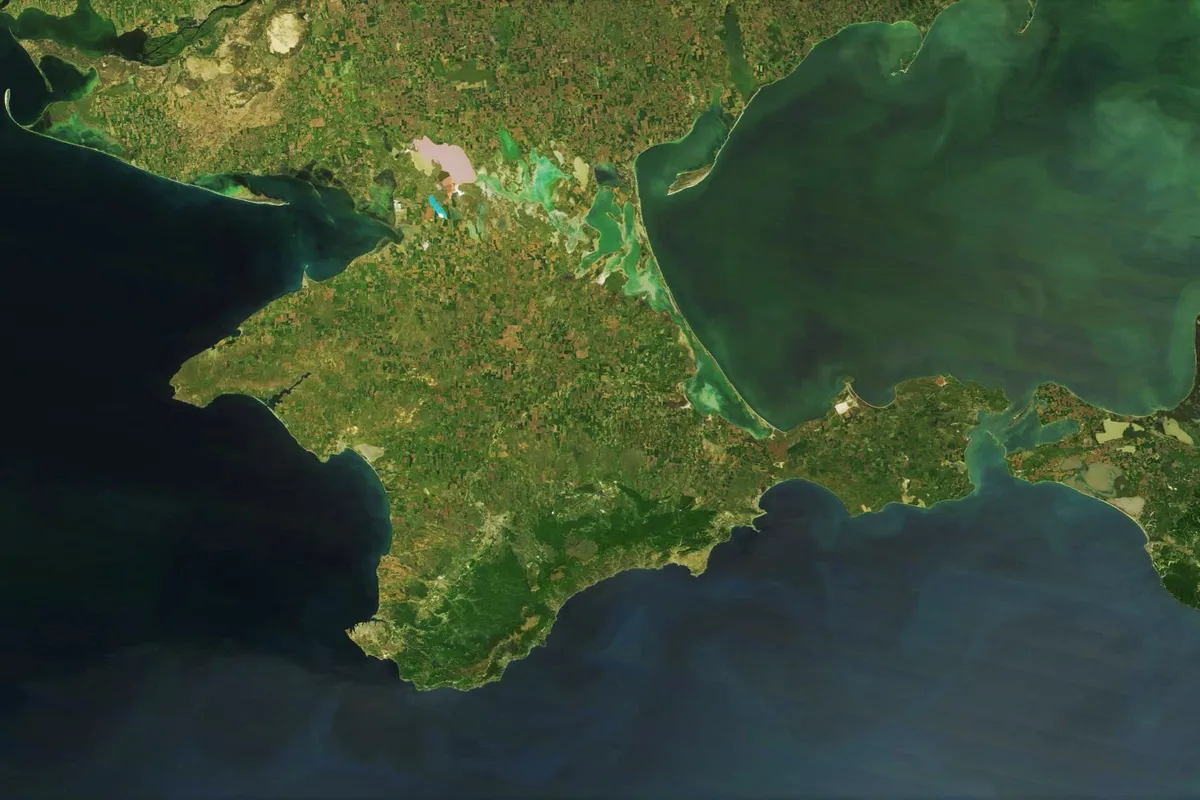
In April, it departed from the Russian port of Novorossiysk on the Black Sea, a hotspot in the war between Russia and Ukraine, as part of the so-called "shadow fleet" transporting Russian oil. In late May, the vessel transited the Suez Canal and then continued toward Yemen, where Houthi rebels, backed by Iran, have been involved in the broader regional conflict between the US, Israel, and Iran.
A complex web of war-related and sanctions rules is hampering salvage operations and could further complicate efforts to prevent a catastrophe, insurers and analysts say. The intergovernmental agency IOPC Funds, which handles compensation for oil spills from tankers, told Reuters it will not contribute to cleanup costs because the incident is treated as a "war act" rather than an ordinary accident. The tanker also did not have insurance with any recognized Western insurer.
The International Maritime Organization (IMO) of the United Nations said seasonal monsoon conditions limited access to the tanker and delayed the salvage operation. "Contingency plans for oil spills have been prepared," an IMO spokesperson told Reuters. Amos noted that necessary measures, besides using protective booms, include stabilizing the tanker and transferring the remaining crude oil to another vessel.
"The longer we wait, the more damaged and deteriorated the tanker becomes, and the salvage operation will be more complex, difficult, and potentially dangerous," Amos warned. In terms of dimensions and capacity, the ship is comparable to the Iranian vessel Sanchi, which collided with a cargo ship off the Chinese coast in 2018, resulting in the worst maritime oil disaster in recent decades.