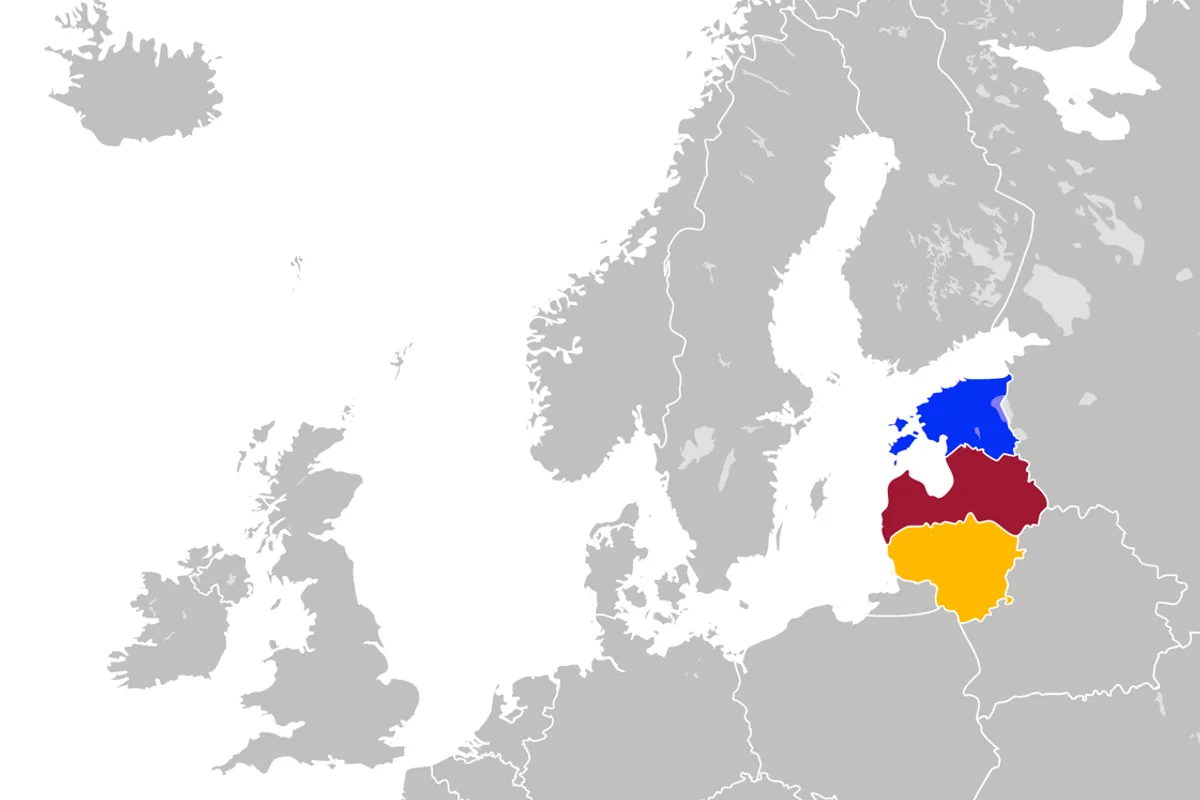
German media outlet Bild reported that NATO has prepared a three-part plan for a potential Russian attack on the Baltic states. This plan is part of NATO's ground warfare concept, devised by U.S. Army Major Andrew Pingrey, with its primary goal being deterrence.
The strategy aims to halt Russian forces, degrade their warfighting capabilities, and push invading units back toward Russia's borders. According to Bild, the concept includes three key components of a possible NATO response.
Strikes on Russian Missiles and Air Defense
If Russian forces launch missile and drone attacks on the Baltic states, followed by a conventional ground invasion, NATO would first seek to suppress the Russian missile threat. The plan envisions combat aircraft, missiles, and drones targeting Russian missile systems. Special attention would be focused on Kaliningrad, the Russian exclave, due to its high concentration of air defense systems and missiles.
Autonomous Drone Zone Along Borders
Simultaneously, NATO would establish an "autonomous zone" along its borders with Russia and Belarus. This area would serve as a defensive barrier where drones and robotic military vehicles would operate against advancing Russian forces. NATO forces would not be permanently stationed within this area, and if the Russians continued to advance, unmanned systems would be used to slow or halt their progress.
Strikes on Russian Military Infrastructure
The third element would involve attacks on targets within Russia itself. Bild states that NATO special forces could target key military and logistical infrastructure, such as airfields, defense factories, bridges, and railway lines transporting Russian troops and equipment.
The concept also includes cooperation with Russians who oppose President Vladimir Putin, to disrupt military supplies and weaken further Russian attacks. Bild further reports that NATO plans to establish an "air bridge" to airlift drones and robotic systems into Russia, as reported by Kyiv Post. These systems could then attack military bases and airfields.
The plan states that NATO would not attempt to occupy or conquer Russia. The goal would be to halt Russian invading forces and push them back toward Russia's borders. As Bild reports, military planning experts within NATO do not insist on keeping the concept secret, as the deterrent effect is strongest when Moscow is aware of the consequences that would follow an attack on any member state of the alliance.