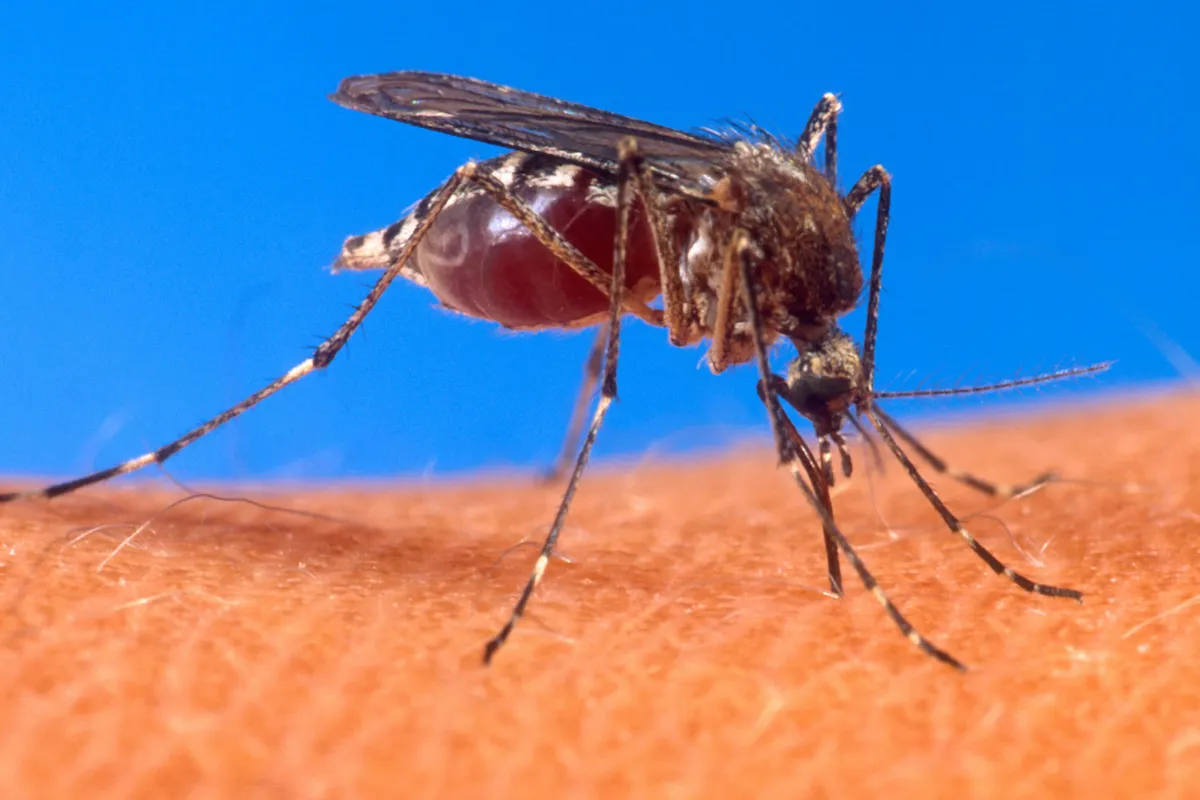
Although this year's prolonged drought has provided a respite from mosquito infestations, Osijek is intensively preparing for future seasons. Work on the new Mosquito Control Center is progressing according to plan, with construction currently underway on the second floor of the future building. The project, valued at 2.7 million euros, is being carried out as part of the MOSQUITOLAB initiative, and the new building is rising next to the existing Health Center of Osijek-Baranja County.
Construction began in February this year, with a projected completion period of 18 months. Once the structural work is finished, the laboratories will be equipped. County Prefect Nataša Tramišak has confirmed the expected timeline for the entire complex to become operational.
"The goal is to complete all necessary construction work within the next year, followed by laboratory equipping so that the Center can begin operations, which we expect by the end of 2027 or the beginning of 2028," said Prefect Tramišak for Osijek Express.
Three Laboratories for Comprehensive Control
The heart of the new Center will consist of three specialized laboratories with clearly defined roles. The first will focus on molecular diagnostics and the detection of viruses transmitted by mosquitoes, such as those causing infectious diseases dangerous to humans. It will also identify invasive mosquito species and develop new methods for their suppression.
The second laboratory will be dedicated to the application of the SIT technique, i.e., mosquito sterilization. A specialized X-ray device will be procured for this purpose. The third laboratory will continue the activities of the existing DDD (disinfection, disinsection, and deratization) service, with an emphasis on controlling floodwater mosquitoes, which have been the biggest problem in the Osijek-Baranja County area for years.
A Scientific Center with International Collaboration
In addition to its operational role in mosquito control, the Center is also envisioned as a scientific research hub. Plans include connecting with European institutes already engaged in modern mosquito control methods, particularly in Hungary, Italy, and Austria. The Prefect emphasized that such centers are not new in the European Union and that examples of good practice from around the world are now being brought to Croatia.
At the end of June, the County signed a cooperation agreement on mosquito control with the City of Osijek and the municipalities of Bilje, Petrijevci, Darda, and Erdut, creating a broader local framework for addressing this issue. "I believe that this Center will serve as an example of good practice throughout the Republic of Croatia, and likely beyond," concluded Tramišak. The MOSQUITOLAB project is part of the Interreg Hungary-Croatia cross-border cooperation program for the 2021-2027 financial period.