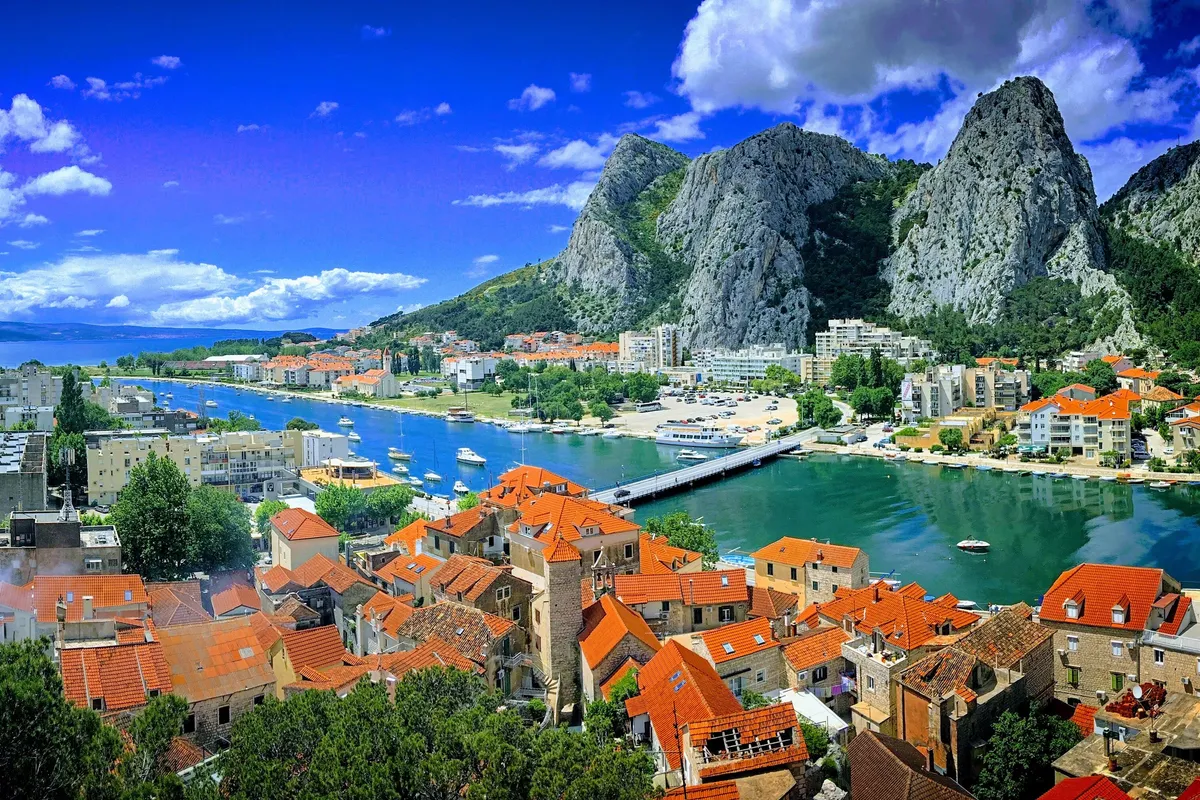
One of the most beautiful viewpoints along the Adriatic Highway, at the rest area on the Dupci Pass between Omiška Dinara and Biokovo, has been marred for years by a sight that stings the eyes. Trash bins are overflowing, and waste piles up on all sides as the bura wind scatters plastic bottles, bags, and packaging down the steep, hard-to-reach slopes toward the mythical Vruja Cove and the sea.
A Tourist Postcard Buried in Garbage
From the rest area along the Adriatic Highway, there is a spectacular view of the islands of Brač and Hvar, the mountains, and Vruja Cove between Pisak and Brela. But instead of travelers stopping to enjoy the untouched nature, they are greeted by a shameful sight. If you look a bit lower, you will see all the sorrow of a land that lives off tourism-bottles, various packaging, and other waste scattered everywhere.
On the inaccessible slopes, the wind has scattered trash that no one collects. It is clear that the bura wind cares more about the waste than the municipal services do, and the problem repeats and worsens year after year.
Toi Toi Toilet at 40 Degrees and Defaced Signs
Even the brown tourist signage has not been spared neglect. The signs are covered with numerous stickers, dominated by emblems of fan and hooligan groups from all over Europe. Particularly concerning is the state of the Toi Toi toilet-a plastic box that sits in over 40 degrees Celsius all day, and whose smell one dares not even describe.
The question arises as to what kind of people live here when they do not care for such beauty. However, responsibility also lies with the relevant authorities, who clearly fail to address this long-standing problem.
Twenty Years for Devastation, a Simple Solution for Trash
It took the state nearly twenty years to realize that entrepreneur Stipe Latković was illegally building and causing devastation in Vruja, the consequences of which are still visible today. With trash, however, it should be simpler-just pick it up.
If we are unable to maintain the rest areas, the solution is simple: place concrete barriers and close them off. Tourists can look at them in photos, given how some of them behave. Litter in nature, especially in the sea, is unforgiving-microplastics have long been found in the stomachs of key fish species in the Adriatic.