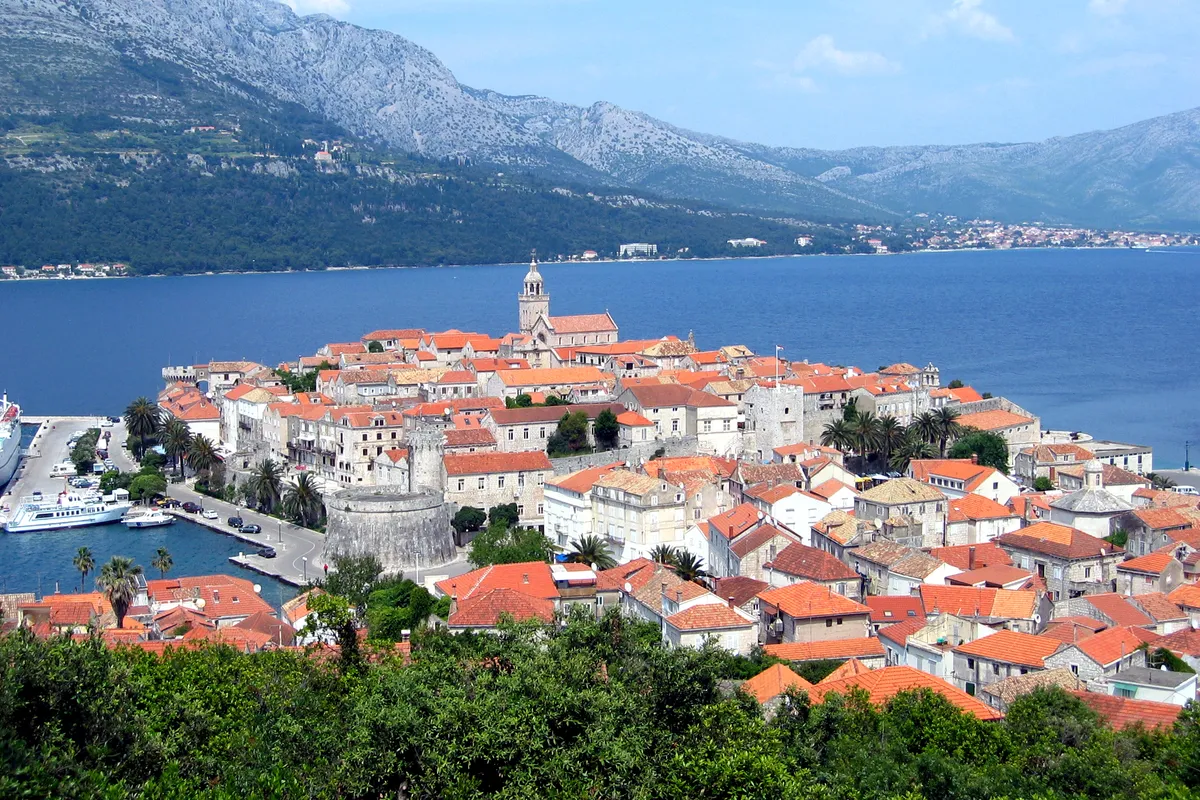
On August 18, 2026, the City Council of Korčula adopted the third set of amendments to the Spatial Plan, thereby formally legalizing the possibility of constructing port infrastructure, specifically a breakwater, in the previously strictly protected Pupnatska Luka bay. The decision was made with 7 votes 'for', 4 'against', and 1 abstention, sparking strong reactions from the local opposition and the professional community.
Opposition United: 'This Is a Substantive Change, Not a Technical Alignment'
Opposition councilors refused to support the proposal, emphasizing that the key provision on introducing infrastructure was inserted under the guise of aligning with legal regulations. This effectively removed the previous explicit restriction that protected the natural coastline of this Adriatic bay.
Korčula's SDP and the councilor from the Možemo! party, Igra Šain Kovačević, strongly condemned the move by the ruling majority. The SDP warns that introducing the possibility of interventions in the coastal belt of Pupnatska Luka is not a benign technical amendment.
"This is not a minor or technical amendment, but a substantive change that opens the door to interventions that were not permitted under the earlier proposal. The ruling majority has removed a clear restriction that protected the natural coastline."
Councilor Šain Kovačević reminded that laws must be respected but expressed regret over what Korčula will irreversibly lose through these legal maneuvers. The SDP also notes that former mayor Nika Silić had warned of HDZ's intentions during the election campaign, and that these have now taken official form through the spatial planning documentation.
Ugarković: 'They Won't Stop Until Every Part of the Coast Is Filled, Sold, and Built On'
Pero Ugarković, a prominent Croatian marine researcher and expert in marine ecosystem conservation, also spoke publicly about the controversial plan. Ugarković warns of the phenomenon of "quiet devastation" of space through small, individual plan amendments that the public often fails to notice until it's too late.
He highlights the absurdity of a situation where the bay is formally part of the Natura 2000 European ecological network and recognized as a particularly valuable natural landscape, while local politics simultaneously enables its commercialization.
"Tourist boards and agencies use images of Pupnatska Luka as one of the most beautiful beaches to sell Dalmatia, while on the ground, its degradation is being allowed."
Citing data from FINA, Ugarković notes that around 20% of entrepreneurs in Croatia operate in the construction or real estate sector, creating enormous pressure on space, which leads to natural beauties being turned into buildings profitable only for a few. Ugarković concludes that it only takes one investor who values money over homeland, with political support and public apathy or fear, to create a reality where "they won't stop until every part of the coast is filled, sold, and built on."
Citizens: 'One of the Last Most Beautiful Bays in the Mediterranean Has Fallen'
Citizen reactions on the ground are equally dramatic. On social media, condemnations of the City Council's decision are piling up, with emphasis on how the bay, once accessible only by foot or boat, thus retaining its status as a natural wonder, has become a highly profitable location after the construction of the road.
Critics warn that the introduction of a breakwater and port infrastructure will turn Pupnat into a new mass tourism hotspot intended exclusively for nautical tourism and big capital, while the authentic natural landscape will irreversibly disappear.