The Peninsula Is Bursting at the Seams
The Mayor of Zadar spoke on Radio Zadar, providing an overview of the water supply situation amid the tourist season and announcing necessary changes to the traffic regime in the historic core.
The Mayor of Zadar spoke on Radio Zadar, providing an overview of the water supply situation amid the tourist season and announcing necessary changes to the traffic regime in the historic core.

The Mayor of Zadar, Šime Erlić, on Tuesday, appearing on Radio Zadar's program, sent a reassuring message to citizens and the many tourists: water restrictions in the city and county are not on the horizon, and the water from the taps is completely safe for consumption. However, he warned that the pressure of the tourist season has exposed the full vulnerability of the existing infrastructure.
"There will be no need for restrictions. The system is currently stable," Erlić stated after a series of consultations with the Waterworks management and technical services. He admitted that water levels are not high, but the key point is that the system is under control. The first major shock of the season has already caused pressure drops and water availability issues in certain parts of the county, prompting Waterworks to appeal for rational consumption. The situation has stabilized through better optimization of pumping stations and increased inflow.
Erlić vividly described what the Zadar water supply system faces. "Our number of users multiplies tenfold during the season, all at once. It doesn't happen gradually. Key weekends arrive, with a large number of tourists, and that's a huge shock to the system," he emphasized. He sees the long-term solution in a major infrastructure project, the construction of a new pipeline and bringing water from the Zrmanja River. Work on this project is already underway in coordination with the government, but he warns that it will take years to complete, as the existing network is largely old and suffers significant water losses.
Addressing citizens' concerns about reports of environmental pollution, particularly in the Lika and Benkovac areas, the mayor was clear. "Our water in Zadar and our county is of good quality for drinking and other uses," Erlić said, adding that he himself drinks tap water daily. He emphasized that the Institute of Public Health continuously conducts analyses and that any change in water properties would be officially determined and publicly announced. Regarding current information on pollution, Erlić was more cautious, stating that he lacks sufficient direct information to draw conclusions about the scale of the problem and expects further analyses of all environmental elements.
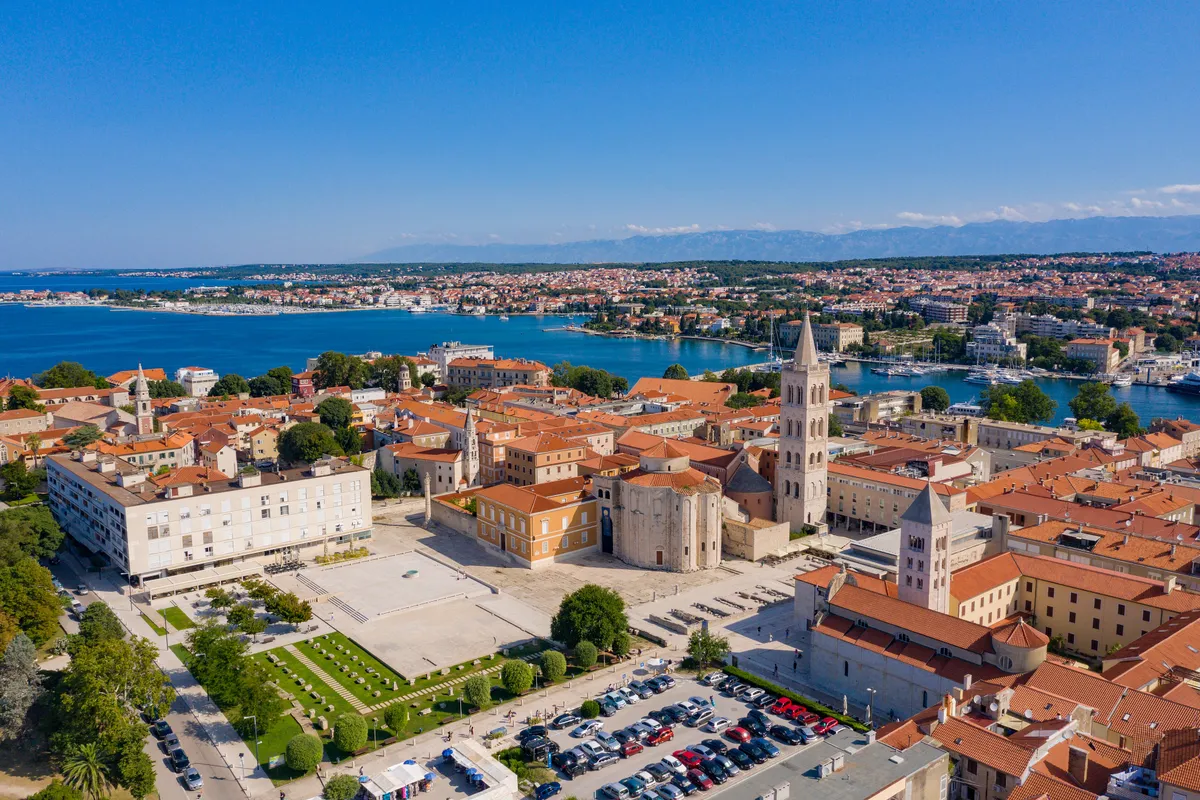
In the second part of his appearance, Erlić addressed the pressing traffic issue. He called the recent traffic restriction on the Peninsula a sort of test and stated that Zadar must move toward a model with fewer cars in the historic core. "It's impossible to accommodate such a large number of cars in the historic core of the Peninsula at any given time," he declared. According to research data, during peak hours, about a thousand cars arrive at the Peninsula in just one hour, and as much as 70 percent of that traffic consists of tourists.
The mayor is aware that it is unrealistic to expect the construction of all necessary parking facilities before the traffic regime changes. Therefore, according to him, parking, regulation, and public transport must develop in parallel. The goal is to clearly tell drivers not to enter the congested core but to use alternative parking lots in the areas of Relja, Voštarnica, Brodarica, Kampus, TIZ, City Galleria, and other locations outside the innermost core. There are also plans for greater use of cameras, automatic counting, and systems to inform drivers about parking space availability.