Maritime Shipping at Record Prices
Financial Times reports that shipping costs on key routes, from the Panama Canal to the Rhine, have hit historic levels due to the effective closure of the Strait of Hormuz and climate change.
Financial Times reports that shipping costs on key routes, from the Panama Canal to the Rhine, have hit historic levels due to the effective closure of the Strait of Hormuz and climate change.
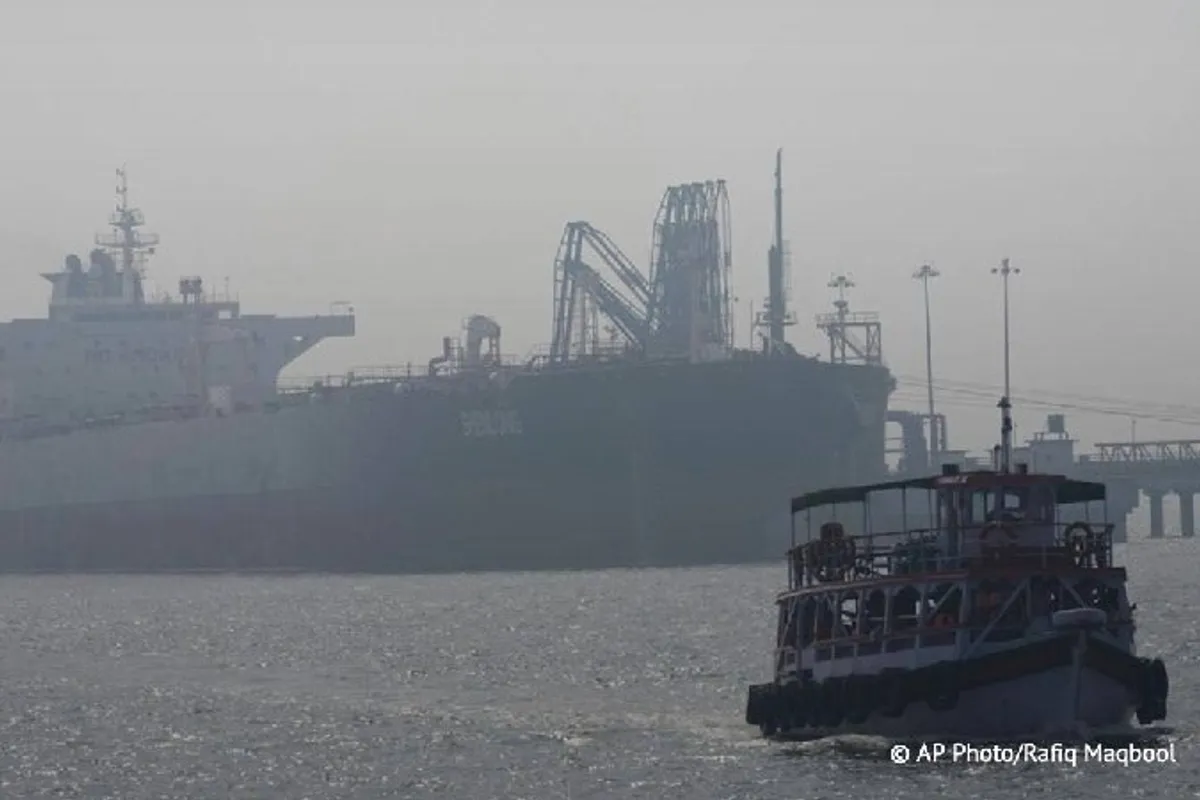
Shipping costs for maritime and river transport on key global routes have reached record levels, the Financial Times (FT) reported on August 17, 2026, citing analysts. The disruptions stem from a combination of Middle East conflicts and climate factors, including prolonged droughts in Europe and Latin America.
According to price reporting agency Argus, the effective closure of the Strait of Hormuz has triggered a chain reaction in the market. Routes such as the Panama Canal, the Rhine, and the Red and Black Seas are experiencing unprecedented increases in freight rates. For tankers sailing from the Black and Red Seas to the Mediterranean, prices this week hit their highest level in two decades.
Freight rates for shipping oil from the Persian Gulf to Asia reached $15.22 per barrel last week, the highest level since Argus began tracking the data in 2005. Meanwhile, average spot rates for container shipments from Asian countries to ports on the U.S. East Coast have surged 234% year-on-year, exceeding $10,200 per standard 40-foot container (12.19 meters long, 2.44 meters wide, and 2.59 meters high).
The El Niño phenomenon, which raises water temperatures in the equatorial Pacific above normal levels, has caused water levels in the Panama Canal to drop. Due to this, as well as increased demand triggered by the crisis in the Strait of Hormuz, the average cost of daily auction slots for transiting the canal in August has risen to a record $1.1 million to $2.5 million.
John Ollett, head of European freight rates at Argus, described the situation as the biggest disruption the shipping market has ever seen. "This is without a doubt the biggest disruption the shipping market has ever recorded, surpassing the COVID pandemic," Ollett told the Financial Times.
Peter Sand, chief analyst at analytics firm Xeneta, warned that the consequences will not fade quickly. "The disruption caused by the war in the Middle East is becoming a deeply entrenched and structural problem that won't go away anytime soon," Sand said, adding that increased costs will be passed through the entire supply chain.