Magnitude 7.1 Earthquake in Kumamoto: Tsunami Warning, Nuclear Plants Undamaged
Tens of thousands of households without power, fires and collapses reported, Prime Minister Takaichi said: "Human lives are a priority."
Tens of thousands of households without power, fires and collapses reported, Prime Minister Takaichi said: "Human lives are a priority."
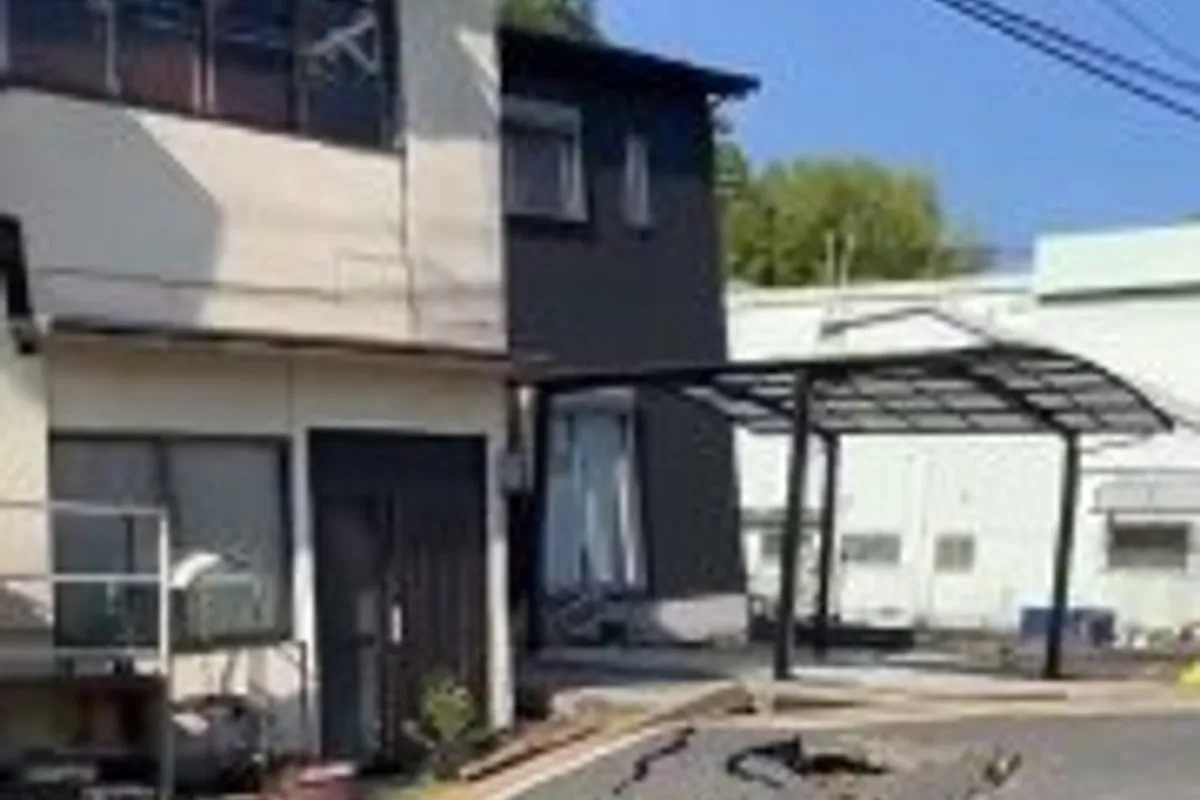
Southwest Japan was struck by a powerful earthquake on Tuesday, July 28, 2026. According to the Japan Meteorological Agency (JMA), a magnitude 7.1 earthquake was recorded at 16:27 local time (07:27 GMT) in Kumamoto Prefecture on the island of Kyushu, at a depth of 10 kilometers. On Japan's Shindo intensity scale, which measures ground shaking, the earthquake reached the highest level of 7, indicating extremely strong shaking. The U.S. Geological Survey (USGS) reported a slightly lower magnitude estimate of 6.8.
Immediately after the earthquake, the JMA issued a tsunami warning for the inland seas of Ariake and Yatsushiro. Expected waves could have reached up to 1 meter in height. National public broadcaster NHK reported that waves of that level may have already been recorded. Later, the U.S. Pacific Tsunami Warning Center (PTWC) announced that there was no longer a tsunami threat for the Japanese coast. Aftershocks of magnitude 4.5 and 4.2 were also recorded.
The earthquake caused serious damage. Local media and witnesses released video footage of the collapse of the iconic Kumamoto Castle, and landslides triggered by the shaking as well as fires were reported. At the time of the earthquake, items fell from shelves in stores and airports, and people took cover. According to data reported by Anadolu, about 48,000 households lost power, while Kyushu Electric Power cites a figure of 45,000 households and facilities without electricity in the Kumamoto region. Railway operator JR Kyushu suspended services, including the Shinkansen bullet train.
Japan's Nuclear Regulation Authority (NRA) announced that no irregularities were reported at nearby nuclear facilities. Kyushu Electric Power confirmed that three reactors currently operating in the region continue to run normally. No reports of irregularities came from the Sendai Nuclear Power Plant or the Genkai Nuclear Power Plant, reported ABC News.
The office of Prime Minister Sanae Takaichi issued emergency instructions to officials. "Act in close coordination with local authorities and under the principle of prioritizing human life above all else, spare no effort in emergency disaster response, including saving lives and assisting disaster victims, with the government acting as one," stated a communiqué reported by Hindustan Times. Prime Minister Takaichi herself said, according to Inquirer: "We place human lives as the highest priority."
Chief Cabinet Secretary Minoru Kihara was involved in coordinating the response. An NHK journalist on the ground described dramatic moments: "The shaking continues as I speak. Including myself, there may be people who feel their hearts pounding rapidly." At another point, he added: "When the earthquake struck, the shaking was so strong that I could not stand up."
Japan records about 18 percent of the world's earthquakes, according to Insider Paper, and even 20 percent of earthquakes of magnitude 6.0 or higher, highlights G1 Globo. Residents still remember the devastating Kumamoto earthquakes of 2016, when magnitude 6.5 and 7.3 quakes took between 273 and 275 lives (figures vary among sources Insider Paper, G1 Globo, and ABC News) and caused more than 2,800 injuries. The 2011 disaster with a magnitude 9.0 earthquake and tsunami killed or left missing about 18,500 people and devastated the Fukushima nuclear plant. In just the past few months, northern Japan was struck by two strong earthquakes: magnitude 7.7 in April and 7.2 in June 2026, Insider Paper recalls.
A temporary emergency warning for increased risk of an earthquake of magnitude 8.0 or stronger, issued after the April quake, was lifted after one week. Japanese authorities are now focused on addressing the aftermath of the latest jolt in Kumamoto, and Japan's Ministry of Defense and the Fire and Disaster Management Agency, according to Inquirer, are actively involved in the crisis response.