Magnitude 7.4 Earthquake Devastates Colombia: More Than 290 Dead
The strongest earthquake in Colombia in the 21st century lasted up to two minutes, toppled buildings, and left thousands injured. Rescuers continue to search for the missing.
The strongest earthquake in Colombia in the 21st century lasted up to two minutes, toppled buildings, and left thousands injured. Rescuers continue to search for the missing.
A devastating magnitude 7.4 earthquake struck western Colombia on Monday, August 10, 2026, at 7:34 a.m. local time. According to the latest figures released by President Abelardo De La Espriella, more than 290 people have died, 3,494 have been injured, and 496 are reported missing. Brazil's G1 Globo portal cites a slightly different estimate of around 4,000 injured, so sources are not fully aligned on the exact numbers.
The epicenter was near the town of San José del Palmar in the Chocó department, at a depth of 96 kilometers. The shaking, which lasted between 90 seconds and two minutes, was felt as far away as the capital, Bogotá, some 300 kilometers distant, as well as in neighboring countries. Initially reported as magnitude 6.4, it was confirmed an hour later as a 7.4 quake, the strongest in Colombia this century. For comparison, the 1999 Armenia earthquake had a magnitude of 6.1.
The hardest-hit cities were Pereira and Cali. In Pereira, 96 people died, 260 are listed as missing, and 260 were rescued. Sixty-six buildings collapsed. In Cali, 110 people died, 115 are missing, and 88 were pulled out alive from the rubble; 46 buildings completely collapsed. A total of nine departments were affected.
Among the quake's stories is that of Daniela Largo, a 32-year-old who spent more than 36 hours under the rubble of the Dibeni hotel in Pereira. After being rescued, she was resuscitated for 17 minutes, but her organs were severely damaged. Her father told El Tiempo that a doctor said a miracle was needed because her heart was functioning at only 20 percent. Daniela died after a three-day battle in the intensive care unit.
Diana Lucía from Cali was luckier: she was pulled out alive after more than 24 hours under the rubble. Sandra, who was trapped in a collapsed three-story building, survived more than six hours under the debris. During the rescue, she shouted to the rescuers: "They started breaking the wall, clearing the rubble. I was yelling, please, be careful, because this is falling on me." Her main concern was her daughter: "I kept saying, I can't die without knowing if my daughter is okay, without knowing what happened to her."
At a clinic that survived the quake, pediatrician Gérman Somoyar organized the evacuation of ten newborns with the help of three nurses and two doctors. "Among the three nurses, what we could organize at that moment was for them to each hold two babies and immediately begin the evacuation. Then two doctors came to help on the floor, I told them to help us with one baby each, and they went out, each with a baby in their arms," Somoyar recounted. The team descended six floors with babies in their arms, and everyone safely left the building.
Volunteers joined the search, including a group of film sound technicians who brought equipment to detect sounds beneath the rubble. Felipe, a member of the group, spoke with sorrow about the victim César: "César, he was someone we lost yesterday... We didn't have time to pull him out. (...) I'm still trying to sort out my emotions, honestly, I haven't managed yet."
The fate of the Saavedra Caicedo family from Cali was particularly heartbreaking. Parents Jairo Hernán Saavedra and Victoria 'Vicky' Caicedo, their triplets Sofía, Isabella, and Ana María, and other family members were in a building that collapsed. Only Ana María, the sole survivor among the triplets, survived. Her cousin Carlos Saavedra said Ana María is recovering from surgery, with a broken arm and pelvis. Isabella was found dead four days after the quake, on Thursday around 6:30 p.m.
Children are among the victims. In Calima-El Darién, four children aged 6 to 8 died: Anthony Ríos Gómez, María José Lozada Torres, Emanuel Bastidas Arredondo, and Jesús Muñoz Quinceno. In Yumbo, Luciana Moreno Flórez and Niela Nicol Vernaza Corrales died at a school. In total, around 100 children are reported missing, and 654 have received psychological support.
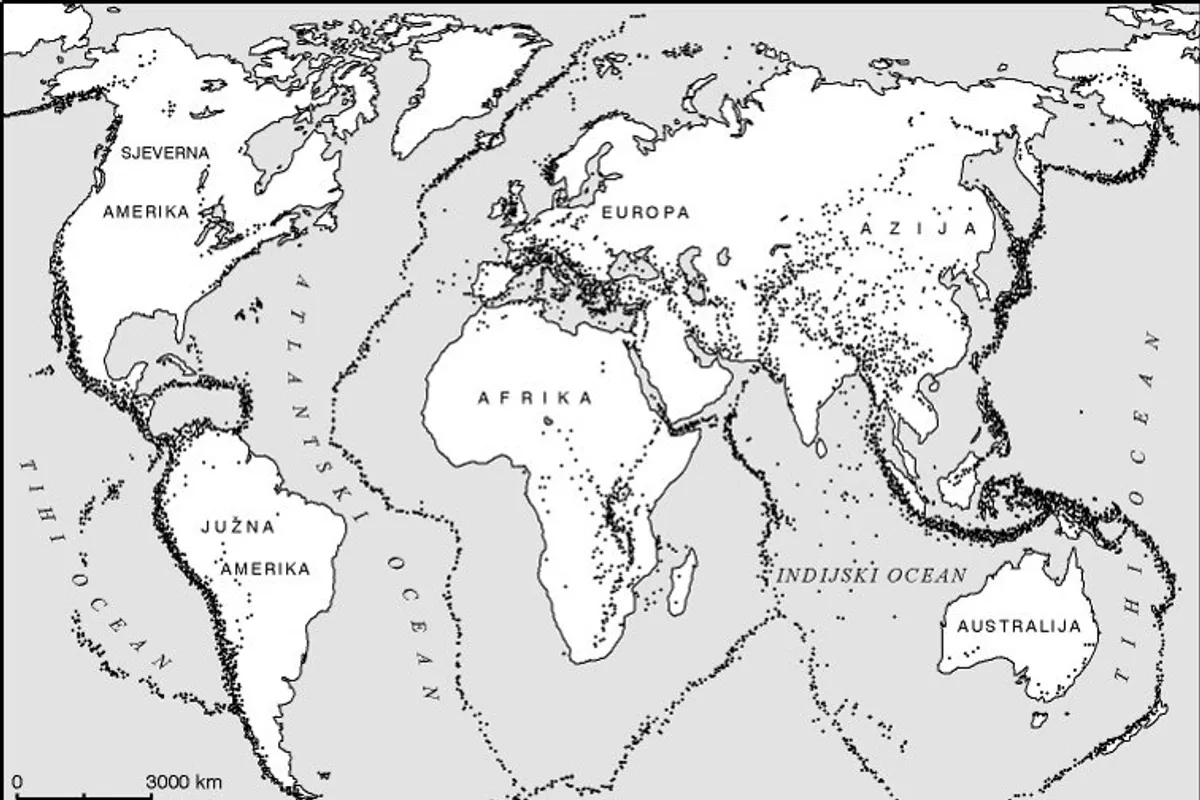
Seismologist Gilberto explained to G1 Globo that Colombia sits where three tectonic plates meet: Nazca, South American, and Caribbean. The Nazca plate is subducting beneath the South American plate, and the accumulated pressure is released over time in the form of earthquakes. "And that accumulated pressure is what will generate, precisely, the earthquake," he said.
Asked whether seismic activity on the planet is increasing, Gilberto was clear: "There is no evidence that seismic activity on the planet is increasing." He added that on average, 14 to 15 major earthquakes occur each year, and in 2026, 11 of magnitude greater than 7 have been recorded so far, suggesting the year could be slightly above average. On Saturday, a magnitude 7.7 earthquake struck Indonesia, killing at least 38 people, while Granada in Spain recorded a magnitude 5 quake with no injuries.
Colombian authorities have secured a $450 million loan from the World Bank, along with an additional $1.3 billion in commitments from multilateral organizations.