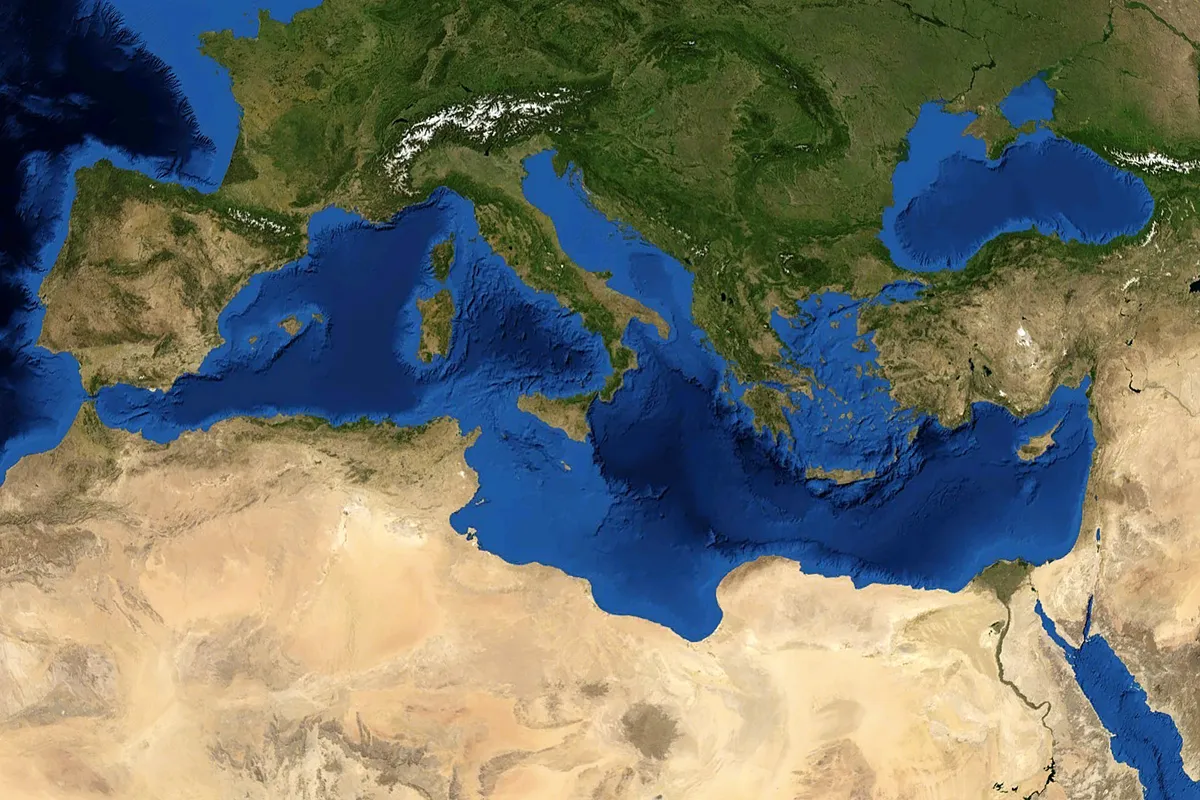
For decades, a private pool in the backyard was hailed as a symbol of prestige and the pinnacle of tourist attractions, but now it is increasingly seen as an environmentally unacceptable burden across the Mediterranean. As southern Europe faces more frequent heatwaves and droughts, local authorities from the Greek islands to the southern regions of France and Spain are taking radical steps to preserve water resources, reports Novi list in an analysis published on August 19, 2026.
France and Greece Introduce Strict Alert Levels
More than half of mainland France is currently under some level of restrictions, with regions such as the Orne department and parts of the French Riviera (Alpes-Maritimes) at the highest alert levels. In these areas, any filling, topping up, or adding water to private residential pools is prohibited. Meanwhile, Greece has declared an official state of emergency due to drought on seven tourist islands: Astypalaia, Tinos, Alonissos, Leros, Patmos, Symi, and Karpathos.
On these islands, hotels and recreational facilities must operate with limited water supplies, and rules and systems are being actively introduced to use only seawater in pools. The goal is to preserve critical drinking water reserves from desalination plants.
Some Islands Go a Step Further
Faced with drying up of their own springs, the Greek islands of Lipsi and Sikinos have made significant strides toward sustainable tourism. Lipsi has completely banned the issuance of permits for new pool construction, branding the entire island as an oasis with "natural pools"-that is, clean seawater. Sikinos has taken additional measures by banning pools and limiting the number of beds in new hotels to a maximum of 20, aiming to halt the growth of mass tourism.
In the western Mediterranean, the French department of Pyrénées-Orientales has become the first sub-region in Europe to impose a complete ban on the sale of above-ground and in-ground pools. In the Spanish regions of Catalonia and Andalusia, filling pools with drinking water is strictly prohibited, and violators are detected using satellite technology and artificial intelligence that automatically identifies blue surfaces in yards and cross-references them with land registries. Drones with thermal imaging cameras and smart water meters that physically reduce water pressure on properties with sudden spikes in consumption are also being used, reports Zadarski list.
Karst Does Not Forgive: Croatia's Pool Draining Problem
While the public focuses on restrictions on filling pools, an equally dangerous environmental issue remains in the shadows: where does all the water go when pools are drained? In sensitive areas, especially in the fragile karst terrain like that of Kvarner, improper discharge of pool water poses a serious threat to underground ecosystems.
The Kvarner region has karst relief, with highly permeable limestone soil riddled with cracks, sinkholes, pits, and underground caves. Water discharged into karst does not pass through natural filters like those in sandy or clay soils; instead, it flows through cracks in the rock directly into the underground, reaching drinking water springs or the sea.
Discharging thousands of liters of pool water at once causes triple damage: chemical contamination of the soil, leaching and destruction of vegetation, and endangerment of underground fauna. Pool water is full of chlorine, algaecides, flocculants, and pH stabilizers. When it enters the karst underground, it contaminates the aquifers from which drinking water is drawn, and in the sea, it destroys sensitive coastal ecosystems, algae, and juvenile fish. The karst underground is also home to strictly protected species such as the olm, for which even minimal changes in the chemical composition of water are lethal.
How to Responsibly Drain a Pool
Pool owners should be aware that pool water, when not adequately treated, is essentially chemical waste. If draining is unavoidable, it is necessary to take environmentally responsible measures: dechlorination or neutralization, controlled flow, prohibition of discharge onto karst surfaces, and the use of eco-friendly alternatives.
It is not allowed to discharge water immediately after the last use. The pool should remain open and free of chemicals for at least one to two weeks so that chlorine can naturally break down under sunlight. Discharge must be slow to avoid soil erosion, and water must not be allowed to freely flow over drystone walls, into sinkholes, or into the environment. The best option, with approval from municipal utilities, is to direct the water into the public sewer system if it has adequate wastewater treatment, or to hire licensed companies with tankers. A sustainable future requires a transition to systems with natural filtration, such as biological pools with plants, or the use of systems that purify the same water for years, eliminating the need for seasonal draining.
"Karst does not forgive mistakes, and the protection of groundwater begins in the backyard of every individual," concludes Novi list.