Russia Halts Production of Kinzhal Missiles Since April
Deputy chief of Ukraine's military intelligence reveals Moscow stopped making hypersonic missiles to boost capacity for other, more effective ballistic rockets.
Deputy chief of Ukraine's military intelligence reveals Moscow stopped making hypersonic missiles to boost capacity for other, more effective ballistic rockets.
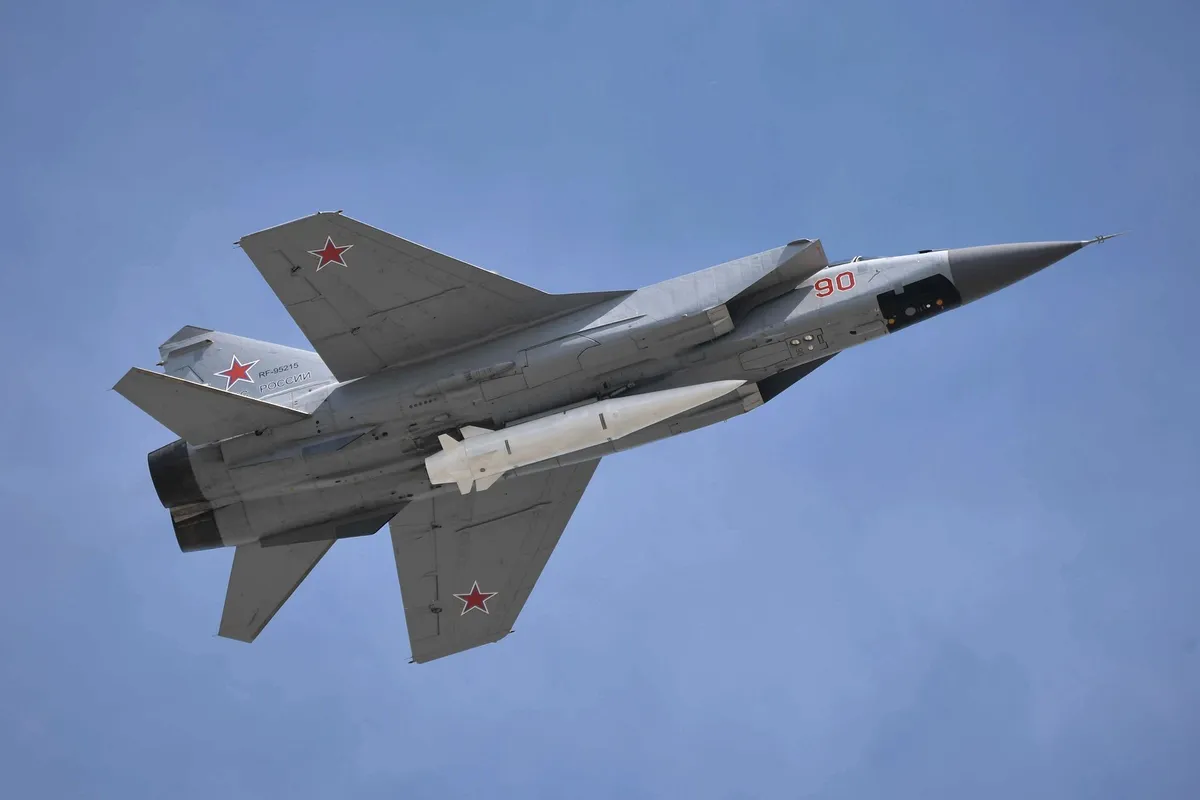
Russia halted production of its Kinzhal ballistic missiles in April 2026, redirecting resources to ramp up output of other, more precise missile types. This information was disclosed by Major General Vadym Skibitskyi, deputy chief of the Main Intelligence Directorate of Ukraine's Defense Ministry, in an interview with RBC-Ukraine published on August 10.
Skibitskyi clarified that the decision was driven not only by a desire to increase production volumes but also by serious accuracy issues with the Kinzhal itself. "For an effective missile, deviation from the target must not exceed 5-7 meters, but theirs is 30 meters or more," Skibitskyi stated. This revelation sheds new light on the months-long absence of these missiles from regular reports by the Ukrainian Air Force.
According to the Ukrainian intelligence officer, halting Kinzhal production allowed Russia to redirect key resources elsewhere. "The Russians managed to increase ballistic missile production partly because they have currently stopped making Kinzhals. Consequently, missile fuel no longer goes to Kinzhals but to other ballistic missiles," Skibitskyi said.
In addition to the Kinzhal, Moscow also ceased production and use of the Kh-32 missile, a modernized version of the older Kh-22. Funds and components originally intended for these systems are now used for missile types that the Russian military leadership deems more effective. Skibitskyi added that the Russian defense industry currently operates under a "simplified" technical control procedure, with failure to meet production plans carrying "real consequences."
The Kinzhal missiles, which Russia launches at Ukraine from MiG-31K aircraft, have become synonymous with mass air alerts across the country. Their launch from fighter jets regularly triggered nationwide alerts in Ukraine. However, Ukrainian Air Force reports have shown no indications of this weapon being used for several months, which now has an official explanation.
While Russia has stopped producing Kinzhals, this does not necessarily mean a reduction in the overall threat. Skibitskyi suggests the focus has shifted to other types of ballistic missiles, which could mean Russian forces are adapting and seeking ways to increase the effectiveness of their strikes on targets in Ukraine.